

Why herbal solutions work: Evidence, science explained
TL;DR:
- Herbal remedies vary in scientific backing; some, like turmeric and Boswellia, show strong evidence for inflammation.
- Evidence for lymphatic or swelling relief through herbs is limited, mostly from animal studies or traditional use.
- Use high-quality, regulated herbal products, and consult health professionals to ensure safe, effective integration.
Not every herb in a bottle does what the label implies. The appeal of natural remedies is real, but ‘natural’ does not automatically mean ‘effective’ or even ‘safe’. Some herbal solutions are backed by genuine mechanistic science and clinical trial data. Others rely almost entirely on tradition. For anyone dealing with swelling, inflammation, or lymphatic congestion in the UK, knowing the difference is not a minor detail. It determines whether you are spending money on something that may actually help, or on something that simply feels reassuring. This article covers the science behind how herbal solutions work, where the strongest evidence sits, and how to use them wisely.
Table of Contents
- How herbal solutions work: The science explained
- Which herbal solutions actually work? Evidence by condition
- Herbal solutions for swelling and lymphatic issues: What the evidence (and experts) say
- How to use herbal solutions safely and effectively
- Why the answer isn’t as simple as ‘herbs are natural’
- Explore more: Herbal support for swelling, inflammation, and wellness
- Frequently asked questions
Key Takeaways
| Point | Details |
|---|---|
| Herbs target inflammation | Certain herbal compounds work by blocking inflammation through multiple biological pathways. |
| Evidence stronger for joints | Most reliable results are for joint inflammation, not general swelling or lymphatic issues. |
| Lymphatic results unproven | Herbal extracts for lymphatic drainage show potential but lack robust clinical backing. |
| Safety and regulation matter | THR-marked products and professional advice are key to safe herbal use in the UK. |
How herbal solutions work: The science explained
Herbs are chemically complex. Each plant contains dozens of bioactive compounds, and it is these compounds, not the plant itself, that do the actual work inside the body. The most studied categories include flavonoids, alkaloids, terpenoids, and polyphenols. Curcumin in turmeric and boswellic acids in Boswellia serrata are two well-known examples. Herbal bioactive compounds like these exert measurable anti-inflammatory effects through specific biological pathways.
The primary mechanism involves inhibiting enzymes that drive inflammation. COX (cyclooxygenase) and LOX (lipoxygenase) enzymes are responsible for producing prostaglandins and leukotrienes, both of which trigger pain and swelling. Many herbal compounds block these enzymes, similar in principle to how ibuprofen works, but often through multiple targets simultaneously. This multi-target action is one reason researchers find herbal solutions interesting from a pharmacological standpoint.
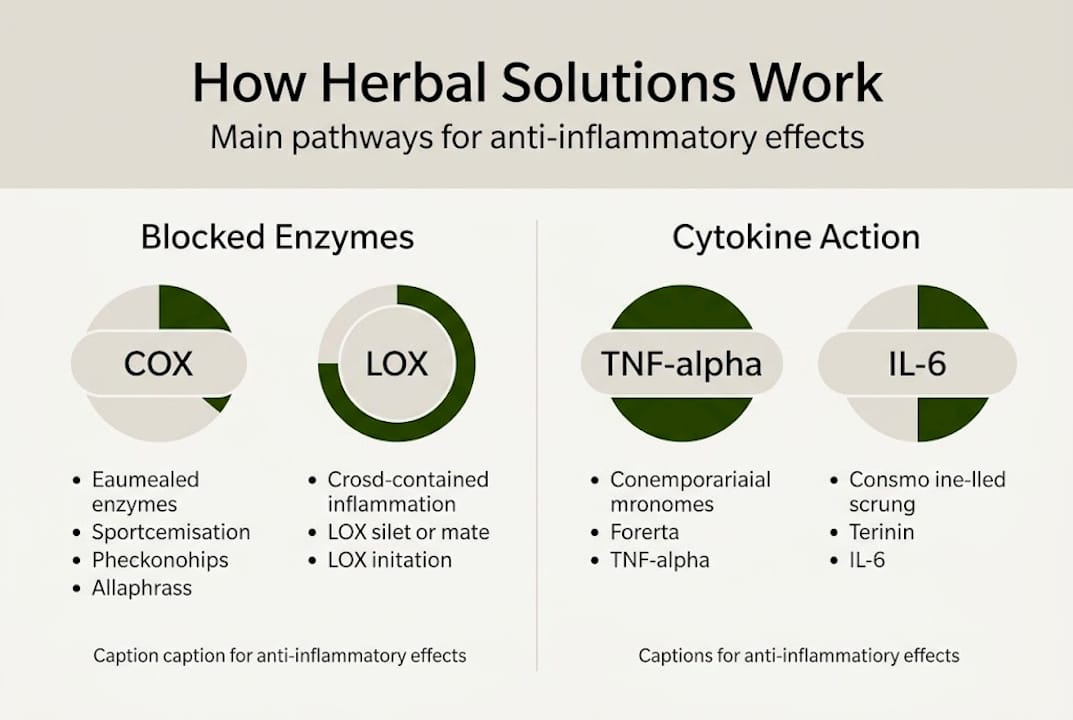
Beyond enzyme inhibition, certain compounds modulate cytokines. Cytokines are signalling proteins that regulate the intensity of the inflammatory response. When cytokine activity becomes dysregulated, inflammation becomes chronic. Compounds such as curcumin suppress NF-κB, a key transcription factor that controls cytokine production. Less NF-κB activity means less inflammatory signalling downstream.
Here is a summary of the key compound classes and their primary mechanisms:
| Compound class | Found in | Primary mechanism |
|---|---|---|
| Polyphenols | Turmeric, green tea | NF-κB suppression, antioxidant activity |
| Terpenoids | Boswellia, frankincense | COX and LOX inhibition |
| Flavonoids | Elderflower, grape seed | Cytokine modulation |
| Alkaloids | Poke root, berberine herbs | Varied: anti-inflammatory, immune modulation |
For herbal products and inflammation, the science is strongest when targeting general inflammatory pathways. Lymphatic-specific effects, such as improving fluid drainage or reducing lymphoedema, are far less established in human trials. Animal models show promise, but human data remains sparse.
Pro Tip: The dose matters enormously. A herb with proven bioactive compounds is only useful if the product you buy delivers a therapeutic amount. Always check standardised extract percentages on the label.
For those exploring herbal oils for relief, topical application bypasses some of the absorption challenges that limit oral herbal use, which is worth considering for localised swelling.
Which herbal solutions actually work? Evidence by condition
Not all herbs carry the same weight of evidence. The table below compares popular options across the conditions most relevant to this discussion.
| Herb | Inflammation evidence | Swelling evidence | Lymphatic evidence |
|---|---|---|---|
| Turmeric | Strong (multiple RCTs) | Moderate | Weak |
| Boswellia | Strong (OA, RA trials) | Moderate | Weak |
| Ginger | Moderate (clinical trials) | Moderate | Weak |
| Grape seed | Moderate | Moderate | Animal data only |
| Comfrey | Topical only | Topical only | No data |
Anti-inflammatory benefits in clinical trials have been documented for turmeric, ginger, and Boswellia serrata in conditions such as osteoarthritis and rheumatoid arthritis. These are real, peer-reviewed results.

The picture for swelling and lymphatic issues is less clear. Most reported improvements are either extrapolated from inflammation data or drawn from animal studies. There are no major clinical guidelines in the UK that recommend herbal remedies as primary treatment for lymphoedema or significant fluid retention.
The NHS is direct on this point. Herbal medicine effectiveness is described as generally very limited in terms of scientific research, with most evidence rooted in traditional use rather than clinical trials. That is not a dismissal of herbs. It is an honest reflection of where the evidence currently stands.
Here is a ranked order of evidence strength for inflammation-related use:
- Boswellia serrata for osteoarthritis (strongest RCT data)
- Turmeric / curcumin for joint inflammation
- Ginger for musculoskeletal pain
- Grape seed extract for vascular inflammation
- Topical comfrey for bruising and localised inflammation
For top herbs for swelling, the honest answer is that most documented benefits are for inflammatory pain rather than swelling caused by lymphatic dysfunction specifically.
Pro Tip: When assessing any herbal product, search for studies using the specific extract form you are buying, not just the parent herb. Curcumin standardised to 95% differs significantly from a generic turmeric powder capsule.
For broader context on herbal wellness and regulation in the UK, understanding the regulatory landscape helps you separate quality products from those with unsubstantiated claims.
Herbal solutions for swelling and lymphatic issues: What the evidence (and experts) say
Lymphoedema and chronic swelling are conditions that the UK medical community treats with a structured, evidence-based approach: compression garments, manual lymphatic drainage (MLD) by trained therapists, appropriate exercise, and medical supervision. Herbal remedies do not feature in those guidelines as primary interventions.
That said, dismissing herbal options entirely misrepresents the science. Evidence for lymphatic drainage herbs is described as limited but promising, currently insufficient for formal clinical recommendation. This is a meaningful distinction. Promising means the mechanisms are plausible and early results are interesting. Insufficient means there are not yet enough high-quality human trials to justify placing herbs in treatment protocols.
Preclinical data offers some specific leads. Grape seed proanthocyanidins have shown improvements in lymphatic drainage and reduced oedema in animal models of secondary lymphoedema. These findings support further research rather than immediate clinical translation.
Common herbs used traditionally for swelling and lymphatic support include:
- Red clover: Used historically for lymphatic cleansing, minimal clinical data in humans
- Cleavers (Galium aparine): Popular in traditional UK herbalism for lymph support, no robust trials
- Grape seed extract: Best animal-model evidence for lymphatic benefit
- Dandelion root: Diuretic properties may reduce fluid retention modestly
- Poke root: Traditional use for lymphatic congestion, requires careful handling due to potency
For those using herbal oils for swelling, topical application combined with gentle massage may support local circulation and comfort, even if systemic lymphatic effects remain unproven.
The key message from experts is clear: herbal solutions should be adjunctive. They may complement formal treatment but should not replace it when dealing with clinical swelling or confirmed lymphoedema. Exploring examples of lymphatic herbs is worthwhile for context, particularly when used alongside professional care.
How to use herbal solutions safely and effectively
Knowing which herbs may help is only part of the picture. Using them safely in the UK context requires attention to regulation, product quality, and potential interactions.
The most important quality marker in the UK is the THR (Traditional Herbal Registration) scheme. A THR mark means the product has met standards for quality, safety, and consistency, assessed by the Medicines and Healthcare products Regulatory Agency (MHRA). It does not guarantee clinical efficacy, but it does confirm you are buying something that has been manufactured to a defined standard.
Here is a practical step-by-step approach for safe herbal use:
- Check for THR marking before purchasing any over-the-counter herbal product
- List all current medications and consult a pharmacist before adding any herbal supplement
- Start with one herb at a time to identify any reactions clearly
- Use topical applications where possible for localised swelling to reduce systemic absorption risks
- Review after four to six weeks; if there is no noticeable benefit, reassess
Herbal medicines and medication interactions are a genuine clinical concern. St John’s Wort, for example, affects the metabolism of numerous prescription drugs. The same caution applies across many herbal categories.
Comfrey is a useful case study. Topically, it has documented anti-inflammatory and tissue-repair benefits. Internally, its pyrrolizidine alkaloids are hepatotoxic with internal use, meaning the liver can be seriously harmed. This distinction, between safe topical use and dangerous internal use, illustrates why broad ‘it’s natural’ reasoning is inadequate.
For herbal self-care for swelling, building a routine that includes quality products, appropriate application methods, and professional oversight is the most sensible path.
Pro Tip: Combine herbal topical application with manual lymph massage techniques for best results. The physical movement of fluid and the anti-inflammatory properties of the oil work through different but complementary mechanisms. See herbal lymph massage tips for guidance.
Why the answer isn’t as simple as ‘herbs are natural’
There is a persistent assumption that if something comes from a plant, it is inherently gentle, safe, and beneficial. This belief is understandable, but it is not accurate. Arsenic is natural. So is belladonna. The origin of a substance tells you nothing definitive about its safety or its efficacy.
The NHS and NICE do not express scepticism about herbal medicine out of institutional bias. They apply the same standard they apply to everything: where is the evidence? For most herbal applications to lymphatic conditions and swelling specifically, the evidence base is thin. That is a scientific observation, not a political one.
Where herbal solutions genuinely earn their place is in adjunctive support, managing the uncomfortable background noise of chronic inflammation, supporting general wellness, and providing options for people who respond poorly to or prefer to avoid synthetic medications. That is a real and legitimate role.
Smart herbal use means reading the evidence critically, choosing quality products, and integrating herbs into a broader approach rather than treating them as standalone cures. For context on regulation and evidence for herbal products, understanding what is and is not substantiated helps you make choices based on fact rather than hope.
Explore more: Herbal support for swelling, inflammation, and wellness
If you are looking for herbal solutions that are thoughtfully sourced, traditionally prepared, and focused on real results, your next step is straightforward.
At Get Gutted, we handcraft small-batch herbal oils, including our Organic Poke Root Oil infused in Castor Oil, alongside complementary products such as Soursop Leaves, Apricot Kernels, and Essiac tea blends. Each product is selected for its traditional use and prepared using slow-infusion methods to preserve potency. Whether you are supporting lymphatic drainage, addressing fluid retention, or managing areas of discomfort, our range gives you quality-focused options grounded in herbal tradition.
Frequently asked questions
Which herbs are best for swelling and lymphatic support in the UK?
Turmeric, Boswellia, and grape seed extract carry the most evidence for inflammation, while anti-inflammatory benefits in trials are well-documented for joint conditions. For lymphatic-specific use, evidence remains insufficient for formal clinical recommendation.
Are herbal solutions safer than conventional medicine?
Not necessarily. Herbal medicines can interact with medications and carry quality risks when bought from unregulated sources; always speak to a pharmacist or GP before combining them with prescribed treatments.
Does the NHS or NICE endorse herbal remedies for swelling or lymphatic problems?
No. NHS guidance on herbal medicine states evidence is generally very limited, and no major UK clinical guidelines include herbal treatments as primary therapy for lymphoedema or significant swelling.
What should I look for when buying herbal products in the UK?
Look for the THR mark, which confirms MHRA-assessed quality standards. Consult a professional if you are taking any prescription medication, as interactions are a documented concern across multiple herb categories.