

Herbal oils for lymphatic health: 82% swelling relief
TL;DR:
- Herbal oils have scientifically supported anti-inflammatory effects and can support lymphatic function.
- They should be used as part of a broader wellness routine, not as standalone treatments, with proper dilution and care.
- Clinical evidence is limited, emphasizing realistic expectations and consultation with healthcare professionals for conditions like lymphoedema.
Herbal oils are frequently dismissed as pleasant-smelling extras with little real effect on the body. That view is outdated. Anti-inflammatory effects in herbal oils are now well-documented, with certain compounds shown to alter inflammation pathways at the cellular level. This guide covers how specific oils influence lymphatic function, reduce swelling, and manage inflammation, alongside what UK health guidance actually says and how to use these oils safely as part of a broader wellness routine.
Table of Contents
- How herbal oils influence lymphatic health and inflammation
- Popular herbal oils for swelling and lymphatic drainage
- Current guidelines: NHS advice vs. herbal oil practices
- Practical use and safety: integrating herbal oils into your wellness routine
- Why the conversation about herbal oils needs more nuance
- Support your lymphatic health with evidence-based wellness
- Frequently asked questions
Key Takeaways
| Point | Details |
|---|---|
| Herbal oils offer measurable effects | Certain oils show 66-82% reduction in inflammation in animal studies though human results are milder. |
| NHS guidance prioritises proven methods | Herbal oils can supplement, but not replace, NHS-endorsed treatments for lymphatic issues. |
| Safety and personalisation matter | Always dilute essential oils and check for contraindications before use. |
| Realistic expectations are key | Herbal oils provide gentle support rather than dramatic cures for swelling and lymphatic health. |
How herbal oils influence lymphatic health and inflammation
Herbal oils work through more than one route. Applied topically, active compounds cross the skin barrier and enter local tissue, where they interact with immune cells, blood vessels, and lymphatic capillaries. Inhaled, volatile compounds reach the bloodstream via the lungs and can influence the nervous system. Both routes matter for inflammation and lymphatic function.
The most studied oils for these purposes include lavender, ginger, eucalyptus, and geranium. These oils contain compounds such as linalool, gingerols, 1,8-cineole, and citronellol, each of which has been shown to interfere with pro-inflammatory signalling. Specifically, they suppress cytokine production and block NF-κB, a key protein complex that drives inflammation in the body. This is not a surface-level effect. It is a direct interaction with the molecular machinery behind swelling and tissue congestion.
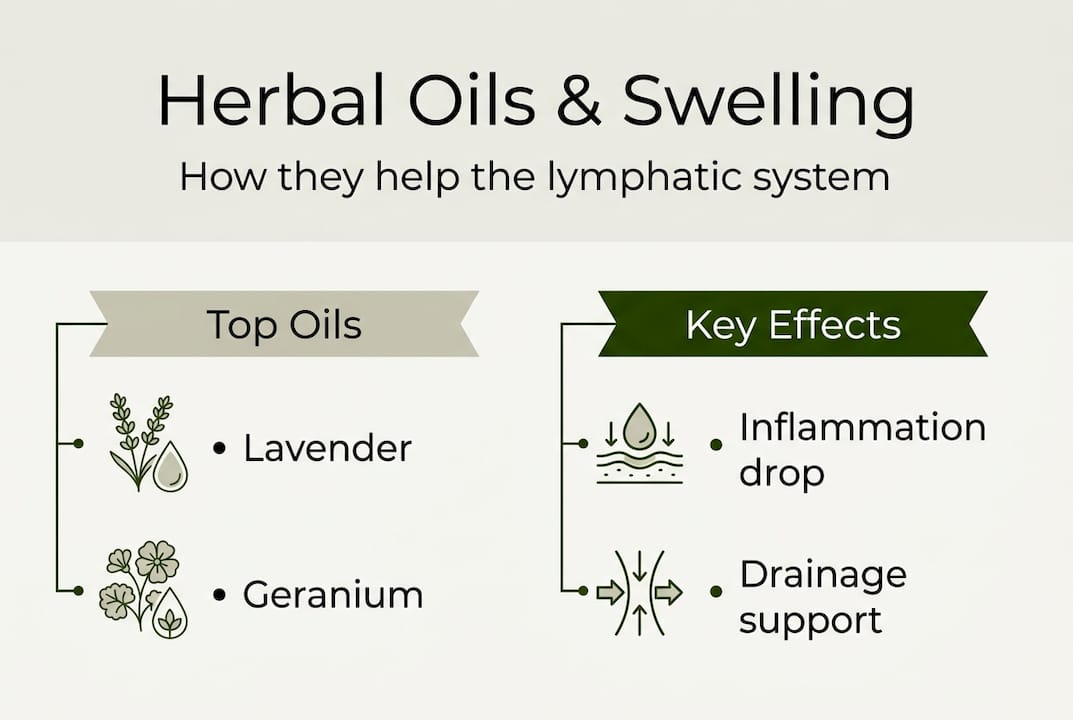
In preclinical studies, certain essential oils inhibit inflammation by up to 82%, a figure drawn from in vivo models using thymol-rich and geranium-based preparations. That is a meaningful number, though it is important to note these are animal and cell studies, not large human trials.
For joint-related swelling, gamma-linolenic acid (GLA) oils such as evening primrose, borage, and blackcurrant seed oil offer a different mechanism. These oils supply GLA, a fatty acid the body converts into anti-inflammatory prostaglandins. GLA-containing oils reduce rheumatoid pain and swelling with moderate human evidence behind them, according to Cochrane review data.
| Oil type | Key compound | Primary action |
|---|---|---|
| Lavender | Linalool | Cytokine suppression |
| Ginger | Gingerols | NF-κB inhibition |
| Geranium | Citronellol | Blood flow, anti-inflammatory |
| Evening primrose | GLA | Prostaglandin regulation |
| Eucalyptus | 1,8-Cineole | Immune modulation |
Key mechanisms at a glance:
- Suppresses pro-inflammatory cytokines (IL-1β, TNF-α)
- Blocks NF-κB activation in immune cells
- Improves local microcirculation and lymph flow
- Supplies GLA for anti-inflammatory prostaglandin synthesis
Pro Tip: When exploring herbal oils for inflammation relief, prioritise oils with published in vivo data over those relying solely on traditional use claims.
“Preclinical evidence for herbal oils is strong. Human trial data is growing but still limited. Realistic expectations matter.”
The honest position is this: the science is promising and the mechanisms are real. Human trial data is less robust than preclinical results, but it is growing. Using these oils as part of a wider wellness approach, rather than as a standalone cure, is the most evidence-consistent position.
Popular herbal oils for swelling and lymphatic drainage
Not all herbal oils perform equally. Understanding what each one actually offers helps you make better choices rather than relying on marketing language.
Castor oil has a long history of topical use for swelling and congestion. Its active compound, ricinoleic acid, binds to prostaglandin receptors in tissue and has mild anti-inflammatory properties. Castor oil packs improve circulation and may reduce localised swelling, but robust clinical evidence for lymphatic detox specifically is lacking. It is useful as a base oil and as a carrier for more potent herbal infusions.
Geranium oil stands out in the research. It reduces blood congestion, supports lymphatic movement, and shows anti-inflammatory results in mouse models. There is also early evidence for benefits in haemorrhoids and phlebitis, conditions involving venous and lymphatic congestion. This makes it one of the more credible options for targeted topical use.

GLA-rich oils (evening primrose, borage, blackcurrant seed) are the best-supported for inflammation-related swelling in humans. These are typically taken orally or used in blended formulations. Their benefit is systemic rather than localised.
Lavender, ginger, and eucalyptus perform well in laboratory models. They are practical additions to massage blends and topical preparations, particularly for post-exercise soreness or mild swelling.
| Oil | Evidence level | Best use |
|---|---|---|
| Geranium | Moderate (preclinical) | Topical, lymphatic massage |
| Evening primrose | Moderate (human trials) | Oral or blended topical |
| Castor oil | Low to moderate | Carrier, packs, base oil |
| Lavender | Preclinical | Massage blends |
| Ginger | Preclinical | Targeted topical use |
For a detailed breakdown of how these oils compare in practice, the lymphatic drainage oils comparison guide covers formulation and application differences.
- Geranium oil: best for targeted lymphatic and venous support
- GLA oils: best for systemic inflammation and joint swelling
- Castor oil: best as a base or carrier for herbal infusions
- Lavender and ginger: best as supporting agents in blends
Statistic to note: In preclinical models, geranium-based preparations reduced inflammatory markers by over 66%, placing it among the most active oils tested for this purpose.
Be cautious of products claiming to fully detox the lymphatic system through oil use alone. The lymphatic system is complex, and no oil replaces adequate hydration, movement, and medical care where needed. For a broader view of herbal products for lymphatic health, context and quality of formulation matter significantly.
Current guidelines: NHS advice vs. herbal oil practices
The NHS estimates that over 200,000 adults in the UK live with lymphoedema, a condition involving chronic swelling due to a compromised lymphatic system. The official guidance is clear and evidence-based: compression therapy, manual lymphatic drainage (MLD), exercise, and meticulous skincare form the core treatment approach.
Herbal oils do not feature in NHS lymphoedema protocols. This is not because they are dismissed outright, but because the clinical evidence required for NHS endorsement has not yet been met. The bar is high, and rightly so.
“NHS-recommended care for lymphoedema centres on compression, movement, and manual drainage. Herbal oils are not part of the clinical pathway.”
Where herbal oils can reasonably sit is in the complementary space: supporting relaxation during massage, providing mild topical relief for non-clinical swelling, or assisting with post-exercise recovery. They are not a replacement for MLD or compression garments in diagnosed lymphoedema.
What the NHS recommends for lymphatic and swelling management:
- Manual lymphatic drainage performed by a trained therapist
- Compression bandaging or garments
- Regular, structured exercise
- Careful skincare to prevent infection
- Monitoring for signs of cellulitis or worsening
The risk of over-relying on herbal oils in place of NHS care is real. Delayed treatment in lymphoedema can lead to fibrosis, chronic infection risk, and reduced quality of life. Herbal oils used alongside natural remedies for lymphatic drainage are most appropriate for mild, non-clinical swelling or as a supportive addition to an already-managed condition.
The most practical approach is to treat NHS guidance as the foundation and herbal oils as a considered addition, not the other way around. Speak to your GP or lymphoedema nurse before introducing any new topical product if you have a diagnosed condition.
Practical use and safety: integrating herbal oils into your wellness routine
Using herbal oils effectively comes down to a few consistent principles. Dilution, application method, and awareness of contraindications are the three areas that matter most.
Dilution is non-negotiable. Essential oils must be diluted in a carrier oil before skin contact. A 1 to 2% dilution is standard for topical use: that is roughly 6 to 12 drops of essential oil per 30ml of carrier oil. Undiluted application risks irritation, sensitisation, and in some cases chemical burns.
Most herbal oils are safe when diluted correctly, but risks increase with pregnancy, active skin conditions, or existing lymphoedema. Always patch test a new blend on a small area of skin and wait 24 hours before wider use.
Step-by-step integration:
- Choose your oil based on your specific need (swelling, post-exercise, lymphatic support)
- Dilute to 1 to 2% in a quality carrier oil such as castor, jojoba, or sweet almond
- Patch test on the inner arm and wait 24 hours
- Apply using gentle upward strokes towards lymph nodes during massage
- Use consistently over 2 to 4 weeks before assessing results
Pro Tip: Pairing herbal oil application with a simple herbal lymph massage guide technique significantly improves lymphatic movement compared to passive application alone.
Who should exercise caution:
- Pregnant or breastfeeding individuals
- Those with diagnosed lymphoedema (consult a clinician first)
- People with nut allergies (check carrier oil source)
- Anyone with broken, infected, or highly sensitive skin
Do not ingest essential oils unless under direct supervision from a qualified practitioner. Internal use carries real risks and is not appropriate for general wellness use. For natural ways to reduce swelling at home, topical application combined with movement and hydration is the safest and most practical starting point.
Why the conversation about herbal oils needs more nuance
The UK discourse around herbal oils tends to fall into two camps. One side dismisses them as pseudoscience. The other overstates their power as complete systemic solutions. Neither position serves you well.
The science is real but incomplete. Preclinical data is strong. Human trials are fewer and smaller. That gap does not mean the oils do not work. It means we do not yet have the full picture. Individual response varies considerably based on skin type, health status, formulation quality, and application consistency.
What gets lost in polarised coverage is the concept of bioindividuality. What works reliably for one person may produce little effect for another. This is not a failure of the herb. It is a feature of human biology.
The most useful frame is this: herbal oils are tools, not treatments. Used with quality products, realistic expectations, and in partnership with sound health guidance, they have a legitimate place in a wellness routine. Explore natural wellness for swelling with that mindset, and the results are far more consistent.
Support your lymphatic health with evidence-based wellness
If this guide has helped clarify where herbal oils genuinely fit in your wellness routine, the next step is finding products that match that standard.
At Gutted, every product is formulated with the same rigour this article applies: real herbs, real evidence, and honest expectations. Our Organic Poke Root Oil infused in Castor Oil is handcrafted using traditional slow-infusion methods to preserve potency. Alongside it, you will find Soursop Leaves, Apricot Kernels, and Essiac tea blends, all selected to support detox and internal balance. For a broader starting point, the top herbs for inflammation relief guide is a practical next step.
Frequently asked questions
Which herbal oil is best for reducing swelling?
Geranium and GLA-rich oils such as evening primrose and borage are the most studied for reducing swelling. Evidence from Cochrane supports GLA oils for inflammation-related swelling, though effects are typically mild.
Are herbal oils effective for lymphatic drainage?
Herbal oils may offer mild support when used alongside massage, but NHS lymphoedema guidance does not endorse them as a primary treatment. Evidence for direct lymphatic drainage effects remains limited.
Is castor oil a reliable remedy for lymphatic health?
Castor oil has traditional use for swelling and congestion, but clinical evidence for lymphatic detox is weak. It is best used as a carrier or complementary element rather than a primary lymphatic remedy.
Who should avoid herbal oils for swelling and lymphatics?
People with lymphoedema, those who are pregnant, or anyone with sensitive or broken skin should consult a clinician before use. Safety risks increase with undiluted application or use over compromised skin.
Recommended
- Best oils for lymphatic drainage and swelling relief: 6 options compar – Gutted.
- Natural wellness: herbal remedies for swelling, 200,000+ UK – Gutted.
- Herbal oils for lymphatic and inflammation relief – Gutted.
- Top herbs for holistic wellness: relief for inflammation & swelling – Gutted.
- Herbal teas for menopause: evidence and top options – Caribella