

Lymphatic drainage: natural remedies and UK guidance
TL;DR:
- Most UK cases of lymphoedema are secondary, caused by damage from cancer treatment or obesity.
- Manual lymphatic drainage offers modest benefits and should be performed by trained professionals.
- Movement, compression, skin care, and hydration are the foundational strategies for supporting lymphatic health.
Over 200,000 people in the UK live with lymphoedema, a condition caused by a poorly functioning lymphatic system, yet most have little understanding of how this system works or which remedies actually help. The lymphatic system collects excess fluid from tissues, filters it, and returns it to the bloodstream. When that process slows or fails, fluid builds up, swelling follows, and discomfort sets in. Natural remedies are widely discussed, but not all are equal. This guide cuts through the noise and gives you a clear, factual picture of lymphatic drainage, what works, and how to support your body safely.
Table of Contents
- What is lymphatic drainage?
- Understanding lymphatic disorders and swelling
- Manual lymphatic drainage therapy: Evidence and misconceptions
- Natural remedies, lifestyle changes, and self-care
- A fresh perspective: What most people miss about lymphatic drainage
- Explore gentle wellness options with Gutted
- Frequently asked questions
Key Takeaways
| Point | Details |
|---|---|
| Lymphatic drainage basics | The lymphatic system processes excess fluid and helps maintain immune function and balance. |
| Swelling types and UK prevalence | Lymphoedema affects over 200,000 people in the UK, mostly due to secondary causes. |
| MLD is supplementary | Manual lymphatic drainage may offer modest benefit but is not standalone NHS-recommended therapy. |
| Lifestyle is key | Daily habits such as exercise, healthy diet, and compression best support lymphatic wellness. |
| Evidence over trends | Prioritise proven, UK-guided care over unproven herbal and cosmetic approaches. |
What is lymphatic drainage?
The lymphatic system is a network of vessels, nodes, and organs that runs throughout your body. Its primary job is to collect fluid that leaks out of your blood vessels into surrounding tissues. That fluid, called lymph, is then filtered through lymph nodes before being returned to the bloodstream.
Every day, your body filters roughly 20 litres of plasma through capillary walls. Most of it is reabsorbed directly, but around 3 litres of excess fluid is left behind in tissues. The lymphatic system collects all of it. Without this process, tissues would swell rapidly and immune function would break down.
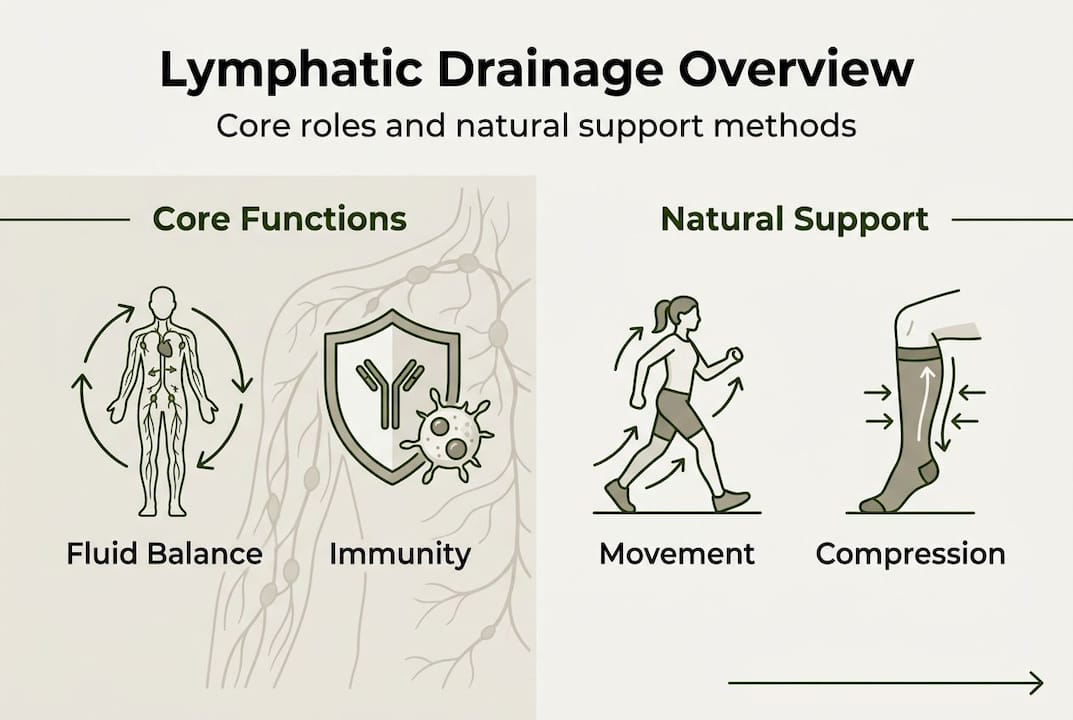
The system also plays a central role in immune defence. Lymph nodes trap bacteria, viruses, and abnormal cells, allowing white blood cells to destroy them. This is why your nodes swell when you are fighting an infection. They are doing their job.
Beyond fluid balance and immunity, the lymphatic system absorbs dietary fats from the gut. Specialised vessels called lacteals pick up fat molecules that are too large for blood capillaries, transporting them into circulation via the thoracic duct.
Key functions of the lymphatic system at a glance:
- Fluid collection and return to the bloodstream
- Immune surveillance and filtration
- Fat absorption from the digestive tract
- Removal of cellular waste and toxins
| Function | Mechanism | Outcome |
|---|---|---|
| Fluid balance | Collects interstitial fluid | Reduces tissue swelling |
| Immune defence | Filters lymph through nodes | Destroys pathogens |
| Fat transport | Lacteals absorb dietary fats | Delivers nutrients to blood |
| Waste removal | Carries cellular debris | Supports detox |
With over 200,000 people in the UK affected by lymphoedema, understanding this system is not a niche concern. It is a widespread health issue that deserves clear, accessible information. For a broader look at what can affect your lymph nodes, see this guide on natural lymph node causes and explore lymphatic support remedies that have evidence behind them.
Understanding lymphatic disorders and swelling
When the lymphatic system cannot keep up with fluid demand, lymphoedema develops. This is not a single condition. It has two distinct forms, and knowing the difference matters.
Primary lymphoedema is genetic and relatively rare. It occurs when lymphatic vessels are absent, malformed, or underdeveloped from birth. Symptoms may appear in childhood, adolescence, or early adulthood.
Secondary lymphoedema is far more common in the UK. It develops as a result of damage to the lymphatic system from an outside cause. Common causes include cancer treatment (particularly surgery or radiotherapy), infection, obesity, and injury. The majority of UK cases fall into this category.
“Secondary lymphoedema is the most prevalent form in the UK, most often arising after cancer treatment or as a complication of obesity.”
Left unmanaged, lymphoedema can lead to serious complications:
- Cellulitis: Bacterial skin infections that spread rapidly in swollen tissue
- Fibrosis: Hardening of the skin and underlying tissue over time
- Reduced mobility: Persistent swelling limits movement and quality of life
- Psychological impact: Chronic visible swelling affects confidence and mental wellbeing
It is also important to distinguish lymphoedema from venous oedema. Venous swelling is caused by poor circulation in the veins, not lymphatic failure. Both can cause leg swelling, but the treatment approach differs significantly. A GP or specialist can confirm which is present through clinical assessment.
| Feature | Lymphoedema | Venous oedema |
|---|---|---|
| Cause | Lymphatic failure | Venous insufficiency |
| Skin changes | Thickening, fibrosis | Discolouration, ulcers |
| Pitting | Non-pitting in later stages | Usually pitting |
| Primary treatment | Compression, MLD, exercise | Compression, elevation |
For practical guidance on reducing swelling through natural swelling reduction methods, or if you want gentle swelling relief strategies for daily use, both resources offer useful starting points.
Manual lymphatic drainage therapy: Evidence and misconceptions
Manual lymphatic drainage (MLD) is a specialised massage technique designed to stimulate lymph flow. It uses very light, rhythmic strokes applied in specific directions to encourage fluid movement through the lymphatic vessels. It is not a standard deep-tissue massage.
Here is what the evidence actually shows. MLD provides a modest additional benefit of approximately 7% swelling reduction when used alongside compression therapy for mild to moderate lymphoedema. It is not recommended as a standalone treatment. The NHS and NICE guidelines do not list it as a first-line intervention.
There is also an important distinction between therapeutic and cosmetic MLD. Therapeutic MLD is performed by trained professionals for clinical conditions. Cosmetic MLD, often marketed in spas and wellness centres, is a lighter version with no clinical evidence behind it for treating lymphoedema. They are not interchangeable.
How to seek MLD safely in the UK:
- Get a GP referral or consult an NHS lymphoedema specialist first
- Look for a therapist registered with the Lymphoedema Support Network or British Lymphology Society
- Confirm the therapist is trained in Vodder, Földi, or Casley-Smith MLD techniques
- Ensure MLD is part of a broader treatment plan that includes compression
- Avoid unqualified practitioners offering cosmetic lymphatic massage as a medical treatment
Pro Tip: If you are considering MLD, ask your therapist specifically whether they practise therapeutic or cosmetic techniques. The difference in training and outcome is significant.
For more detail on what massage can and cannot do for the lymphatic system, read about lymphatic massage benefits and follow a practical herbal lymph massage guide for home use.
Natural remedies, lifestyle changes, and self-care
The most effective approach to lymphatic health is not a single remedy. It is a consistent set of habits, and the NHS is clear on this. Exercise, diet, and compression are the primary management tools for lymphoedema in the UK.
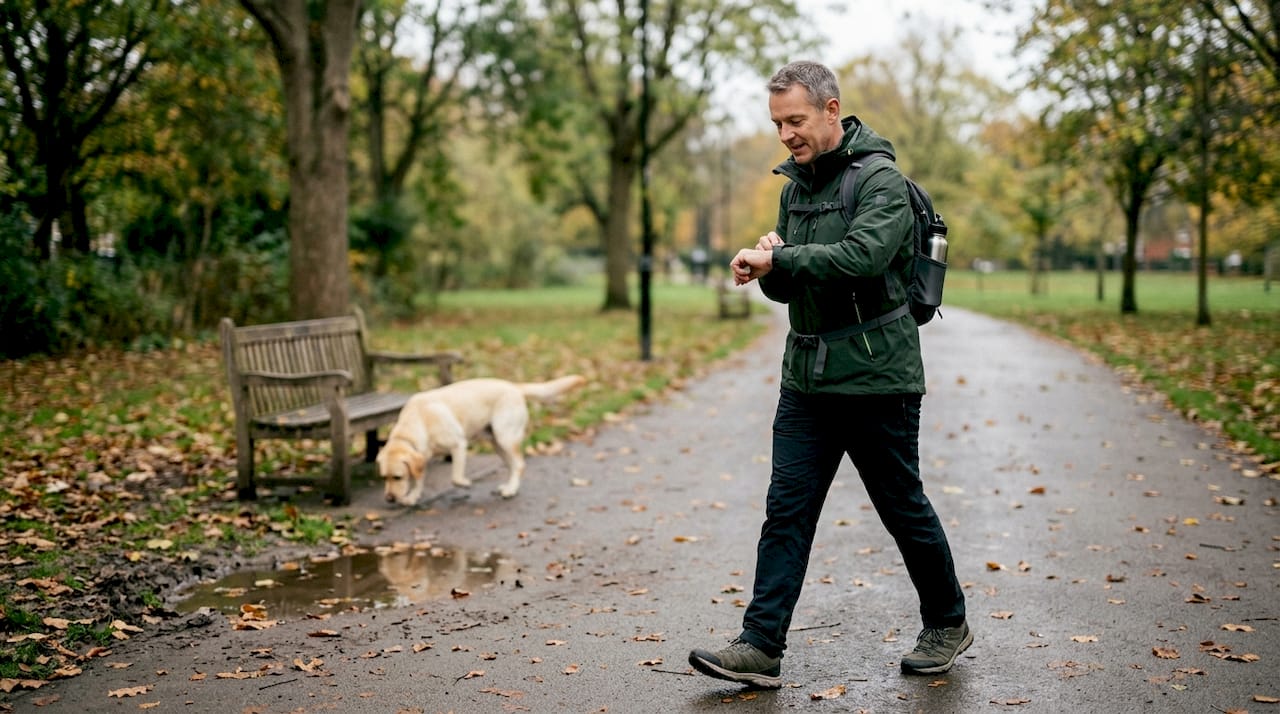
Movement is one of the most powerful tools available. The lymphatic system has no pump of its own. It relies on muscle contractions to push fluid through vessels. Walking, swimming, yoga, and gentle resistance exercise all activate this muscle pump effect. Even 20 to 30 minutes of daily walking makes a measurable difference.
Diet and hydration support the system by reducing inflammation and maintaining healthy fluid levels. A diet low in processed foods and high in vegetables, lean protein, and anti-inflammatory foods helps reduce the burden on lymphatic vessels. Staying well hydrated keeps lymph fluid flowing efficiently.
Compression garments are the most evidence-backed non-surgical intervention for lymphoedema. Worn consistently, they prevent fluid from pooling in affected limbs and reduce the risk of fibrosis. They should be fitted by a trained professional.
Skin care is often overlooked but critical. Damaged or broken skin in a swollen limb is a direct entry point for bacteria, leading to cellulitis. Daily moisturising, careful wound management, and sun protection all reduce this risk.
Herbal options have a long tradition of use for swelling and inflammation. While clinical evidence varies, many people incorporate herbal oils, teas, and topical preparations alongside their primary care. Combining walking, skin care, and herbal options as part of a broader wellness routine is a practical approach.
Pro Tip: Elevating swollen limbs above heart level for 20 minutes after exercise helps fluid drain more effectively through gravity alone.
For practical next steps, explore herbal swelling remedies, learn how to boost lymphatic flow naturally, discover the best oils for lymphatic relief, and read about herbal oils for inflammation.
A fresh perspective: What most people miss about lymphatic drainage
There is a tendency in wellness spaces to reach for the newest herbal product or trending treatment before addressing the basics. This is where most people go wrong with lymphatic health.
The evidence is not ambiguous. NHS and BLS self-care guidance consistently points to movement, compression, and skin care as the foundation. These are not exciting. They are not marketable. But they work. Herbal remedies and topical oils can be useful additions, but they are additions, not replacements.
Another common mistake is confusing cosmetic lymphatic massage with clinical treatment. A spa session may feel relaxing, but it will not address established lymphoedema. Knowing that distinction protects you from wasted time and money.
The most sustainable approach combines UK-standard self-care with professional guidance and, where appropriate, complementary herbal support. Ignoring skin care is a particular risk. Cellulitis in a lymphoedema limb can be serious and fast-moving. Daily moisturising is not optional. It is part of the treatment.
Start with the fundamentals. Build from there.
Explore gentle wellness options with Gutted
If you are looking to support your lymphatic health with natural, carefully made products, Gutted offers a range of herbal wellness options crafted for exactly this purpose.
Our Organic Poke Root Oil infused in Castor Oil is handcrafted in small batches using traditional slow-infusion methods, designed to support lymphatic drainage and ease areas of discomfort. Alongside it, we offer Soursop Leaves, Apricot Kernels, and Essiac tea blends for internal balance and detox support. Explore our gentle wellness solutions and read our natural swelling reduction guide to find the approach that fits your needs.
Frequently asked questions
How does lymphatic drainage reduce fluid retention?
By moving excess fluid from tissues back into the bloodstream, lymphatic drainage restores fluid balance and reduces visible swelling in affected areas.
Is manual lymphatic drainage recommended by the NHS?
The NHS recommends compression and exercise as primary management; MLD alongside compression is considered for mild to moderate cases but only under professional guidance, not as a standalone treatment.
What lifestyle habits help lymphatic health?
Regular exercise, a balanced diet, consistent hydration, and daily skin care are the NHS core recommendations for lymphatic health, with herbal remedies offering potential complementary support.
What are early signs of lymphatic disorders?
Persistent swelling, a feeling of heaviness or tightness in a limb, and frequent skin infections are among the earliest indicators that the lymphatic system may not be functioning properly.