

Natural wellness: herbal remedies for swelling, 200,000+ UK
TL;DR:
- Natural wellness relies on traditional methods but lacks consistent scientific evidence and safety regulation.
- Herbs like turmeric, ginger, and boswellia show promise for inflammation but may interact with medications.
- Always check for the THR mark, consult healthcare providers, and use herbal remedies as supplements, not replacements.
Natural remedies are not automatically safe, and plant-based does not mean proven. These are two assumptions that quietly shape how many people in the UK approach herbal wellness, often leading to poor decisions or missed opportunities. The tradition of using plants to manage swelling, inflammation, and lymphatic congestion is long and genuinely rich. But tradition is not the same as evidence, and enthusiasm is not the same as safety. This article covers what natural wellness actually means, which herbs show the most promise for inflammation and lymphatic health, and how to use them without putting yourself at risk.
Table of Contents
- What does natural wellness mean?
- Understanding herbal anti-inflammatories
- Natural wellness for lymphatic health and swelling
- Safety, evidence and best practices in natural wellness
- Why cautious optimism should guide your natural wellness journey
- Explore trusted support for your natural wellness choices
- Frequently asked questions
Key Takeaways
| Point | Details |
|---|---|
| Natural is not always safe | Herbal remedies can have risks and should be chosen carefully, ideally with UK THR regulation. |
| Herbal anti-inflammatories explained | Turmeric, ginger, and boswellia have scientific backing for inflammation but results vary by person. |
| NHS prioritises proven therapies | Compression, exercise, and massage lead care for swelling, with herbal remedies as adjuncts at best. |
| Evidence is still emerging | While promising, herbal solutions for lymphatic issues need more robust, large-scale studies before mainstream use. |
| Communication is key | Share herbal usage with your healthcare provider to prevent dangerous interactions or side effects. |
What does natural wellness mean?
Natural wellness is, at its core, a philosophy. It prioritises plant-based, lifestyle-centred, and holistic strategies over synthetic drugs or invasive procedures. It draws on centuries of traditional medicine from cultures across the world, including Ayurveda, Traditional Chinese Medicine, and European herbalism. In the UK, interest in these approaches has grown steadily over the past decade, driven by a desire for greater autonomy over personal health and frustration with the limitations of conventional care.
Conventional medicine, by contrast, relies on standardised evidence, regulatory approval, and reproducible clinical outcomes. It is not inherently superior in every context, but it does operate within a framework designed to protect patients from harm. Natural wellness does not always have that framework, which is where the risks begin.
Being natural does not mean safe. Evidence for many herbal products is limited and based primarily on tradition rather than clinical trial data.
The NHS is clear on this point. Herbal medicines can interact with prescription drugs, cause side effects, and carry limited clinical evidence. Not all products sold in the UK are regulated, particularly those imported from outside the European Economic Area. For UK consumers, the most important safety marker is the THR (Traditional Herbal Registration) mark. Products carrying this mark have been assessed for quality and safety, though not necessarily for efficacy.
Here is a quick summary of the key benefits and limitations of natural wellness:
- Benefits: Fewer synthetic chemicals, long cultural history, often lower cost, supports holistic lifestyle changes, may complement conventional care
- Limitations: Variable quality and regulation, limited clinical evidence for many products, risk of drug interactions, not appropriate for all conditions or individuals
- Key risk: Assuming that natural means harmless, which can delay appropriate medical treatment
- Practical step: Always check for the THR mark when buying herbal products in the UK
Natural wellness works best when it is approached as a complement to, not a replacement for, evidence-based care. That distinction matters enormously.
Understanding herbal anti-inflammatories
Inflammation is the body’s first response to injury, infection, or irritation. Short-term inflammation is useful. Chronic inflammation is not. It contributes to conditions ranging from joint pain and swelling to more serious systemic disease. This is where herbal anti-inflammatories have attracted genuine scientific interest.
Three herbs consistently appear in the research: turmeric, ginger, and boswellia. Each works through different biochemical pathways. Turmeric, ginger, and boswellia inhibit key enzymes and signalling molecules involved in the inflammatory process, including COX and LOX enzymes, as well as the NF-kB pathway, which regulates the body’s inflammatory gene expression. These are the same pathways targeted by many synthetic anti-inflammatory drugs.
| Herb | Primary mechanism | Evidence level | Typical use |
|---|---|---|---|
| Turmeric (curcumin) | NF-kB and COX inhibition | Moderate clinical support | Joint pain, gut inflammation |
| Ginger | COX and LOX inhibition | Moderate, some RCT data | Muscle soreness, nausea, swelling |
| Boswellia | LOX inhibition, leukotriene reduction | Good for osteoarthritis | Joint swelling, inflammatory bowel |
The evidence is not uniform. Some studies show clear benefit; others show modest or inconsistent results. Bioavailability is a recurring problem with curcumin in particular, as the body absorbs it poorly without additional compounds like piperine.
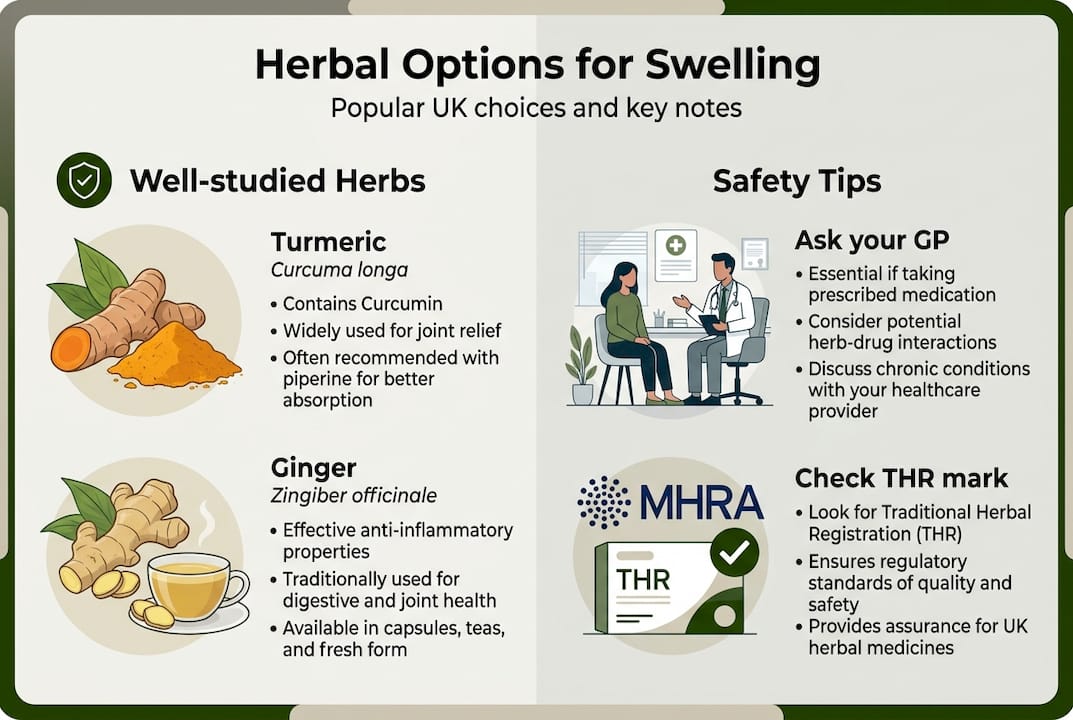
Side effects are real. Turmeric at high doses can thin the blood and irritate the digestive tract. Ginger interacts with anticoagulants. Boswellia is generally well tolerated but can cause gastrointestinal discomfort. These are not rare edge cases. They are documented interactions that matter if you take prescription medicines.
Pro Tip: If you are on blood thinners, anti-platelet drugs, or anti-inflammatory prescriptions, speak to your GP before adding any herbal anti-inflammatory to your routine. The interaction risk is real and not always obvious.
The appeal of these herbs is understandable. They carry fewer systemic side effects than long-term NSAID use, they are widely available, and they have centuries of traditional use behind them. But that tradition should inform your choices, not replace your judgement.
Natural wellness for lymphatic health and swelling
The lymphatic system is not as well understood as the cardiovascular system, but it plays a critical role in fluid balance, immune function, and waste removal. When it becomes congested or damaged, fluid builds up in tissues, causing swelling known as lymphoedema. This condition affects over 200,000 people in the UK and has no cure.
The NHS approach to lymphoedema management is structured and evidence-based. It centres on four pillars:
- Compression therapy: Specialist garments or bandaging to reduce fluid accumulation
- Exercise: Specific movements to stimulate lymphatic flow and reduce swelling
- Manual lymphatic drainage (MLD): A specialist massage technique to encourage fluid movement
- Skin care: Preventing infection and maintaining skin integrity in affected areas
Herbal approaches to lymphatic health take a different route. Traditionally used plants include cleavers, calendula, astragalus, and paeonia. These are used in herbal practice to support lymphatic circulation and reduce congestion. However, evidence for herbals in lymphatic drainage remains limited. Some pilot studies, including work on astragalus and paeonia combinations, show symptom improvement, but the data is insufficient to recommend these as primary treatments.
| Approach | Evidence base | Recommended by NHS | Typical role |
|---|---|---|---|
| Compression therapy | Strong clinical evidence | Yes | Primary treatment |
| MLD massage | Good clinical support | Yes | Primary treatment |
| Exercise | Strong evidence | Yes | Primary treatment |
| Cleavers, calendula | Traditional use only | No | Complementary, unproven |
| Astragalus and paeonia | Pilot studies, limited | No | Experimental, not routine |
This does not mean herbal approaches have no place. It means they should not replace established care. If you are managing lymphatic swelling, NHS-recommended methods come first. Herbal support, if chosen carefully, may sit alongside them.
Safety, evidence and best practices in natural wellness
Making good decisions about herbal wellness comes down to three things: knowing the risks, choosing quality products, and communicating openly with your healthcare provider.
The risks are not trivial. Herbal medicines can interact with a wide range of prescription drugs. St John’s Wort, for example, reduces the effectiveness of contraceptives and anticoagulants. Liquorice root can raise blood pressure. Herbal products can cause side effects that are just as real as those from synthetic drugs, and unregulated imports may contain contaminants, incorrect doses, or undisclosed ingredients.
The THR mark is your most reliable guide in the UK. It does not guarantee effectiveness, but it confirms that a product has met quality and safety standards. Avoid products sold without clear labelling, especially those imported from outside regulated markets.
Here is a practical guide to using herbal wellness safely:
Do:
- Check for the THR mark on all herbal products
- Inform your GP or pharmacist of any herbal products you use
- Start with low doses and monitor your response
- Use herbals as a complement to, not a replacement for, prescribed treatments
- Research the specific herb, not just the general category
Do not:
- Assume a product is safe because it is labelled natural or organic
- Stop prescribed medication to try a herbal alternative without medical advice
- Buy unbranded or unregulated products from unknown sources
- Use herbal remedies during pregnancy or breastfeeding without professional guidance
- Ignore side effects or dismiss them as a detox reaction
Pro Tip: Keep a simple list of every herbal product you use, including the dose and frequency. Share it at every medical appointment. Many interactions go undetected simply because patients do not mention herbal use.
Certain groups face higher risk: people on anticoagulants, immunosuppressants, or chemotherapy; those with liver or kidney conditions; pregnant or breastfeeding women; and children. For these groups, unsupervised herbal use is not advisable.
Why cautious optimism should guide your natural wellness journey
There is a tendency in natural wellness communities to treat scepticism as the enemy. It is not. Scepticism, applied honestly, is what separates informed use from wishful thinking.
The herbs discussed in this article have genuine value. Turmeric, ginger, and boswellia are not marketing inventions. The tradition of using cleavers and calendula for lymphatic support is not baseless. But value and proof are different things, and the gap between them matters when your health is at stake.
What we have seen, time and again, is that the best outcomes come from people who hold both things at once: respect for plant-based tradition and willingness to engage with medical evidence. They do not abandon their GP. They bring their herbal choices into the conversation. They ask questions. They check for the THR mark. They do not stop their blood pressure medication because a forum post told them a herb would fix it.
Natural wellness is not a rejection of medicine. It is a broader approach to health that, when used thoughtfully, can genuinely support your body. The key word is thoughtfully.
Explore trusted support for your natural wellness choices
If this article has raised questions about where to start, or how to make better choices with herbal wellness, you are not alone. Many people in the UK are navigating the same territory, trying to find approaches that are both natural and genuinely safe.
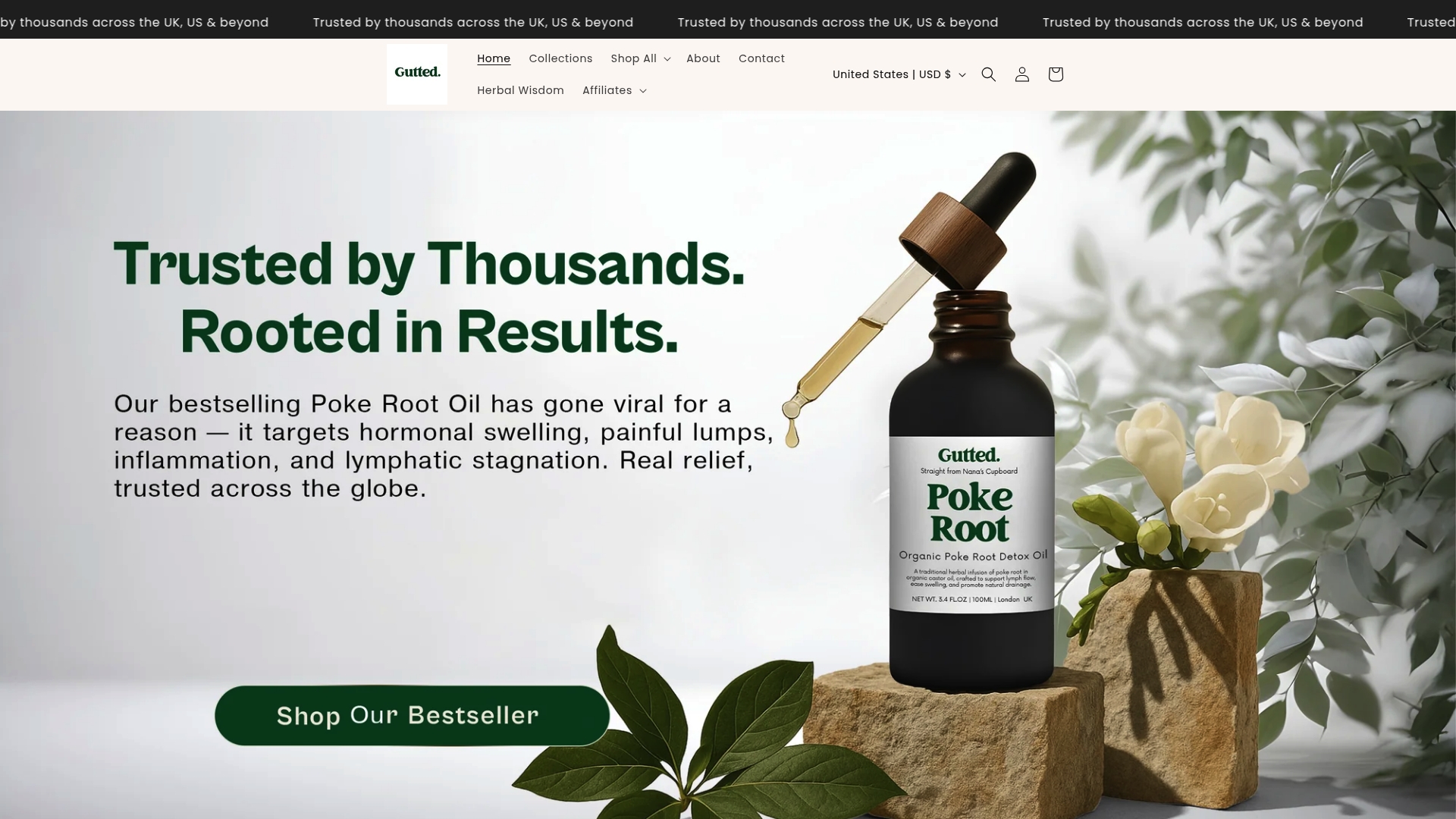
At getgutted.co, we offer natural wellness resources designed to support informed decisions about herbal health. Our products are handcrafted in small batches using traditional slow-infusion methods, and our approach is grounded in the same principle this article has outlined: natural support, used wisely, alongside evidence-based care. Whether you are exploring lymphatic health, managing inflammation, or simply looking for cleaner alternatives, we are here to help you take the next step with confidence.
Frequently asked questions
Is natural wellness always safe?
No. Herbal remedies can interact with medicines or cause side effects, and not all products sold in the UK are regulated. Natural does not mean risk-free.
Do herbal remedies help with lymphatic swelling?
Evidence is limited. NHS prioritises compression, exercise, and massage as primary treatments for lymphatic swelling, with little clinical evidence supporting herbals as a substitute.
Which herbals are most promising for inflammation?
Turmeric, ginger, and boswellia are the most studied for anti-inflammatory properties, though evidence is sometimes mixed and individual responses vary.
How can I choose safe herbal products in the UK?
Look for the THR (Traditional Herbal Registration) mark, avoid unregulated imports, and consult your GP if you are taking any prescription medicines before starting a herbal product.