

What is topical herbal therapy: a clear guide
Topical herbal therapy is defined as the direct application of plant-based preparations to the skin or mucous membranes to deliver localised relief from pain, inflammation, and tissue damage without entering the bloodstream. Unlike oral herbal medicine, which passes through the digestive system and liver before reaching target tissues, topical application works at the site of need. This distinction matters because it means faster local action and a lower risk of systemic side effects. The practice draws on centuries of traditional knowledge, from Ayurvedic oil treatments to European salve-making, and is now supported by growing scientific evidence around TRP channel modulation and inflammatory pathway inhibition. Getgutted builds its botanical product range on exactly these principles.
What is topical herbal therapy and how does it work biologically?
Topical herbal therapy works by delivering bioactive plant compounds through the skin to affect local nerves, blood vessels, and immune cells. The body does not need to digest or metabolise these compounds first. That directness is what makes the approach both fast-acting and tissue-specific.
The most studied mechanism involves transient receptor potential (TRP) channels, which are sensory proteins found in nerve endings beneath the skin. Capsaicin, the active compound in chilli peppers, binds to TRPV1 receptors and initially triggers a burning sensation. With repeated application, it causes nociceptor desensitisation lasting days to weeks, effectively reducing pain signals in that area. Menthol activates TRPM8 receptors to produce a cooling effect that overrides pain perception through a process called counter-irritancy.
Anti-inflammatory action follows a separate pathway. Compounds in arnica and comfrey inhibit COX-2 enzymes and suppress NF-kB signalling, two of the primary molecular drivers of tissue inflammation. This is the same pathway targeted by many pharmaceutical anti-inflammatories, but delivered locally rather than systemically. The result is reduced swelling, redness, and discomfort at the application site without the gastrointestinal risks associated with oral non-steroidal anti-inflammatory drugs.
Topical therapy also extends beyond the skin to mucous membranes in the respiratory and digestive tracts, where herbs can act as demulcents, antimicrobials, or vulneraries. This broader definition means steam inhalations with eucalyptus or thyme count as topical herbal therapy, not just creams and salves.
Pro Tip: Apply topical herbal preparations immediately after a warm shower. Open pores and increased local circulation improve absorption significantly.
You can read more about the science behind herbal solutions on the Getgutted blog if you want a deeper look at the clinical evidence.
What types of topical herbal preparations are there?
Topical herbal preparations fall into several distinct forms, each with different textures, absorption rates, and practical uses. Choosing the right form matters as much as choosing the right herb.
| Preparation | Characteristics | Best used for |
|---|---|---|
| Infused oil | Herb steeped in carrier oil; liquid consistency | Massage, daily skin nourishment |
| Salve | Infused oil set with beeswax; semi-solid | Targeted spot treatment, wound care |
| Poultice | Fresh or powdered herb applied directly | Acute bruising, drawing out inflammation |
| Liniment | Alcohol or vinegar base; fast-absorbing | Muscle pain, sports recovery |
| Herbal compress | Herbs wrapped in cloth, applied with heat | Deep tissue relief, bodywork sessions |
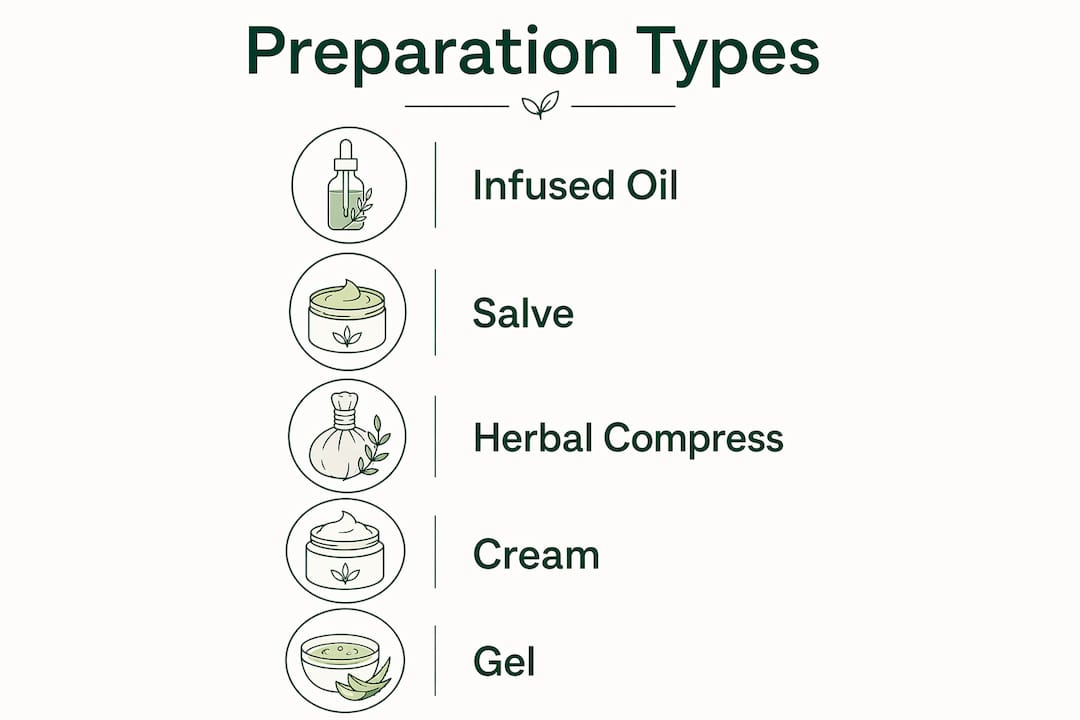
Salves are the most practical form for home use. They combine an infused oil with beeswax to create a semi-solid consistency that stays in place on the skin and releases active compounds slowly. Poultices are more immediate. A simple comfrey poultice, made by mashing fresh leaves and applying them to a bruise, delivers allantoin directly to damaged tissue within minutes.
The Thai herbal compress, known as Luk Pra Kob, represents one of the most sophisticated traditional forms. It combines heat, aroma, and rhythmic pressure applied along energy lines of the body. The heat causes thermal dilation of blood vessels, which draws herbal compounds deeper into tissue. The aromatic steam simultaneously engages the olfactory system, supporting nervous system regulation alongside the chemical effects.
Pro Tip: When making a salve at home, use a ratio of roughly 28g of beeswax per 240ml of infused oil for a firm but spreadable consistency. Adjust beeswax quantity for warmer or cooler climates.
How to safely use topical herbs in bodywork sessions and self-care
Safe application follows a clear protocol regardless of whether you are working on yourself or with a practitioner. Clean, dry skin is the starting point. Residue from soaps, lotions, or other products can block absorption and alter how the herb interacts with the skin.
Apply preparations using gentle circular motions to encourage local circulation without causing friction burns. For heated preparations such as herbal compresses, always test the temperature on the inner forearm before applying to a client or to sensitive areas. A compress that feels comfortable on the forearm is generally safe for broader application.
When you use topical herbs in bodywork sessions, the sequence of application matters. Follow these steps for best results:
- Assess the area for contraindications: broken skin, acute inflammation, or known allergies to the herb family.
- Apply a thin layer of infused oil or liniment and allow 2–3 minutes for initial absorption before beginning massage strokes.
- Use effleurage strokes to distribute the preparation evenly and warm the tissue.
- Introduce deeper pressure only after the tissue has softened and the herbal compounds have had time to act.
- For heated compresses, keep the compress in constant motion. Press, lift, and move continuously to prevent burns or irritation.
- Finish with light strokes to support lymphatic drainage and close the session.
Manual osteopaths take this further by using carriers like DMSO to drive botanical compounds into deeper structures such as ligaments and nerves. This approach is reserved for trained practitioners because DMSO also carries contaminants through the skin if the preparation is not pharmaceutical grade.
Pro Tip: For self-care, wrap a warm damp towel over a freshly applied herbal salve for 10 minutes. The gentle heat mimics the thermal dilation effect of a professional compress without specialist equipment.
What plants are used in herbal therapy and what do they do?
The herbs most commonly used in topical therapy each have a distinct mechanism and tissue affinity. Understanding these profiles helps you select the right plant for the right condition.
- Arnica (Arnica montana): Reduces bruising and post-injury swelling by inhibiting COX-2 and NF-kB pathways. Best applied to closed injuries. Never use on broken skin.
- Calendula (Calendula officinalis): Promotes wound healing through antimicrobial and vulnerary action. Suited to minor cuts, rashes, and inflamed skin.
- Comfrey (Symphytum officinale): Contains allantoin, which accelerates cell proliferation and connective tissue repair. Arnica, comfrey, and St. John’s Wort are the core trio used by manual osteopaths for structural dysfunction.
- St. John’s Wort (Hypericum perforatum): Calms nerve pain and reduces inflammation in nerve-involved conditions such as sciatica or neuralgia.
- Capsaicin (Capsicum annuum): Depletes substance P from nerve endings over repeated use, producing lasting pain relief in conditions like osteoarthritis and neuropathy.
- Menthol (Mentha spp.): Activates cooling receptors to override pain signals. Works within minutes and pairs well with deeper-acting herbs in multi-herb liniments.
- Camphor (Cinnamomum camphora): Improves local circulation and acts as a mild analgesic. Often combined with menthol for a synergistic cooling and warming effect.
Multi-herb formulations outperform single-herb preparations in most conditions because they target several mechanisms at once. A liniment combining capsaicin, menthol, and St. John’s Wort addresses counter-irritancy, cooling, and nerve inflammation simultaneously. Getgutted’s approach to herbs for inflammation follows this multi-mechanism logic.
What are the limitations and safety considerations of topical herbal therapy?
Topical herbal therapy is not without risk, and understanding its limits is part of using it responsibly. The evidence base varies considerably across herbs. Capsaicin and arnica have strong clinical trial support. Others, such as camphor and comfrey, have a long traditional record but fewer controlled human studies.
Key safety considerations include:
- Patch testing: Always apply a small amount to the inner wrist and wait 24 hours before full application. Contact dermatitis from plants in the Asteraceae family (arnica, calendula, chamomile) is more common than most people expect.
- Heat contraindications: Avoid heated preparations over acute inflammation, open wounds, varicose veins, or areas with impaired sensation.
- Comfrey caution: Comfrey contains pyrrolizidine alkaloids that can be toxic if absorbed in large amounts over long periods. Limit use to short courses and avoid broken skin.
- Medication interactions: Topical St. John’s Wort may interact with photosensitising medications. Menthol preparations can affect how other topical drugs are absorbed through the skin.
- Pregnancy: Many topical herbs are contraindicated during pregnancy. Seek professional guidance before use.
Topical herbal therapy complements medical treatment. It does not replace diagnosis or prescribed care for serious conditions. For chronic or undiagnosed pain, always consult a qualified practitioner before beginning any herbal protocol. The traditional herbal remedies explored by Getgutted are positioned as supportive wellness tools, not medical treatments.
Key takeaways
Topical herbal therapy delivers plant compounds directly to affected tissue, bypassing systemic metabolism to provide faster, more targeted relief than oral alternatives.
| Point | Details |
|---|---|
| Direct tissue action | Topical herbs work at the application site, avoiding the digestive system and liver metabolism. |
| Mechanism variety | Capsaicin, menthol, and arnica each act through distinct pathways for pain and inflammation relief. |
| Form matters | Salves, oils, compresses, and poultices suit different conditions and depths of tissue. |
| Safety first | Patch test every new preparation and avoid heat applications over acute inflammation or broken skin. |
| Complement, not replace | Topical herbal therapy supports recovery and wellness alongside, not instead of, medical care. |
Why I think topical herbal therapy deserves more credit than it gets
Most people assume that if something is natural, it must be gentle to the point of being ineffective. Topical herbal therapy proves that wrong. Capsaicin preparations have outperformed placebo in multiple trials for osteoarthritis pain. Arnica gel has shown comparable results to ibuprofen gel in some studies of muscle soreness. These are not minor effects.
What I find most underappreciated is the ritual dimension. The sensory engagement of herbal compress treatments is not just pleasant. It actively regulates the nervous system through olfactory and tactile pathways, which amplifies the chemical effects of the herbs themselves. When you slow down, apply something warm and aromatic, and attend to your body, you shift out of a stress response. That shift is therapeutic in its own right.
The mistake I see most often is people applying too little, too infrequently, and expecting dramatic results. Topical herbal therapy rewards consistency. A daily arnica salve applied with intention over two weeks will outperform a single heavy application every few days. Start small, observe how your body responds, and build from there.
— Mabel
Getgutted’s wellness kits for topical herbal self-care
Putting topical herbal therapy into practice is straightforward when you have the right products to hand.
Getgutted’s wellness kits bring together handcrafted botanical preparations designed for inflammation relief, lymphatic support, and daily wellness. Each kit is formulated with ingredient purity as the priority, drawing on traditional plant-based practices with clear guidance on how to use each product effectively. Whether you are new to topical herbal treatments or looking to build a more structured self-care routine, these kits offer a practical starting point grounded in ancestral herbal wisdom and modern quality standards.
FAQ
What is the difference between topical and oral herbal therapy?
Topical herbal therapy applies plant compounds directly to the skin or mucous membranes for localised action. Oral herbal therapy enters the digestive system and is metabolised before reaching target tissues, producing systemic rather than local effects.
How quickly does topical herbal therapy work?
Fast-acting compounds like menthol produce effects within minutes. Deeper-acting herbs like arnica and comfrey require consistent application over several days to show measurable results in bruising or tissue repair.
Can I use topical herbal preparations alongside prescribed medication?
Some topical herbs interact with medications or affect drug absorption through the skin. Always consult a qualified healthcare practitioner before combining topical herbal preparations with prescribed treatments.
What herbs are best for topical pain relief?
Capsaicin, menthol, arnica, and St. John’s Wort are the most evidence-supported herbs for topical pain relief, each targeting different pain mechanisms from nerve desensitisation to anti-inflammatory action.
Is topical herbal therapy safe for everyday use?
Most preparations are safe for regular use when applied correctly and patch-tested first. Comfrey and camphor require short-course use only. Avoid heated preparations over broken skin, acute inflammation, or areas with reduced sensation.