

Examples of traditional herbal remedies for inflammation and hormonal health
Traditional herbal remedies are plant-based medicinal preparations with documented cultural use and recognised pharmacological properties. The World Health Organisation acknowledges traditional medicine as a primary healthcare resource for a significant portion of the global population, and scientific research continues to validate what ancestral healers knew for centuries. From willow bark to turmeric, examples of traditional herbal remedies span every continent and address conditions from chronic inflammation to hormonal discomfort. Getgutted draws directly on this lineage of botanical knowledge, formulating products rooted in whole-plant traditions that modern research increasingly supports.
1. What are the best-known examples of traditional herbal remedies for inflammation?
Willow bark is one of the oldest anti-inflammatory remedies on record. Used for over 4,000 years for pain relief, it contains salicin, the compound that directly inspired the development of aspirin. That lineage makes willow bark one of the clearest examples of traditional knowledge informing modern pharmaceutical science.
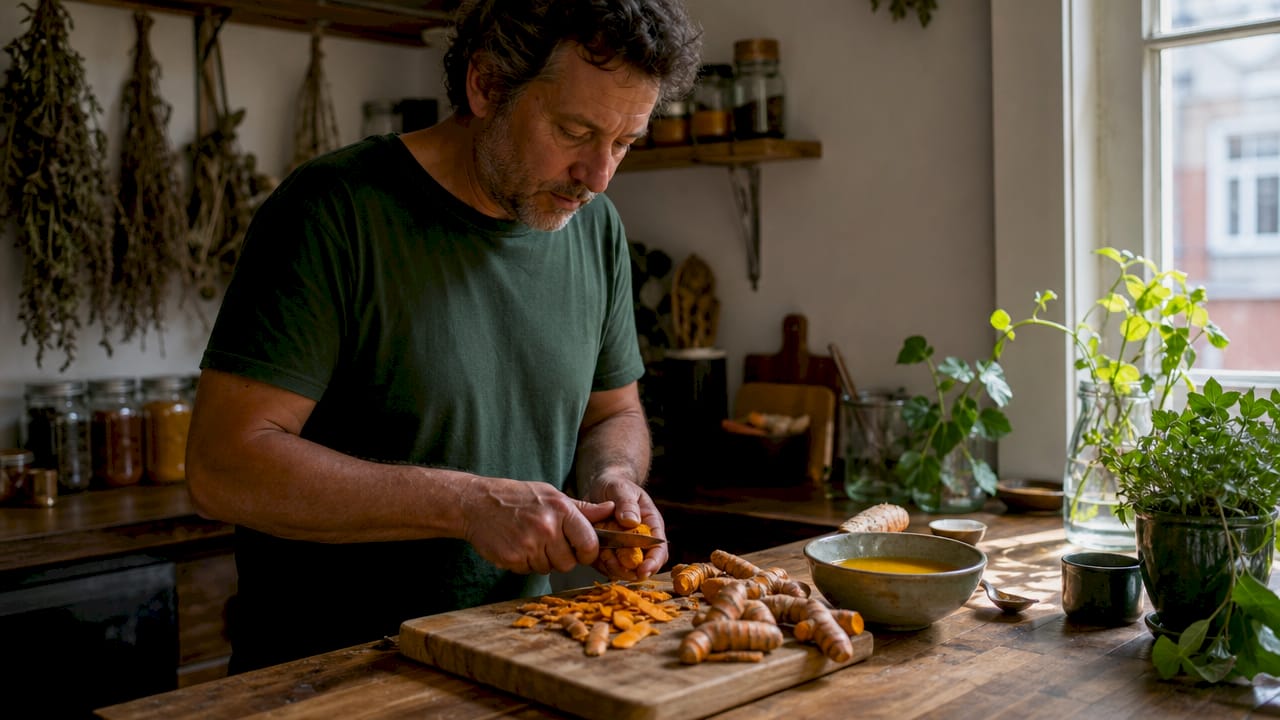
Turmeric root is another cornerstone of anti-inflammatory herbalism. Whole turmeric extracts contain over 300 compounds, and whole-plant preparations consistently outperform isolated curcumin in clinical settings. This matters because it confirms that the plant’s full chemistry, not a single extracted molecule, drives its therapeutic effect.
The Prasachandaeng remedy from Thai traditional medicine offers a compelling multi-herb example. This 12-herb formula uses a 95% ethanol extract and has demonstrated anti-inflammatory activity by inhibiting nitric oxide production. It shows how traditional healers designed complex formulas to address inflammation through multiple biological pathways simultaneously.
Elderberry extracts standardised to anthocyanins support seasonal immune health and reduce inflammatory responses. They are typically prepared as syrups or tinctures and have a long history of use across European folk medicine. For anyone exploring natural remedies for inflammation, elderberry is a practical and well-researched starting point.
| Herb | Traditional origin | Preparation | Key benefit |
|---|---|---|---|
| Willow bark | European, Chinese | Decoction, tincture | Pain and inflammation relief |
| Turmeric | Ayurvedic, South Asian | Powder, infusion | Multi-compound anti-inflammatory |
| Prasachandaeng | Thai traditional medicine | Ethanol extract | Nitric oxide inhibition |
| Elderberry | European folk medicine | Syrup, tincture | Immune and inflammatory support |
Pro Tip: When buying turmeric supplements, choose whole-root extracts rather than isolated curcumin products. The full spectrum of compounds produces a stronger and more balanced effect.
2. Which traditional herbal remedies ease hormonal discomfort?
Black cohosh is the most studied traditional herb for menopausal symptoms. Native American healers used it for centuries to address menstrual irregularity and menopausal discomfort, and modern research has identified its triterpene glycosides as the likely active constituents. It is most commonly taken as a standardised capsule or tincture.
Agnus castus, also called chasteberry, has a long history in European herbal medicine for regulating the menstrual cycle. It acts on dopamine receptors to influence prolactin levels, which in turn affects progesterone balance. Women experiencing premenstrual syndrome or irregular cycles have used it in tincture and capsule form for generations.
Evening primrose oil provides gamma-linolenic acid, a fatty acid that supports prostaglandin production and reduces hormonal inflammation. It is particularly valued for breast tenderness and premenstrual discomfort. The oil is cold-pressed from seeds and taken as a daily supplement.
Saw palmetto has a strong tradition of use in Native American medicine for urinary and hormonal health, particularly in men. It inhibits the conversion of testosterone to dihydrotestosterone, which makes it relevant to conditions driven by androgen excess. Capsules and standardised extracts are the most common preparation forms.
Key benefits and considerations for hormonal herbs:
- Black cohosh: Reduces hot flushes and menopausal discomfort; avoid during pregnancy
- Agnus castus: Supports cycle regularity and reduces premenstrual symptoms; not suitable with hormonal contraceptives
- Evening primrose: Eases breast tenderness and skin-related hormonal symptoms; take with food
- Saw palmetto: Supports prostate health and androgen balance; consult a practitioner for long-term use
Pro Tip: Always consult a qualified medical herbalist or GP before starting any herbal regimen for hormonal health. Some herbs interact with prescribed hormonal medications, including the contraceptive pill.
3. How do traditional preparation methods affect a remedy’s effectiveness?
The preparation method determines which compounds a plant releases and how well the body absorbs them. Infusions, decoctions, tinctures, and poultices each extract different therapeutic compounds from different plant parts. Choosing the wrong method for a given herb can render a preparation almost inert.
Infusions, essentially herbal teas, work best for delicate plant materials such as leaves and flowers. Boiling water releases water-soluble compounds including volatile oils and flavonoids. Chamomile, peppermint, and elderflower are classic infusion herbs.
Decoctions apply sustained heat to tougher materials such as roots, bark, and seeds. The extended boiling time breaks down cell walls and releases compounds that would survive a simple infusion. Willow bark and liquorice root are prepared this way.
Tinctures use alcohol as the solvent, which extracts both water-soluble and fat-soluble compounds simultaneously. This makes them more complete extractions than water-based methods alone. Alcohol also acts as a preservative, extending shelf life considerably.
| Preparation method | Plant material | Compounds extracted | Common examples |
|---|---|---|---|
| Infusion | Leaves, flowers | Water-soluble, volatile oils | Chamomile, peppermint |
| Decoction | Roots, bark, seeds | Resins, tannins, minerals | Willow bark, liquorice root |
| Tincture | Most plant parts | Water and fat-soluble | Echinacea, valerian |
| Poultice | Fresh or dried herb | Topical compounds | Comfrey, plantain |
Multi-herb formulas are designed to balance potency and reduce the risk of toxicity through synergy. The Prasachandaeng remedy exemplifies this principle: its 12 herbs work together so that no single constituent dominates. This design philosophy is central to what is traditional herbalism at its most sophisticated.
Pro Tip: When preparing a decoction at home, use a stainless steel or glass pan rather than aluminium. Metal can react with plant acids and alter the chemistry of the final preparation.
4. How does cultural context shape the use of traditional herbal remedies?
Traditional herbal knowledge passes down primarily through oral transmission and community healing practices rather than written texts. This means the context in which a remedy is used, including the season, the healer’s relationship with the patient, and the plant’s local ecology, is as important as the plant itself. Stripping a remedy from its cultural context often reduces its effectiveness and risks misuse.
In many African traditions, plant healers known as sangomas or inyangas select herbs based on a combination of observed symptoms and spiritual assessment. In Native American medicine, plant knowledge is held communally and shared through ceremony. Both systems treat the patient as a whole person rather than a collection of symptoms.
Ethnobotany, the study of how cultures use plants, has documented thousands of traditional remedies that remain under-researched by Western science. This gap represents both a loss and an opportunity. Researchers who work respectfully with traditional knowledge holders have identified genuinely novel compounds and treatment approaches.
Sustainable sourcing is a direct consequence of cultural stewardship. Many traditional systems prohibit overharvesting and specify when and how plants should be gathered. Readers interested in herbal wisdom and nature’s restorative power will find that authentic practice always includes respect for the plant’s ecology.
Creating a supportive environment for herbal healing also matters. Research into healing environments shows that the physical and sensory context of treatment influences outcomes. Traditional healers understood this intuitively, which is why ceremony, setting, and intention have always accompanied plant medicine.
Pro Tip: When sourcing traditional herbs, look for suppliers who name their growing region and harvesting method. Vague labelling often signals poor quality or unsustainable sourcing.
5. What role does whole-plant philosophy play in effective herbal solutions?
Traditional herbalism relies on pharmacologically active doses of whole-plant preparations, not the micro-dilutions used in homeopathy. This distinction matters enormously. Herbalism produces measurable biochemical effects because the doses are real and the compounds are present in therapeutic concentrations.
Herbal traditions often regard consistent, long-term use as necessary for full benefit. This contrasts sharply with the expectation of immediate pharmaceutical results. Herbs work with the body’s own regulatory systems, which means the effects build gradually and tend to be more sustainable over time.
The synergistic design of herbal formulas means that removing one herb from a traditional combination can alter the entire formula’s safety and efficacy profile. This is why traditional medicine examples from Thai, Ayurvedic, and Chinese systems almost always involve compound formulas rather than single herbs. The whole is genuinely greater than the sum of its parts.
For readers wanting to understand the science behind these effects, Getgutted’s resource on why herbal solutions work covers the pharmacological evidence in accessible detail. It connects ancestral practice to the mechanisms that modern research has begun to confirm.
Key takeaways
Traditional herbal remedies work through whole-plant pharmacology, culturally informed preparation methods, and consistent long-term use rather than isolated compounds or quick fixes.
| Point | Details |
|---|---|
| Whole-plant preparations outperform isolates | Turmeric’s 300+ compounds work together; isolated curcumin alone is less effective. |
| Preparation method determines efficacy | Decoctions, tinctures, and infusions each extract different therapeutic compounds. |
| Multi-herb formulas reduce toxicity | Traditional formulas like Prasachandaeng balance potency through synergy across 12 herbs. |
| Cultural context is not optional | Oral transmission and regional knowledge shape how remedies are safely and effectively used. |
| Consistency matters more than speed | Herbal medicine works with the body’s systems over time, not as an immediate intervention. |
What I have learned from years of working with traditional plant medicine
The most common mistake I see is treating traditional herbal remedies like pharmaceutical drugs: one herb, one symptom, one week of use. That approach misses the entire point. Traditional herbalism is built on the idea that the body is a system, and plants work best when they are matched to that system over time.
Quality and sourcing are where most people go wrong before they even begin. I have seen well-intentioned people buy cheap turmeric capsules with negligible curcuminoid content and conclude that herbal medicine does not work. The herb did not fail them. The product did. Preparation technique and ingredient integrity are as important as choosing the right plant.
The cultural dimension is something I feel strongly about. These remedies did not emerge in laboratories. They came from generations of observation, relationship with the land, and community knowledge. Approaching them with curiosity and respect, rather than as a shopping list of active ingredients, produces better outcomes and honours the traditions that preserved this knowledge.
My practical suggestion is to start with one well-researched herb for a specific concern, use a quality preparation consistently for at least six to eight weeks, and track your response honestly. Patience is not a weakness in herbal medicine. It is the method.
— Mabel
Getgutted wellness kits: traditional herbs, modern convenience
Getgutted brings together traditional botanical knowledge and carefully sourced ingredients in curated wellness kits designed to support inflammation relief and hormonal balance. Each kit reflects the whole-plant philosophy described throughout this article, combining herbs that work synergistically rather than in isolation.
The kits are produced in small batches with strict ingredient standards, so you get the therapeutic concentrations that traditional preparation methods are designed to deliver. If you have been reading about herbs like poke root, turmeric, or elderberry and want a practical, ready-made starting point, the Getgutted wellness range offers a grounded next step rooted in ancestral herbal practice.
FAQ
What is traditional herbalism?
Traditional herbalism is the practice of using whole-plant preparations at pharmacologically active doses to support health, distinct from homeopathy, which uses micro-dilutions. It draws on cultural knowledge systems and measurable botanical compounds to address specific health concerns.
How long do traditional herbal remedies take to work?
Most traditional herbal remedies require consistent use over six to eight weeks before their full effects become apparent. Herbal medicine works with the body’s regulatory systems gradually rather than producing immediate pharmaceutical-style results.
Are traditional herbal remedies safe to use alongside prescribed medication?
Some herbs interact with prescribed medications, particularly hormonal treatments, blood thinners, and antidepressants. Always consult a qualified medical herbalist or GP before combining herbal remedies with any prescribed medicine.
What makes a traditional herbal preparation effective?
Efficacy depends on the correct preparation method, therapeutic dosage, ingredient quality, and consistent use over time. Whole-plant extracts generally outperform isolated compounds because the full range of phytochemicals works synergistically.
How do I know if an herbal product is high quality?
Look for products that name the plant’s botanical species, growing region, and extraction method. Standardised extracts with stated active compound percentages offer greater reliability than generic herbal powders with no specification.