

Top natural remedies for swelling and inflammation
TL;DR:
- Evidence-based natural remedies like curcumin, ginger, Boswellia, and chamomile can reduce inflammation over weeks.
- Consistency and proper dosing are essential for natural remedies to be effective and safe.
- Natural approaches complement lifestyle changes and medical advice, not replace urgent or serious treatments.
Natural remedies for swelling and inflammation are everywhere online, and the sheer volume of options makes it genuinely difficult to know what is worth trying. From herbal teas to dietary overhauls, the promises are bold but the evidence varies enormously. Swelling and inflammation affect daily life in real ways: stiff joints, puffy limbs, persistent discomfort, and a body that feels sluggish and blocked. This guide cuts through the noise. You will find a structured, evidence-informed look at remedies that have real research behind them, alongside practical options you can begin incorporating today.
Table of Contents
- How to choose natural remedies for swelling and inflammation
- Turmeric (curcumin): Well-studied anti-inflammatory power
- Ginger, Boswellia, and chamomile: Proven plant powerhouses
- Natural oils and anti-inflammatory diets: Everyday strategies
- How top remedies compare: Effectiveness, speed, and suitability
- Why natural remedies only work if you trust the process
- Ready to embrace natural inflammation relief?
- Frequently asked questions
Key Takeaways
| Point | Details |
|---|---|
| Evidence matters | Choose remedies with solid research support for inflammation relief. |
| Remedies need consistency | Most natural options work gradually over several weeks when used daily. |
| Lifestyle changes add up | Dietary shifts and herbal oils offer best results when combined with long-term healthy habits. |
| Medical guidance is vital | Always check with a healthcare professional before starting new remedies, especially with medicines or serious conditions. |
How to choose natural remedies for swelling and inflammation
Not every remedy labelled “natural” is effective. Before spending money or time on a new supplement or herb, it helps to know what separates a well-evidenced option from a marketing claim.
The strongest evidence comes from randomised controlled trials (RCTs) and meta-analyses. These are studies that test whether a remedy actually works compared to doing nothing. Inconsistent evidence is common in natural health research, often due to poor study design, so prioritising remedies with multiple high-quality trials behind them is a sensible starting point.
Here is what to look for when evaluating any natural remedy:
- Mechanism: Does the ingredient have a known biological reason it might reduce inflammation?
- Evidence quality: Are there RCTs or meta-analyses, or just anecdotal reports?
- Bioavailability: Can your body actually absorb the active compound?
- Safety profile: Does it interact with any medicines you take?
- Realistic timeline: Most natural anti-inflammatories take 4 to 12 weeks to show measurable effects.
Natural remedies are not a substitute for prescribed medication, particularly for acute conditions such as infections, injuries, or serious chronic disease. They work best as part of a broader lifestyle approach. Exploring herbal remedies for swelling alongside dietary and movement changes tends to produce better outcomes than relying on a single supplement alone.
Pro Tip: If a product promises results in days or claims to cure a condition, treat that as a warning sign. Genuine natural remedies are slow, steady, and cumulative.
Turmeric (curcumin): Well-studied anti-inflammatory power
Turmeric is one of the most researched natural anti-inflammatories available. The active compound, curcumin, has been studied extensively for its effects on pain and swelling, particularly in joint conditions.

Curcumin reduces pain and inflammation in osteoarthritis, with meta-analyses showing significant improvements compared to placebo. In some trials, results were comparable to non-steroidal anti-inflammatory drugs (NSAIDs) but with fewer gastrointestinal side effects.
Curcumin works by inhibiting NF-kB and COX-2, two of the key pathways the body uses to trigger and sustain inflammation. Blocking these pathways helps reduce swelling and discomfort at a cellular level.
Key points about curcumin:
- Standard turmeric powder has poor bioavailability on its own
- Combining curcumin with piperine (black pepper extract) increases absorption by up to 2,000%
- Typical effective doses in trials range from 500mg to 1,500mg of curcumin daily
- Effects on pain and stiffness are generally seen within 4 to 12 weeks of consistent use
- Well-tolerated by most people; caution advised with blood-thinning medicines
Stat to note: Meta-analyses report pain reductions of 15 to 30% compared to placebo, placing curcumin among the most effective plant-based options for joint inflammation.
For those exploring natural curcumin remedies alongside topical approaches, combining an internal supplement with botanical oils for inflammation applied externally may offer complementary support.
Pro Tip: Buy a curcumin supplement that specifies “with piperine” or “enhanced bioavailability” on the label. Plain turmeric capsules without this are unlikely to deliver meaningful results.
Ginger, Boswellia, and chamomile: Proven plant powerhouses
Turmeric is not alone. Several other botanicals have solid clinical evidence for reducing inflammation, and each works through a slightly different mechanism.
-
Ginger. Ginger blocks both COX and LOX enzymes, two pathways involved in producing inflammatory compounds. Ginger reduces osteoarthritis pain and inflammation across multiple RCTs and systematic reviews. In some studies, its effect on pain was comparable to naproxen, a common NSAID. Fresh ginger in food, ginger tea, and standardised extracts all show benefit.
-
Boswellia serrata. Derived from the resin of the Boswellia tree, this herb targets the 5-LOX inflammatory pathway specifically. Boswellia improves pain and function in osteoarthritis and has a particularly good safety record for long-term use. It is one of the few herbs with consistent evidence across multiple well-designed trials.
-
Chamomile. Often thought of purely as a calming tea, chamomile has genuine anti-inflammatory properties. Chamomile reduces inflammation and mucositis severity in clinical settings. It is useful both topically as a compress or oil and internally as a tea for mild systemic inflammation.
Important note: These botanicals are not appropriate for acute oedema caused by injury, infection, or organ-related conditions. If you have sudden, unexplained swelling, seek GP evaluation first.
For broader context on how these plants fit into a holistic remedies approach, or to understand how herbal oils for inflammation can complement internal use, it is worth reading further before committing to a routine.
Pro Tip: Boswellia and ginger can be taken together without known interactions. Pairing them with dietary changes tends to produce better long-term results than either alone.
Natural oils and anti-inflammatory diets: Everyday strategies
Beyond specific herbs, everyday diet and certain oils play a critical role in inflammation management. These are not quick fixes. They are foundational, long-term strategies that support the body’s ability to regulate swelling and fluid balance.
Oils rich in GLA (gamma-linolenic acid), such as evening primrose oil and borage oil, have meaningful evidence behind them. GLA-rich oils probably improve RA pain according to Cochrane review data, making them a practical addition for those managing rheumatoid arthritis or chronic joint inflammation.
The Mediterranean diet is the most evidence-backed dietary pattern for inflammation. A Mediterranean-style diet is linked to lower inflammation markers and supports healthy weight, which itself reduces inflammatory load on joints and tissues.
| Food or oil | Anti-inflammatory benefit | Best used as |
|---|---|---|
| Oily fish (salmon, mackerel) | Omega-3s reduce inflammatory cytokines | 2 to 3 portions per week |
| Olive oil (extra virgin) | Oleocanthal acts similarly to ibuprofen | Daily cooking or dressing |
| Evening primrose oil | GLA reduces joint pain and stiffness | Daily supplement capsule |
| Ginger and turmeric | COX/LOX and NF-kB inhibition | Daily in food or supplement |
| Leafy greens | Antioxidants reduce oxidative inflammation | Daily in meals |
Practical steps you can start immediately:
- Swap refined seed oils for extra virgin olive oil in cooking
- Add oily fish to your meals twice a week
- Drink two to three cups of ginger or chamomile tea daily
- Consider a castor oil pack over swollen or congested areas for topical support
- Use poke root oil, infused in castor oil, as part of a gentle lymphatic massage routine to support fluid movement and reduce localised puffiness
For more on gentle methods for swelling relief or to explore which are the best oils for swelling relief, these resources offer practical next steps.
How top remedies compare: Effectiveness, speed, and suitability
With all options reviewed, here is how they compare in practice to help you decide which might suit your needs best.
| Remedy | Best suited for | Time to effect | Key safety note |
|---|---|---|---|
| Curcumin (with piperine) | Osteoarthritis, joint swelling | 4 to 12 weeks | Caution with blood thinners |
| Ginger extract | Joint pain, general inflammation | 4 to 8 weeks | Avoid high doses in pregnancy |
| Boswellia serrata | Osteoarthritis, chronic inflammation | 4 to 8 weeks | Generally well-tolerated |
| Chamomile (topical or tea) | Mild swelling, skin inflammation | 1 to 4 weeks | Avoid if allergic to ragweed |
| GLA oils (evening primrose) | Rheumatoid arthritis, RA pain | 6 to 12 weeks | Check with GP if on medication |
| Mediterranean diet | Systemic inflammation, weight-related | 8 to 16 weeks | Suitable for most adults |
| Poke root oil in castor oil | Lymphatic congestion, fluid retention | Varies by individual | External use only; avoid broken skin |
Pain reductions of 15 to 30% versus placebo are the benchmark for the best-evidenced options, with effects typically appearing within 4 to 12 weeks of consistent use.
Key safety reminders:
- Always inform your GP before adding supplements if you take prescribed medicines
- Do not use herbal remedies to replace treatment for serious or acute conditions
- Start with one remedy at a time to identify what works for your body
- Consistency matters far more than dosage; irregular use produces poor results
For practical guidance on ways to use herbal oils naturally as part of your routine, that resource covers application methods in detail.
Why natural remedies only work if you trust the process
Here is an honest perspective after reviewing the science: natural remedies are neither magic nor useless. They occupy a specific, useful middle ground that most people either overestimate or dismiss entirely.
The biggest barrier is impatience. Most people try a supplement for two weeks, notice nothing dramatic, and conclude it does not work. But the evidence is clear: meaningful effects from curcumin, Boswellia, or dietary changes require weeks of consistent, daily use. The body does not reset overnight.
The second barrier is misapplication. Using a herbal remedy for swelling caused by a serious underlying condition, without medical evaluation, is not a natural approach. It is a delayed approach. Natural remedies work best alongside professional guidance, not instead of it.
What actually works is treating these remedies as lifestyle infrastructure rather than acute interventions. Curcumin with your morning routine. Ginger tea in the evening. A castor oil pack twice a week. Poke root oil massage as part of a holistic healing with herbs practice. That is the realistic, evidence-consistent picture.
Ready to embrace natural inflammation relief?
If this guide has given you a clearer picture of where to start, there is plenty more to explore.
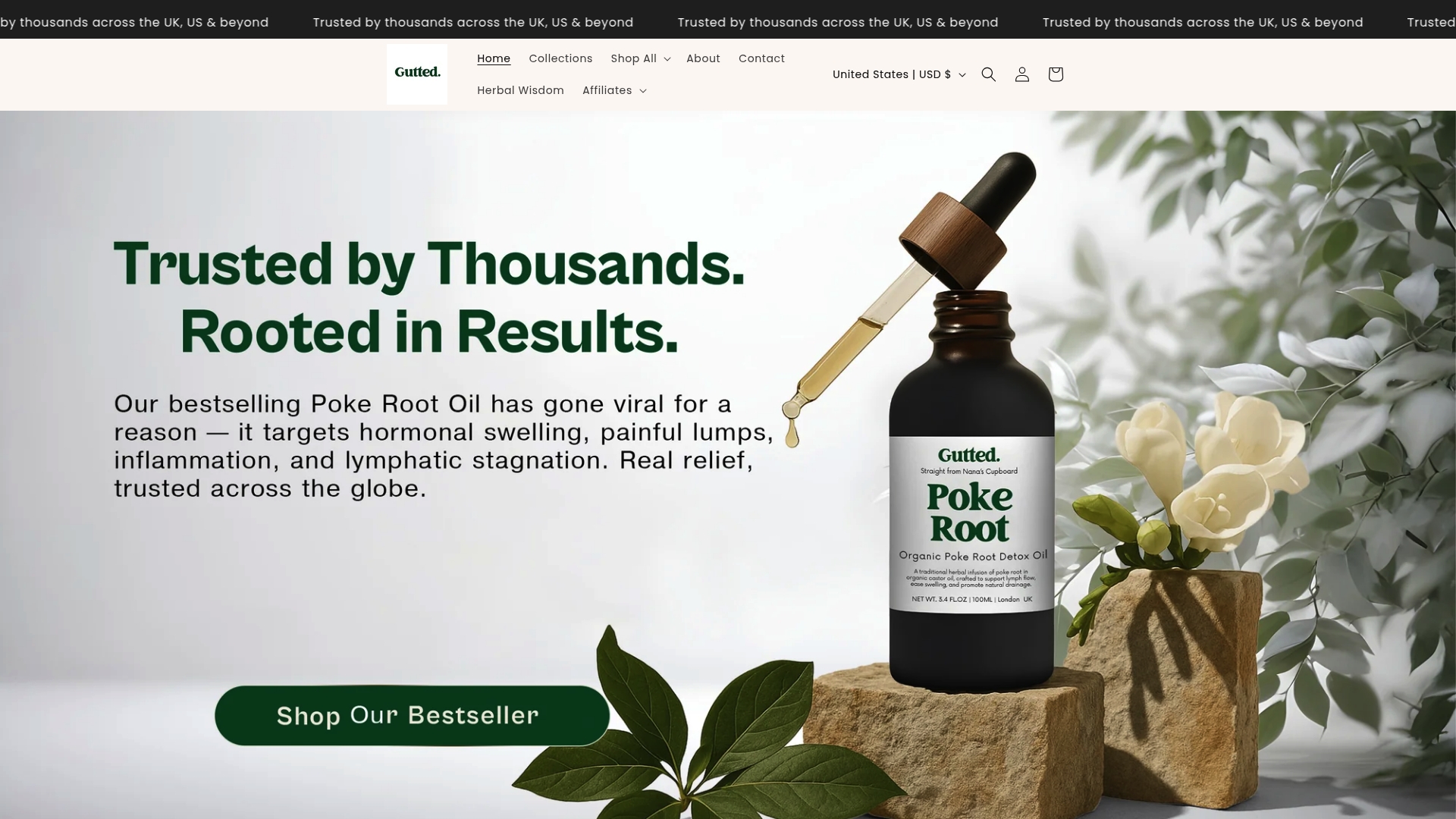
At Gutted, we have put together a range of resources and herbal products designed specifically for people who want to support their body’s natural ability to manage swelling, fluid retention, and inflammation. From our Organic Poke Root Oil infused in Castor Oil to our Essiac tea blends and Soursop Leaves, everything is selected with function and quality in mind. Browse our blog for practical guides, or explore our product range to find what fits your wellness routine. Your body responds to consistency, and we are here to support that journey.
Frequently asked questions
How long do natural anti-inflammatory remedies take to work?
Effects are typically noticeable within 4 to 12 weeks with consistent daily use. Sporadic use is unlikely to produce measurable results.
Are herbal remedies safe with prescription medicines?
Some herbal supplements interact with prescribed medicines, so always check with your GP or pharmacist before starting any new supplement.
Can natural remedies help with acute swelling like after an injury?
No. For acute swelling such as after an injury, NHS guidance recommends elevation, rest, and GP evaluation rather than herbal remedies.
What is the best diet for reducing inflammation?
A Mediterranean-style diet rich in plants, oily fish, olive oil, and spices such as turmeric and ginger is consistently linked to lower inflammation markers.