

Herb-infused oils: a complete guide for holistic healing
TL;DR:
- Herb-infused oils are gentle, fat-soluble extracts made by steeping dried herbs in carrier oils. Safety, preparation methods, and herb choice are crucial for effective use, especially for lymphatic health. Commercial products offer regulated quality, while homemade oils require careful handling and awareness of risks.
Not all herb-infused oils are created equal. Many people assume that because something is natural, it is automatically safe, effective, and ready to use. The reality is more nuanced. From preparation methods and carrier oil selection to shelf life and lymphatic applications, the differences between a well-made herbal oil and a poorly prepared one are significant. This guide covers what herb-infused oils actually are, how to make them safely, how they compare to commercial products, and how to use them for lymphatic health, swelling, and inflammation.
Table of Contents
- What are herb-infused oils and why use them?
- How to make herb-infused oils safely at home
- Herb-infused oils: home-made versus commercial products
- How to use herb-infused oils for lymphatic health and inflammation
- A fresh perspective on herbal oils for holistic wellness
- Discover natural wellness solutions with us
- Frequently asked questions
Key Takeaways
| Point | Details |
|---|---|
| Herb-infused oils basics | Steeping dried herbs in quality oil creates an infusion used for holistic health. |
| Home vs commercial | Commercial oils are often safer and more regulated, but home methods can be effective with proper care. |
| Effective applications | Topical use for massage, swelling, and inflammation is widespread, but always test for sensitivities. |
| Safety first | Botulism and spoilage risks make careful preparation and storage essential for home infusions. |
What are herb-infused oils and why use them?
Herb-infused oils are not essential oils. This distinction matters. Essential oils are concentrated volatile compounds extracted through steam distillation or cold pressing. Herb-infused oils, by contrast, are made by steeping dried herbs in a carrier like olive, almond, or jojoba oil over an extended period. The result is a gentler, fat-soluble extract that carries the plant’s beneficial compounds into the oil itself.
This is also different from culinary infused oils, which are made for flavour rather than therapeutic use and follow entirely different safety standards.
In traditional herbal medicine, infused oils have been used for centuries across cultures. Folk healers applied them topically for bruising, joint pain, skin conditions, and swelling. Today, interest has grown significantly around their role in supporting lymphatic drainage, reducing fluid retention, and easing inflammation in areas where the body feels congested or blocked.
Some of the most widely used herbs in therapeutic infused oils include:
- Calendula: Known for its skin-soothing and anti-inflammatory properties, often used for irritated or sensitive skin
- Comfrey: Traditionally applied to bruises, sprains, and areas of localised swelling
- Arnica: A popular choice for muscle soreness, bruising, and post-exercise recovery
- St John’s Wort: Used for nerve pain and inflammatory skin conditions
- Poke root: A potent lymphatic herb used in small quantities to support drainage and reduce congestion in the lymphatic system
The reason these oils work topically is that fat-soluble plant compounds can penetrate the skin barrier more effectively than water-based preparations. This makes them particularly suited to massage, compress application, and targeted topical use.
For those focused on lymphatic health specifically, the choice of herb matters enormously. Poke root, for example, is a strong lymphagogue (a substance that stimulates lymph flow) and requires careful handling and dosing. Calendula is far gentler and suits broader use. Knowing which herb serves which purpose is the starting point for using these oils effectively.
How to make herb-infused oils safely at home
Making herb-infused oils at home is achievable, but the process requires precision. Mistakes in preparation can lead to contamination, rancidity, or in rare cases, serious health risks.
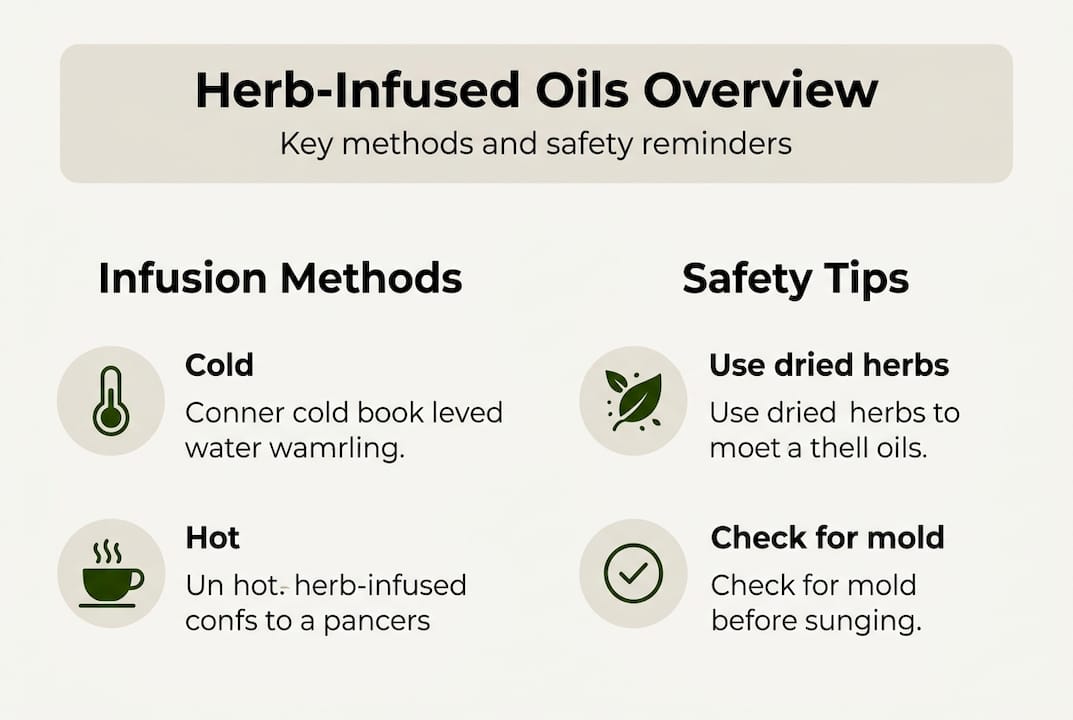
The two main methods are cold infusion and hot infusion.
Cold infusion involves placing dried herbs in a jar, covering with carrier oil, sealing, and leaving in a warm, sunny spot for 4 to 6 weeks. This method preserves delicate plant compounds but takes time.
Hot infusion uses a double boiler or slow cooker set to low heat (around 40 to 60 degrees Celsius) for several hours. This speeds up the process but requires careful temperature control to avoid degrading the herbs or the oil.
Here is a step-by-step process for a safe home infusion:
- Use only dried herbs. Fresh herbs contain moisture, which introduces the risk of bacterial growth and mould.
- Choose your carrier oil based on your intended use. Olive oil is stable and long-lasting. Jojoba is lightweight and suits sensitive skin. Castor oil is thicker and draws deeply into tissue.
- Follow a ratio of 1 part dried herbs to 4 to 5 parts oil by volume. This gives a potent but balanced infusion with a shelf life of up to 6 to 12 months when stored correctly.
- Use clean, sterilised glass jars. Avoid plastic containers.
- Store finished oil in a cool, dark place. Label with the date and herb used.
- Strain thoroughly using muslin cloth before bottling.
Pro Tip: If your oil smells rancid, looks cloudy, or shows any signs of sediment after straining, discard it. These are signs of spoilage or contamination.
Botulism risk is real, particularly with garlic or herb oils left at room temperature. While this risk is more associated with culinary infused oils, it applies to any home preparation involving organic matter in an anaerobic (low-oxygen) environment. Always refrigerate if unsure.
Avoid making infused oils at home if you are immunocompromised, elderly, pregnant, or preparing them for young children. In these cases, commercially prepared products with regulated safety standards are the safer choice.
Herb-infused oils: home-made versus commercial products
Once you understand how to make herb-infused oils, it is worth comparing that option against buying regulated commercial products. Both have merit, but the differences in safety, consistency, and legal standing are significant.
In the UK, herbal products sold with therapeutic claims must meet Traditional Herbal Registration (THR) standards set by the Medicines and Healthcare products Regulatory Agency (MHRA). THR products undergo quality and safety assessments before they can be marketed.
“Homemade herb-infused oils carry a higher risk of contamination and spoilage. UK food safety guidance recommends preferring commercially regulated products and consulting registered herbalists (NIMH) for therapeutic use.”
| Feature | Home-made | Commercial (THR) |
|---|---|---|
| Cost | Lower | Higher |
| Quality control | Variable | Regulated |
| Shelf life | 6 to 12 months | Manufacturer-tested |
| Allergen labelling | None required | Legally required |
| Botulism risk | Present | Minimised |
| Therapeutic claims | Anecdotal | Evidence-assessed |
| Traceability | Limited | Full supply chain |
For topical herbal oils used for lymphatic support or inflammation, commercial products offer greater consistency. You know what is in the bottle, at what concentration, and how it was processed.
If you prefer home-made preparations, consulting a registered herbalist through the National Institute of Medical Herbalists (NIMH) is a sensible step. They can guide herb selection, dosing, and preparation methods suited to your specific health concerns.
The anecdotal evidence for home-made oils is rich and longstanding. But anecdote is not the same as verified efficacy. Both approaches have a place, but informed use requires knowing which context suits each.
How to use herb-infused oils for lymphatic health and inflammation
With a clear view of home-made and commercial options, the practical question is how to use herb-infused oils effectively for your health goals.
The primary application method is topical use. Arnica and calendula are traditional remedies for inflammation, swelling, and gentle massage, and they work best when applied directly to the skin with slow, deliberate strokes.

For lymphatic drainage specifically, massage direction matters. Always work towards the nearest lymph node cluster (neck, armpits, groin) using light pressure. Heavy pressure can compress lymph vessels rather than stimulate them.
| Herb | Application | Main action | Cautions |
|---|---|---|---|
| Arnica | Muscle and joint massage | Anti-inflammatory, bruising | Avoid on broken skin |
| Calendula | Skin and gentle lymph massage | Soothing, anti-inflammatory | Ragweed allergy risk |
| Comfrey | Localised swelling compress | Reduces oedema | Not for long-term use |
| Poke root | Lymphatic drainage massage | Lymphagogue, decongestant | Potent, use sparingly |
| St John’s Wort | Nerve pain, compress | Anti-inflammatory | Photosensitivity risk |
Other effective methods include:
- Warm compress: Apply oil to a cloth, warm gently, and place over the affected area for 10 to 15 minutes
- Bath addition: Add a small amount of oil to a warm bath for full-body anti-inflammatory benefit
- Foot massage: Particularly useful for lower body fluid retention and lymphatic stimulation
Always patch-test before full application, especially with potent herbs like poke root. Apply a small amount to the inner forearm and wait 24 hours before wider use.
Combining herbal oil use with acupuncture and complementary therapies can enhance results. Hydration, gentle yoga, and regular movement all support lymphatic function alongside topical oil use. These are not alternatives to herbal oils but reinforcing practices.
Internal use of herb-infused oils is not recommended unless you are working directly with a registered herbalist. The risks of contamination and incorrect dosing outweigh the benefits for most users.
A fresh perspective on herbal oils for holistic wellness
The DIY herbal oil trend has genuinely empowered people to take ownership of their health. That is a good thing. But it has also created a blind spot: the assumption that making something yourself makes it better or safer.
The phrase “natural means safe” is one of the most persistent and misleading ideas in holistic health. Poke root, for example, is a powerful lymphatic herb, but it is also toxic in large doses. Comfrey contains pyrrolizidine alkaloids that can affect the liver with prolonged use. These are not reasons to avoid these herbs. They are reasons to use them with knowledge.
What most guides miss is the importance of body awareness over time. An oil that works well for three months may need adjusting as your body responds and changes. Herbal wellness is not a fixed protocol. It is an ongoing practice that requires attention.
Commercial products and professional herbalists are not the opposite of natural health. They are part of it. Tradition and modern quality standards can coexist. The most effective approach combines both: respect for traditional plant knowledge and the rigour of regulated preparation.
Discover natural wellness solutions with us
If you are ready to support your lymphatic health and reduce inflammation naturally, the right product and the right information both matter.
At getgutted.co, we handcraft small-batch herbal oils using traditional slow-infusion methods, including our Organic Poke Root Oil infused in Castor Oil, specifically designed to support lymphatic drainage and ease congestion. We also offer complementary herbal wellness products including Soursop Leaves, Apricot Kernels, and Essiac tea blends. Every product is made with sourcing integrity and your wellbeing in mind. Explore our range and find the natural support your body needs.
Frequently asked questions
Are herb-infused oils safe for sensitive skin or children?
Herb-infused oils can be gentle, but always patch-test before use and consult a qualified practitioner before applying to children or those with known skin sensitivities.
How long do home-made herb-infused oils last?
Well-stored home-made oils typically last 6 to 12 months when made with dried herbs and kept in cool, dark conditions.
Is it safer to buy commercial herbal oils in the UK?
Yes. Commercial THR products are regulated for safety and quality, making them a more reliable choice for most users compared to home-made preparations.
Can I use herb-infused oils internally for health?
Internal use is not advised unless guided by a registered herbalist. FSA guidance highlights contamination risks associated with home-infused oils taken internally.