

Herbal guide: reduce swelling and boost lymphatic health
TL;DR:
- Herbal remedies are supplementary and should complement, not replace, NHS lymphatic treatments.
- Authentic herbal products feature batch testing, clear labels, and official registration marks like THR.
- The most supported herbal option for swelling is horse chestnut, backed by clinical trials.
Persistent swelling in the legs, arms, or neck is more than uncomfortable. It can disrupt sleep, restrict movement, and leave you searching for answers that standard medical appointments rarely provide in full. Many people in the UK turn to herbal remedies at this point, only to find a marketplace crowded with vague claims and unverified products. This guide cuts through that noise. It covers how inflammation and lymphatic congestion actually work, what makes a herbal product worth buying, which herbs carry the strongest evidence, and how to build a routine that supports your body safely and practically.
Table of Contents
- Understanding inflammation, swelling, and lymphatic congestion
- What makes a herbal product ‘authentic’?
- Selecting herbal remedies: evidence, uses, and safety
- Combining herbal solutions with lifestyle for best results
- A balanced view: navigating traditional wisdom and clinical evidence
- Discover authentic herbal solutions
- Frequently asked questions
Key Takeaways
| Point | Details |
|---|---|
| NHS recommendations | NHS advice prioritises lifestyle and medical treatments, not herbs, for lymphatic swelling. |
| Evidence for herbal remedies | Horse chestnut is best supported by research, while most herbal options have limited or traditional backing. |
| Product authenticity | Always choose batch-tested, reputable, and clearly labelled products to ensure safety. |
| Integrative approach | Combining herbal remedies with NHS-recommended lifestyle changes is safest and most effective. |
| Safety first | Some herbs are unsuitable for certain conditions; always consult your GP before starting a new remedy. |
Understanding inflammation, swelling, and lymphatic congestion
Inflammation is the body’s first response to injury or infection. It brings fluid, white blood cells, and proteins to the affected area. Short-term, this is useful. Long-term, it becomes the problem itself, causing persistent swelling, pain, and tissue damage.
Lymphoedema (also written as lymphoedema) is a specific condition where the lymphatic system fails to drain fluid properly, causing it to accumulate in tissues. This is different from general oedema caused by poor circulation or heart conditions, though the visible result, a swollen limb or area, can look similar.
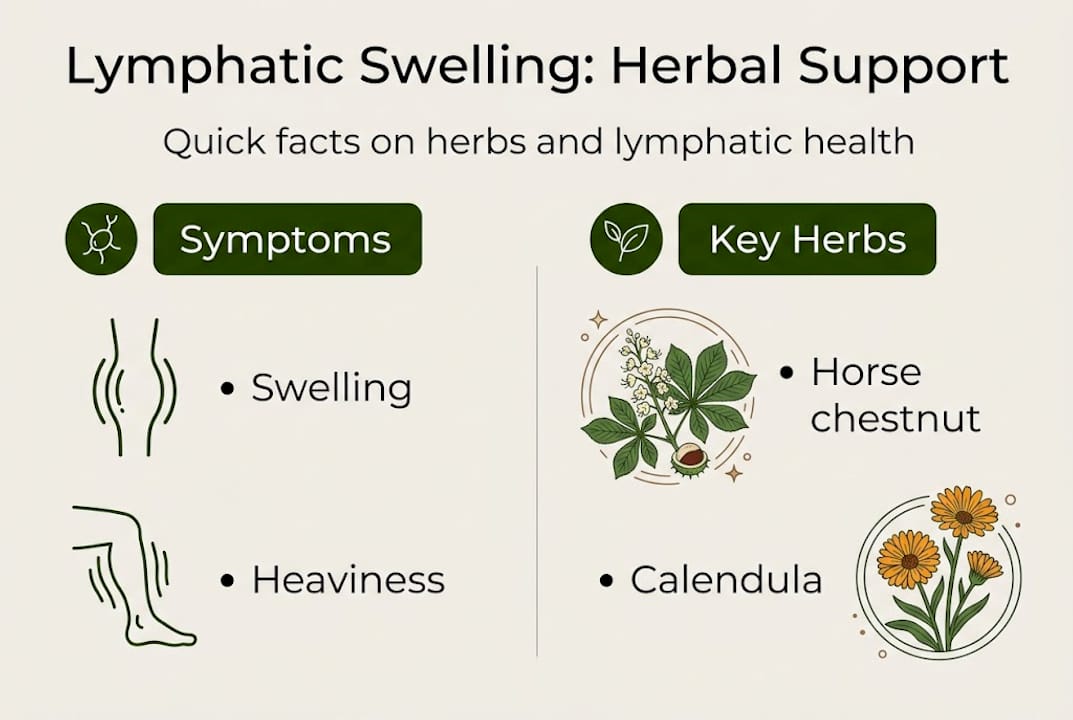
The lymphatic system does not have a pump like the heart. It relies on muscle movement, breathing, and manual stimulation to keep fluid moving. When this system is blocked or damaged, for example after surgery or cancer treatment, fluid builds up and inflammation worsens.
Standard NHS treatment for lymphoedema focuses on:
- Compression garments to reduce fluid accumulation
- Manual lymphatic drainage (MLD) carried out by trained therapists
- Structured exercise to encourage lymph flow
- Careful skin care to reduce infection risk
- Maintaining a healthy body weight
The NHS does not recommend herbal remedies for lymphoedema. Its guidance prioritises compression, MLD, exercise, skin care, and healthy weight as the primary management tools.
This does not mean herbal products have no role at all. It means they are not clinically validated replacements. Many people use herbal products for inflammation as adjunct support alongside approved therapies, not instead of them.
“Herbal approaches may offer complementary value for some individuals, but they should sit alongside, not replace, evidence-based lymphatic care.”
For a broader clinical perspective on oedema management, medical guidance on lymphoedema from palliative care professionals outlines the full spectrum of current treatment thinking. Understanding that context helps you make smarter decisions about where herbal options fit for you personally. Exploring lymphatic support remedies with realistic expectations is the right starting point.
What makes a herbal product ‘authentic’?
The UK herbal supplement market is largely unregulated compared to pharmaceutical medicines. That creates a real problem: a product can carry impressive-sounding claims with no obligation to prove them. Knowing how to assess authenticity protects both your health and your money.
Authentic herbal products share several common features:
- Batch testing: Each production run is tested for purity, potency, and contaminants
- Clear labelling: Ingredients listed by Latin and common name, with quantities stated
- Supplier transparency: Origin of raw plant material is traceable and disclosed
- UK or EU regulatory status: Products registered under the Traditional Herbal Registration (THR) scheme carry a THR mark and have met basic safety and quality standards
- No exaggerated health claims: Legitimate products do not promise cures
| Feature | Reputable product | Low-quality product |
|---|---|---|
| Batch testing | Documented and available | Not mentioned |
| Ingredient listing | Full, with quantities | Vague or proprietary blend |
| THR or equivalent mark | Present | Absent |
| Supplier origin | Stated clearly | Unknown |
| Health claims | Measured and lawful | Exaggerated or medical |
As the NHS advises, herbal products for UK users should come from reputable suppliers with batch testing in place. You should consult your GP before use, particularly if you take prescribed medications or have an existing condition.
Avoid products sold with no traceable manufacturer, especially those imported through unknown online marketplaces. Contamination, mislabelling, and substitution with cheaper plant materials are documented risks in this space.
Pro Tip: Search for a product’s batch test certificate on the manufacturer’s website before purchasing. If it is not publicly available, contact them directly to request it. A trustworthy supplier will respond promptly.
For practical guidance on identifying herbal remedies for swelling that meet quality standards, look for products that reference their sourcing practices and slow-infusion or cold-press methods, as these preserve active compounds more effectively than mass-produced alternatives. Guidance from the British Heart Foundation on swelling health guidance also provides useful context for distinguishing cardiac-related swelling from lymphatic causes.
Selecting herbal remedies: evidence, uses, and safety
Not all herbal options carry equal evidence. Some have been studied in clinical trials. Others rely entirely on traditional use. Knowing the difference matters before you spend money or, more importantly, before you rely on something for a health condition.
Horse chestnut (Aesculus hippocastanum) is the standout. Clinical evidence shows a 32.1ml volume reduction in leg swelling in venous insufficiency studies, making it the most robustly supported herbal option for fluid-related swelling. It works by strengthening capillary walls and reducing fluid leakage into surrounding tissue.

Cleavers, calendula, dandelion, echinacea, and nettle are frequently included in UK herbal products marketed for lymphatic support. However, traditional lymphatic herbs like these lack robust clinical trials for lymphatic drainage. Their use is based on historical practice and preliminary research, not controlled trial data.
| Herb | Evidence level | Primary use | Key caution |
|---|---|---|---|
| Horse chestnut | Clinical trials | Venous swelling | Avoid in kidney/liver disease, pregnancy |
| Turmeric | Moderate (inflammation) | Anti-inflammatory support | Interacts with blood thinners |
| Ginger | Moderate | Circulation, nausea | High doses may affect clotting |
| Cleavers | Traditional only | Lymph tonic | Minimal safety data |
| Dandelion | Traditional/preliminary | Mild diuretic support | Avoid with diuretic medication |
For a herbal lymphatic remedy comparison that covers these options side by side, including topical versus internal use, the differences are significant. Topical oils, for example, interact with the lymphatic system differently to teas or capsules.
Key safety steps when selecting herbal remedies:
- Tell your GP or pharmacist about any herbal product you plan to use
- Check for interactions with current medications, particularly anticoagulants
- Avoid during pregnancy unless specifically cleared by a healthcare provider
- Start with the lowest stated dose and monitor your response over two to four weeks
- Stop use immediately if you notice unusual symptoms such as skin reactions, digestive upset, or increased swelling
Pro Tip: Use the herbs for inflammation relief section of specialist herbal blogs to cross-reference safety profiles before buying. Independent blogs from qualified herbalists tend to be more current than product pages. For broader context on herbal extract efficacy evidence, clinical review sources offer a useful counterpoint to marketing claims.
Combining herbal solutions with lifestyle for best results
Herbal remedies work best when they are part of a wider routine, not a standalone fix. This is especially true for lymphatic congestion, where physical movement is one of the most effective interventions available.
A practical daily routine might look like this:
- Morning dry brushing or gentle self-massage to stimulate lymph flow before applying any topical oil
- 20 to 30 minutes of low-impact exercise: walking, swimming, or rebounding on a mini trampoline
- Compression garment use during active periods if prescribed or advised
- Herbal tea (cleavers, nettle, or dandelion) taken mid-morning as a mild lymphatic tonic
- Topical herbal oil applied to affected areas in the evening, using upward strokes towards the nearest lymph node cluster
- Evening elevation of affected limbs for 20 minutes
Diet matters too. Reducing sodium reduces fluid retention. Anti-inflammatory foods such as oily fish, leafy greens, and berries support the body’s broader inflammatory response.
- Avoid processed foods high in sodium
- Prioritise hydration, aim for 1.5 to 2 litres of water daily
- Limit alcohol, which increases systemic inflammation
- Consider omega-3 supplementation if oily fish intake is low
One important caution: diuretics (water tablets) are not effective for lymphoedema. They remove water from the bloodstream but do not address the protein-rich fluid accumulation that characterises lymphatic blockage. Using them without medical guidance can worsen the condition.
“Herbal extracts show limited efficacy in systematic reviews for lymphoedema and carry interaction risks. They carry no formal grade recommendation in current clinical guidelines.”
This is not a reason to dismiss herbal options. It is a reason to use them alongside, not instead of, NHS guidelines for lymphoedema. Tracking symptoms weekly, noting changes in swelling volume or skin condition, helps you assess whether your current approach is working. If swelling worsens or becomes painful, seek medical advice promptly. For a detailed look at how to boost lymphatic flow naturally, combining movement, diet, and topical support is a well-documented starting point. The herbal self-care for swelling guide on our blog outlines this integration in practical terms.
A balanced view: navigating traditional wisdom and clinical evidence
There is a real tension in this space. Traditional herbalism has centuries of documented use for lymphatic and inflammatory conditions. Modern clinical guidelines, including those from the NHS on lymphoedema, emphasise evidence-based non-herbal treatments because the clinical trial data for most lymph tonics simply does not exist yet.
Both positions have merit. The absence of trial data is not the same as proof that something does not work. It often reflects the reality that herbal research is underfunded and difficult to standardise. At the same time, promoting unproven remedies to people with serious lymphatic conditions carries genuine risk.
The honest position is this: use herbal tools where evidence supports them, treat traditional use as a credible signal worth exploring, and never use herbs as a reason to avoid proper medical assessment. Personalising your approach, respecting your GP’s advice while making space for evidence-informed experimentation, is the most responsible path available. Exploring herbal oils for swelling relief within that framework gives you options without replacing the clinical care your condition may require.
Discover authentic herbal solutions
If you are looking for herbal products that meet the authenticity standards covered in this guide, our range is built around exactly those principles.
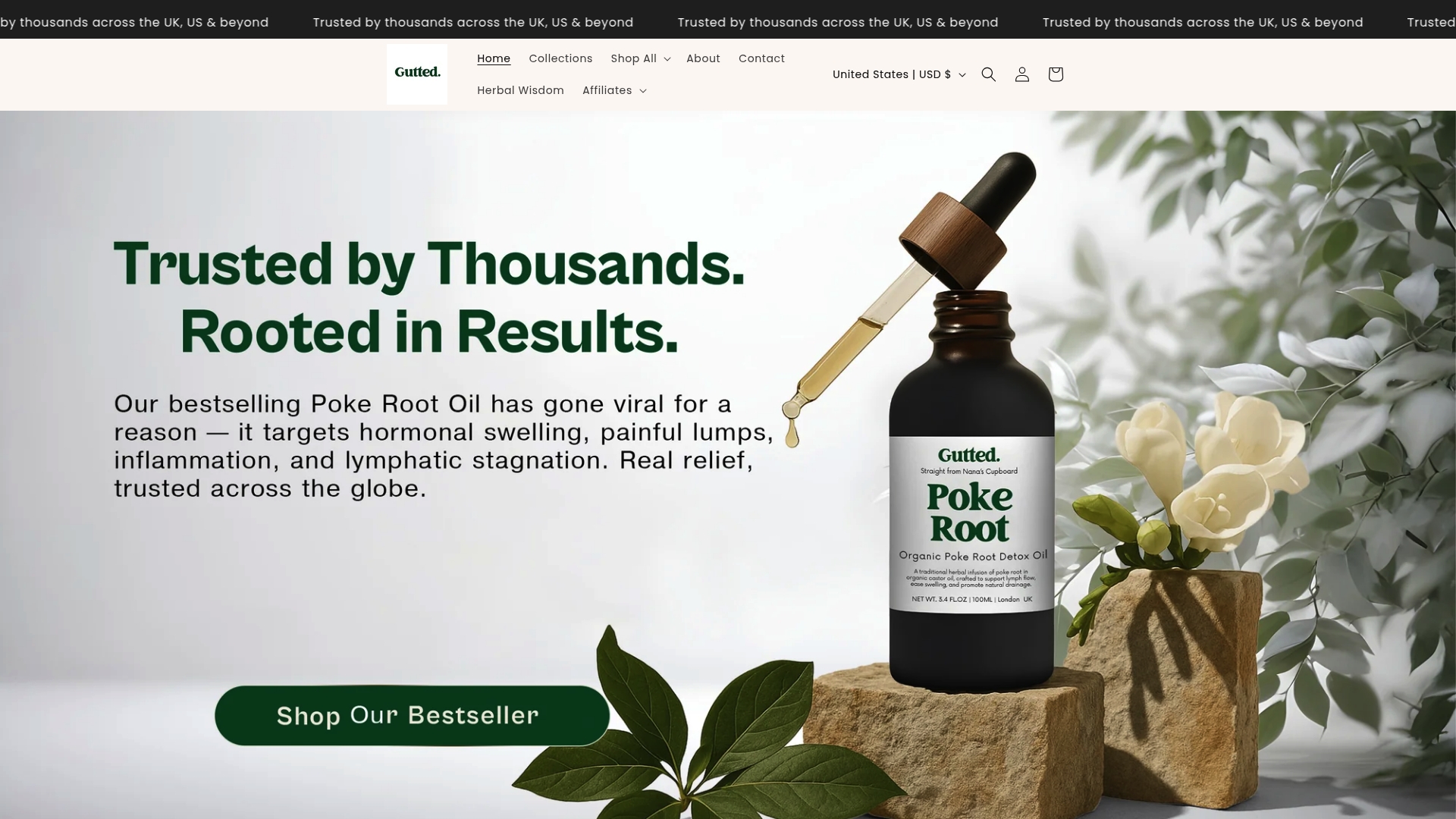
At Gutted, every product is handcrafted in small batches using traditional slow-infusion methods. Our Organic Poke Root Oil infused in Castor Oil is used by customers supporting lymphatic drainage and reducing fluid retention. We also offer Soursop Leaves, Apricot Kernels, and Essiac tea blends for broader detox and internal balance. For further reading, our herbal lymphatic massage guide walks you through practical application techniques to get the most from any topical herbal product.
Frequently asked questions
Which herbal remedies have the best evidence for reducing swelling?
Horse chestnut seed extract has the strongest clinical support, with documented reductions in leg swelling volume. Herbs like cleavers and calendula have mainly traditional use with limited trial data.
Are herbal products safe for everyone?
No. Certain herbs, including horse chestnut, should be avoided in pregnancy and in people with kidney or liver disease. Always consult your GP before starting any herbal product, particularly if you take prescribed medicines.
Can herbal products replace NHS treatments for lymphatic issues?
No. The NHS does not recommend herbal remedies as a replacement for lymphoedema treatment. Compression, MLD, and exercise remain the primary approved approaches. Herbal products may offer adjunct support alongside these.
How do I know if a herbal product is authentic in the UK?
Look for batch testing documentation, clear ingredient labelling with quantities, a traceable supplier, and ideally a Traditional Herbal Registration (THR) mark. Reputable suppliers, as NHS guidance notes, will provide this information transparently.