

Ancestral herbal healing explained: a UK guide
Ancestral herbal healing is a culturally rooted, plant-centred practice that combines botanical remedies with ritual, seasonal knowledge, and lineage-transmitted wisdom to support physical, emotional, and spiritual wellbeing. It is not a single system but a living tradition found across virtually every human culture, passed down through oral teaching, apprenticeship, and household practice rather than standardised clinical protocols. The core elements are plant allies (specific plants chosen for their relationship with a person, place, or lineage), ritual context that gives the remedy meaning beyond its chemistry, and preparation methods ranging from simple infusions to smoke-based cleansing. Traditional medicine, as the WHO frames it, is experience-based and person-centred — ancestral herbal healing sits squarely within that definition.
Safety note before you begin: Several herbs used in ancestral practice interact with prescription medicines. St John’s wort, for example, accelerates the metabolism of many common drugs, including anticoagulants and antidepressants. Comfrey contains pyrrolizidine alkaloids that can cause liver damage with prolonged use. Before combining any herbal remedy with a prescription or over-the-counter medicine, consult your GP or a qualified healthcare professional. This article is general information, not medical advice.
Key things ancestral herbal healing involves:
- Plant allies chosen for their relationship to a person, lineage, or place
- Ritual and seasonal context that shapes how and when a remedy is used
- Preparation methods including infusion, decoction, tincture, oils, smoke, and baths
- Knowledge transmitted through lineage, apprenticeship, or community practice
Table of Contents
- Where does ancestral herbal healing come from?
- What are the core principles behind ancestral herbal practice?
- Which herbs are most commonly used in UK ancestral practice?
- How are herbal remedies prepared and used safely?
- How are plants used in ancestral rituals and ceremonies?
- What does the evidence say, and what does UK law require?
- How do you start with ancestral herbal healing responsibly in the UK?
- How Getgutted approaches ancestral herbal healing
- Key takeaways
- A practitioner’s perspective on working with plant allies
- Ready-made tools for your first steps: Getgutted wellness kits
- Useful sources and further reading
Where does ancestral herbal healing come from?
Archaeological evidence places human use of medicinal plants at least as far back as the Palaeolithic era, with written records from ancient Sumer, Egypt, Greece, China, and India documenting plant-based remedies over millennia. The Ebers Papyrus, dated to around 1550 BCE, covers more than 700 compounds, the majority of plant origin. Seeds likely used for herbalism have been found at Bronze Age sites in China dating to the Shang dynasty. This is not a fringe history — it is the main history of medicine for most of human existence.
The WHO reports that 170 of its 194 Member States use traditional medicine in some form. That figure reflects how deeply plant-based healing remains woven into global healthcare, particularly where formal medical infrastructure is limited or culturally misaligned. The WHO defines traditional medicine as comprising “practices, skills, knowledge and philosophies originating in different historical and cultural contexts, which are distinct from and pre-date biomedicine, evolving with science for current use from an experience-based origin.” Ancestral herbal healing fits that definition precisely.
Knowledge transmission is where ancestral practice diverges most sharply from clinical herbalism. Rather than textbooks and standardised curricula, the knowledge moves through:
- Oral teaching from elder to apprentice or family member
- Household remedies passed across generations, often specific to a region or lineage
- Ritual practice that encodes plant knowledge in ceremony and seasonal observance
- Ethnobotanical documentation, which researchers now use to preserve what oral traditions risk losing
In the UK, this transmission happens across multiple cultural communities. British folk herbalism, African and Caribbean diaspora healing traditions, South Asian Ayurvedic household practice, and Celtic plant lore all coexist, each with its own plant relationships and preparation methods. Understanding that diversity is the starting point for any serious engagement with the subject.
What are the core principles behind ancestral herbal practice?
The philosophy that separates ancestral practice from standardised clinical herbalism is not mysticism — it consists of a different set of working assumptions about what causes illness and what constitutes healing. Where clinical herbalism tends to isolate active compounds and match them to symptoms, ancestral practice treats the person, their relationships, their environment, and their lineage as a single system.
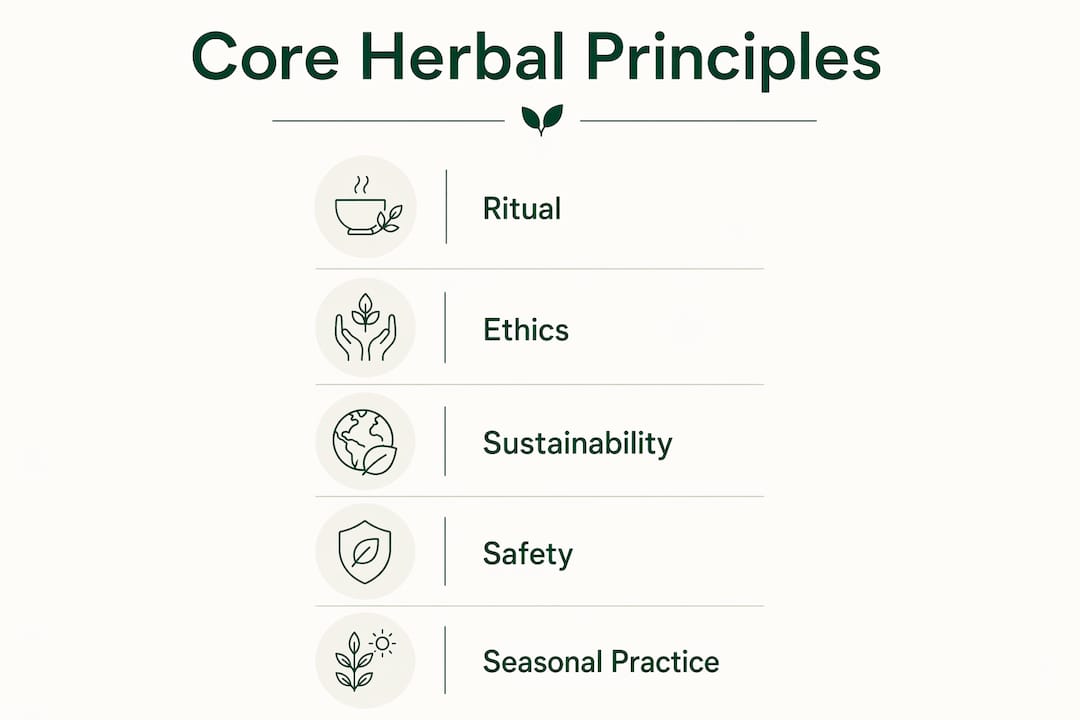
The core principles most practitioners articulate are:
- Plant allies, not ingredients. Plants are understood as beings with their own intelligence and relational capacity, not passive chemical sources. A practitioner builds relationships with specific plants over time.
- Reciprocity. Taking from a plant requires giving back — through gratitude, sustainable harvesting, or tending the land. This is both an ethical stance and a practical conservation principle.
- Lineage and ancestral relationship. The healing is understood to flow through a lineage, not just a formula. Who taught you, and who taught them, matters.
- Holistic balance. Mind, body, and environment are not separate domains. A physical symptom may have an emotional or relational root, and the remedy addresses both.
- Seasonal and ecological timing. Harvest timing is not arbitrary. Traditional healers often choose when to gather based on ecological and seasonal rhythms, which affects the concentration of active constituents in the plant.
Ritual and spiritual context serve a specific function here. They create the conditions for addressing psychosomatic or intergenerational elements of illness that a symptom-focused approach might miss entirely. A grounding herbal bath is not just a warm soak with lavender — the intention, the words spoken, and the lineage invoked are considered part of the medicine.
Ethical dimensions matter practically, not just philosophically. Sustainable harvesting protects plant populations and the ecosystems that support them. Cultural respect means not extracting practices from their context without understanding or permission. These are not soft concerns — they determine whether the practice remains viable for future generations.
Pro Tip: If you are new to working with plant allies, start by spending time with a single plant across one full seasonal cycle before using it medicinally. Observe it in spring growth, summer flowering, autumn seed-set, and winter dormancy. Practitioners consistently report that this kind of slow relationship-building produces a more intuitive and safer understanding of a plant than any amount of reading.
Which herbs are most commonly used in UK ancestral practice?
The UK sits at a crossroads of herbal traditions. Native British plants carry centuries of folk use; diaspora communities bring their own plant relationships from South Asia, West Africa, the Caribbean, and beyond. The plants below are among the most widely referenced in UK-based ancestral and traditional herbal practice, each with its scientific name, conventional uses, and safety notes you need before you start.
| Common name | Scientific name | Traditional use | Key safety note |
|---|---|---|---|
| Mugwort | Artemisia vulgaris | Ancestor work, dream enhancement, cleansing, digestive support | Avoid in pregnancy; may interact with anticoagulants |
| Sage | Salvia officinalis | Purification, throat and respiratory support, memory | Avoid therapeutic doses in pregnancy; toxic in large quantities |
| Yarrow | Achillea millefolium | Wound healing, fever management, boundary-setting rituals | May cause allergic reactions in those sensitive to the Asteraceae family |
| Rosemary | Salvia rosmarinus | Memory, protection rituals, circulatory support | Avoid high doses in pregnancy; may interact with anticoagulants |
| Lavender | Lavandula angustifolia | Calming, sleep support, skin healing, ritual cleansing | Generally safe; essential oil should not be taken internally |
| Nettle | Urtica dioica | Nutritive tonic, anti-inflammatory, spring cleansing | May interact with blood-thinning medicines; wear gloves when harvesting |
| Hawthorn | Crataegus monogyna | Heart and cardiovascular support, ancestor offerings | Consult a GP if taking heart medications; do not self-treat cardiac conditions |
| Comfrey | Symphytum officinale | Topical wound and joint healing | Do not take internally. Contains pyrrolizidine alkaloids; toxic to the liver. UK sale for internal use is restricted. |
| Oak | Quercus spp. | Strength, ancestral connection, ritual boundary-marking | Bark tannins are astringent; not for prolonged internal use |
Mugwort deserves particular attention in the ritual context. Cornell Botanic Gardens documents its longstanding association with drawing the spirit world near and creating sacred atmosphere — a role it holds across European, East Asian, and African diasporic traditions. In the UK, it grows wild along roadsides and riverbanks, making it one of the most accessible ancestral plant allies for British practitioners.
Ethnomedicinal research consistently shows that leaves are the most commonly used plant part across traditional systems globally, though roots, bark, seeds, and flowers each carry specific roles depending on the plant and the tradition. Knowing which part to use, and when it was harvested, is as important as knowing the species.
Comfrey’s safety note is non-negotiable. Its pyrrolizidine alkaloid content makes internal use genuinely dangerous, and the MHRA has restricted its sale for internal use in the UK. Use it only as a topical preparation, and keep it away from broken skin.
How are herbal remedies prepared and used safely?
Preparation method is not a minor detail. The same plant prepared differently produces different chemical profiles and different therapeutic effects. Ethnomedicinal studies document powder, decoction, and infusion as the most common preparation methods across traditional systems, with the choice depending on the plant part, the intended use, and the tradition.
Three core preparations
1. Infusion (herbal tea)
Used for leaves, flowers, and soft plant material.
- Bring fresh water to just below boiling (around 90–95°C for most herbs).
- Place 1–2 teaspoons of dried herb (or a small handful of fresh) per 250ml of water in a covered vessel.
- Steep for 10–15 minutes, keeping the vessel covered to retain volatile oils.
- Strain and drink. Most traditional preparations suggest one to three cups daily, not exceeding that without practitioner guidance.
2. Decoction
Used for roots, bark, seeds, and dense plant material that needs longer extraction.
- Place 1 tablespoon of dried material per 500ml of cold water in a saucepan.
- Bring slowly to a gentle simmer and maintain for 20–30 minutes.
- Strain while hot. Decoctions can be stored in the fridge for up to 48 hours.
3. Tincture (alcohol extraction)
Used when a longer shelf life or stronger extraction is needed.
- Fill a clean glass jar loosely with dried herb (or pack with fresh herb).
- Cover completely with food-grade alcohol at 40–60% proof (vodka works for most herbs).
- Seal, label with the herb name and date, and store in a cool dark place for 4–6 weeks, shaking daily.
- Strain through muslin, pressing the plant material firmly. Decant into dark glass bottles and label.
Standard adult doses in traditional practice typically run 2–4ml of tincture, two to three times daily, but this varies considerably by herb and condition. Always cross-reference with a qualified herbalist before setting your own dose.
Safety checklist before you prepare anything
- Confirm plant identification with a field guide or qualified forager before using any wild-gathered material
- Use clean, filtered water and sterilised glass containers
- Label every preparation with the herb name, preparation date, and method
- Store away from heat and light; discard anything that smells off or shows mould
- Do not give herbal preparations to children or during pregnancy without professional guidance
- Stop immediately and contact your GP if you experience nausea, rash, palpitations, or any unusual symptom
- Check for interactions with any prescription medicine before starting
Pro Tip: Artisanal and small-batch preparations tend to be more consistent than mass-produced herbal supplements, where filler ingredients and variable extraction methods can significantly affect potency. When buying rather than making, look for products that state the plant part used, the extraction ratio, and the country of origin on the label.
How are plants used in ancestral rituals and ceremonies?
Ritual is the context that gives a herbal remedy its ancestral dimension. Without it, you have a botanical preparation; with it, you have a practice that addresses the emotional, relational, and spiritual layers of a person’s experience alongside the physical. The distinction matters, and it is what practitioners consistently draw as the line between clinical herbalism and ancestral work.
Before describing any examples, a necessary framing: specific sacred rites belong to specific communities, and reproducing them without lineage connection or community permission is appropriation, not practice. The examples below are generic illustrations of how plants function in ritual contexts, not instructions for performing culturally specific ceremonies.
Three illustrative practice examples
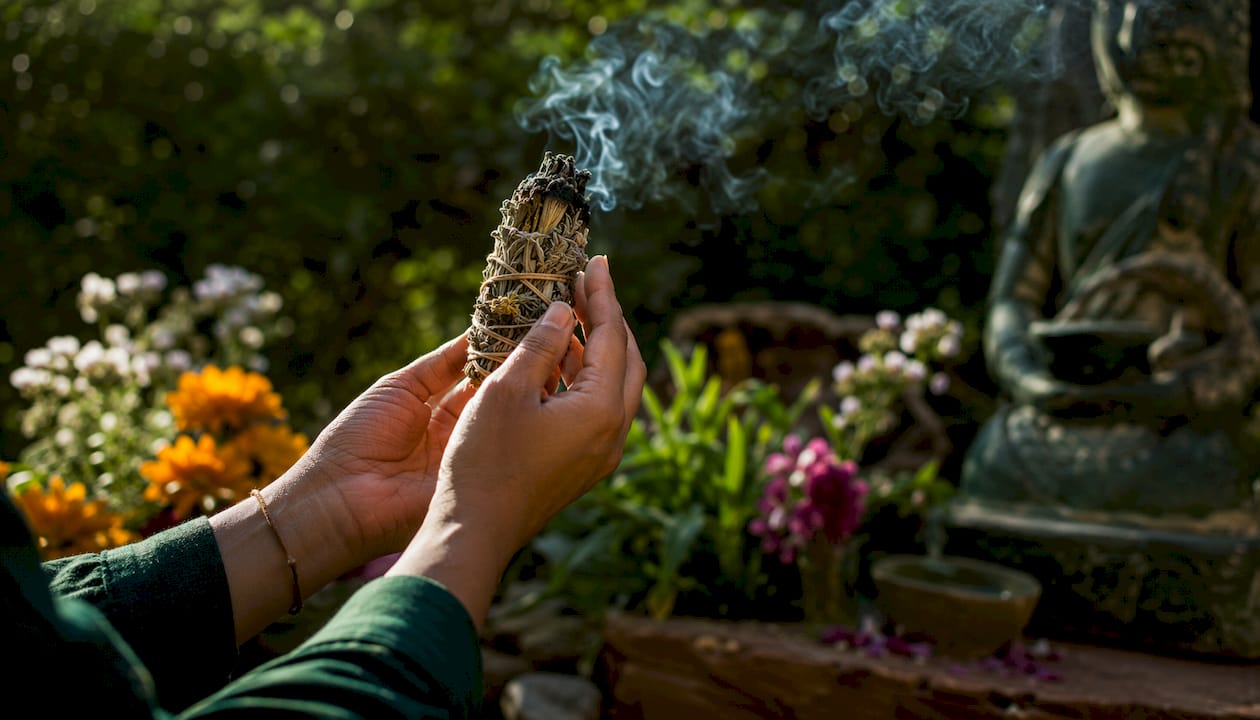
Smoke cleansing. Dried herbs — commonly mugwort, sage, or rosemary in UK-based practice — are bound into a bundle or placed on a heat-safe dish and lit until they smoulder. The smoke is moved through a space or around a person with intention. The aromatic compounds released have documented antimicrobial and mood-affecting properties; the ritual intention focuses the practitioner’s attention and marks a transition. This is distinct from the specific Lakota practice of smudging, which belongs to that tradition and should not be appropriated.
Ancestor offering with plant allies. A simple practice found across many traditions involves placing fresh or dried herbs associated with a lineage on a dedicated surface alongside photographs or objects connected to ancestors. Hawthorn, rosemary, and mugwort appear frequently in European folk traditions in this role. The offering is renewed seasonally, often at liminal times of year.
Grounding herbal bath. Nettle, lavender, and rosemary are simmered as a strong decoction, strained, and added to a warm bath. The practitioner sets an intention before entering, spends 20–30 minutes in stillness, and closes with a moment of gratitude. This is one of the most accessible entry points for beginners and integrates well with clinical care.
Pro Tip: Keep a remedial journal. Record the herb, preparation method, ritual context, date, and your physical and emotional state before and after each practice. Over time, this creates a personal lineage document and helps you spot patterns — including any adverse reactions — that a single session would never reveal.
What does the evidence say, and what does UK law require?
The evidence base for traditional herbal remedies is uneven but not negligible. About 25% of drugs prescribed worldwide derive from plants, and several of the most significant pharmaceutical breakthroughs trace directly to ancestral plant knowledge. Aspirin originated with willow bark (Salix spp.), used for pain and fever for over 3,500 years before Felix Hoffmann synthesised it for Bayer in 1897. Artemisinin, the basis of modern malaria treatment, comes from sweet wormwood (Artemisia annua), a plant used in Chinese traditional medicine for centuries. Hawthorn and foxglove contributed to cardiovascular medicine. These are not coincidences — they reflect the long empirical observation that underlies ancestral herbal practice.
That said, peer-reviewed evidence for many specific traditional preparations remains limited, and the WHO is clear that quality assurance, practitioner training, and clear practice frameworks are necessary to reduce risks. The absence of evidence is not the same as evidence of absence, but it does mean that ancestral herbal healing works best as a complement to, not a replacement for, conventional medical care for serious conditions.
Herb–drug interactions: the non-negotiable warnings
Johns Hopkins Medicine cautions that herbal medicines can interact with prescription drugs in clinically significant ways and are not regulated to the same standard as licensed medicines. The most important interactions for UK practitioners to know:
- St John’s wort (Hypericum perforatum): accelerates metabolism of many drugs via CYP3A4 induction, reducing the effectiveness of oral contraceptives, antiretrovirals, anticoagulants, and antidepressants
- Comfrey: pyrrolizidine alkaloids cause cumulative liver toxicity; internal use is restricted in the UK
- Garlic, ginger, and ginkgo: all increase bleeding risk and should not be combined with warfarin or other anticoagulants without medical supervision
- Valerian: may potentiate sedative medications
UK regulatory framework
| Regulatory area | What it means in practice |
|---|---|
| MHRA Traditional Herbal Registration (THR) | Products with the THR mark have met quality and safety standards; efficacy is based on traditional use, not clinical trials |
| Medicines Act | Herbal products making medicinal claims must be licensed or THR-registered; unlicensed products cannot legally claim to treat disease |
| NHS guidance | The NHS advises telling your GP about any herbal remedies you take; some are prescribed on the NHS (e.g. St John’s wort in some European contexts) but most are not |
| Foraging law | The Wildlife and Countryside Act protects certain plant species; picking on private land without permission is trespass; sustainable harvesting of common species on public land is generally permitted but not unlimited |
| Comfrey | MHRA has restricted its sale for internal use; topical use only is the safe position |
When buying a herbal product in the UK, look for the THR registration number on the label. If it is not there, the product has not been assessed for quality or safety by the MHRA, and the claims on the packaging are not verified.
For wild-gathered herbs, sustainable and ethical sourcing is both a legal and a conservation matter. Never harvest more than a third of any plant population, avoid protected species entirely, and always confirm identification before use.
How do you start with ancestral herbal healing responsibly in the UK?
The most common mistake beginners make is trying to do everything at once. Start with one plant, one preparation method, and one clear intention. The depth comes with time.
Finding training and credentials
The UK has several routes into formal herbal training:
- The National Institute of Medical Herbalists (NIMH) is the oldest professional body for medical herbalists in the world, founded in 1864. Members hold accredited degrees and carry professional insurance.
- The College of Practitioners of Phytotherapy (CPP) offers accredited degree-level training in herbal medicine.
- The Unified Register of Herbal Practitioners (URHP) maintains a register of practitioners who meet agreed competency standards.
- Short courses and workshops in ancestral or folk herbalism are offered by community herbalists, botanical gardens, and independent practitioners — valuable for context, but not a substitute for clinical training if you intend to work with others.
When vetting a practitioner, ask:
- What is your formal training and with which institution?
- Are you insured for herbal practice?
- Do you take a full health and medication history before recommending remedies?
- How do you source your herbs, and can you tell me the provenance?
- What is your protocol if a client has an adverse reaction?
- How do you handle confidentiality?
Sourcing herbs responsibly
- Look for the THR mark on packaged products
- Prefer suppliers who state the plant part, country of origin, and whether the herb is wild-crafted or cultivated
- Small-batch suppliers with transparent sourcing are generally more reliable than mass-market health food brands
- For herbal wisdom and practical modern applications, cross-reference any supplier’s claims with established botanical references
For beginners, three practical starting points:
- Choose one herb you feel drawn to and learn everything about it: its habitat, its seasonal cycle, its preparation methods, and its safety profile.
- Keep a remedial journal from day one, recording every preparation and your response to it.
- Consult your GP before starting any herbal practice if you take prescription medicines or have a chronic health condition.
How Getgutted approaches ancestral herbal healing
Getgutted’s approach to plant-based healing is grounded in the same principles this article describes: small-batch production, ingredient transparency, and a commitment to ancestral herbal wisdom as a living practice rather than a marketing category.
The brand’s product range — including herbal oils, wellness kits, and herbal teas — is developed with a focus on ingredient purity and sourcing transparency. Formulations such as poke root oil infused with organic castor oil reflect a specific ancestral tradition of supporting lymphatic drainage and detoxification, areas where plant-based approaches have a long history of use.
Getgutted’s safety position is clear: its products are not a substitute for medical care. Anyone with a diagnosed condition, or taking prescription medicines, should consult a healthcare provider before adding any herbal preparation to their routine. The brand’s educational content, including this article, is designed to give readers the context to make informed decisions, not to replace clinical guidance.
Pro Tip: When exploring any herbal product range, check whether the brand publishes its sourcing standards and ingredient provenance. Transparency at that level is one of the clearest signals that a producer takes both efficacy and safety seriously.
Useful starting points on the Getgutted site include the guide on ancestral remedies and science and the practical overview of traditional herbs and their benefits.
Key takeaways
Ancestral herbal healing is most effective when ritual context, plant knowledge, and clinical safety awareness work together rather than in isolation.
| Point | Details |
|---|---|
| Definition | Ancestral herbal healing combines botanical remedies with ritual, lineage knowledge, and seasonal timing to support whole-person wellbeing. |
| Safety first | Always check for herb–drug interactions with your GP before combining herbal remedies with prescription medicines, especially anticoagulants or antidepressants. |
| UK regulation | Look for the MHRA Traditional Herbal Registration (THR) mark on any packaged herbal product; unlicensed products cannot legally claim to treat disease. |
| Training and sourcing | Seek practitioners registered with NIMH, CPP, or URHP; choose suppliers who state plant part, provenance, and whether herbs are wild-crafted or cultivated. |
| Getgutted | Getgutted offers small-batch, transparently sourced wellness kits and herbal oils rooted in ancestral practice, with clear safety guidance for responsible use. |
A practitioner’s perspective on working with plant allies
The part of ancestral herbal practice that most guides skip over is the sheer ordinariness of it, day to day. Working with plant allies is not a series of dramatic ritual moments. It is mostly quiet: making a nettle infusion in the morning, noticing how the hawthorn in the garden is coming into bud, updating a remedial journal with observations that seem minor until, six months later, a pattern becomes visible.
What I find people consistently underestimate is the intake process. Before recommending any plant preparation to someone, the first conversation has to cover their full medication list, their health history, and any conditions they have not yet told their GP about. That is not bureaucracy — it is the minimum responsible standard. A client who is taking warfarin and wants to start using ginger and garlic regularly needs to know the bleeding risk before they start, not after. The intake form that screens for drug interactions is not a clinical affectation; it is what separates responsible practice from well-intentioned harm. The plants are powerful. That is the whole point. Treat them accordingly.
Ready-made tools for your first steps: Getgutted wellness kits
If you want to begin exploring ancestral herbal practice without sourcing and preparing everything from scratch, Getgutted’s wellness kits offer a responsibly sourced starting point. Each kit is produced in small batches with clearly stated ingredients and provenance, reflecting the same transparency standards this article recommends you look for in any herbal supplier.
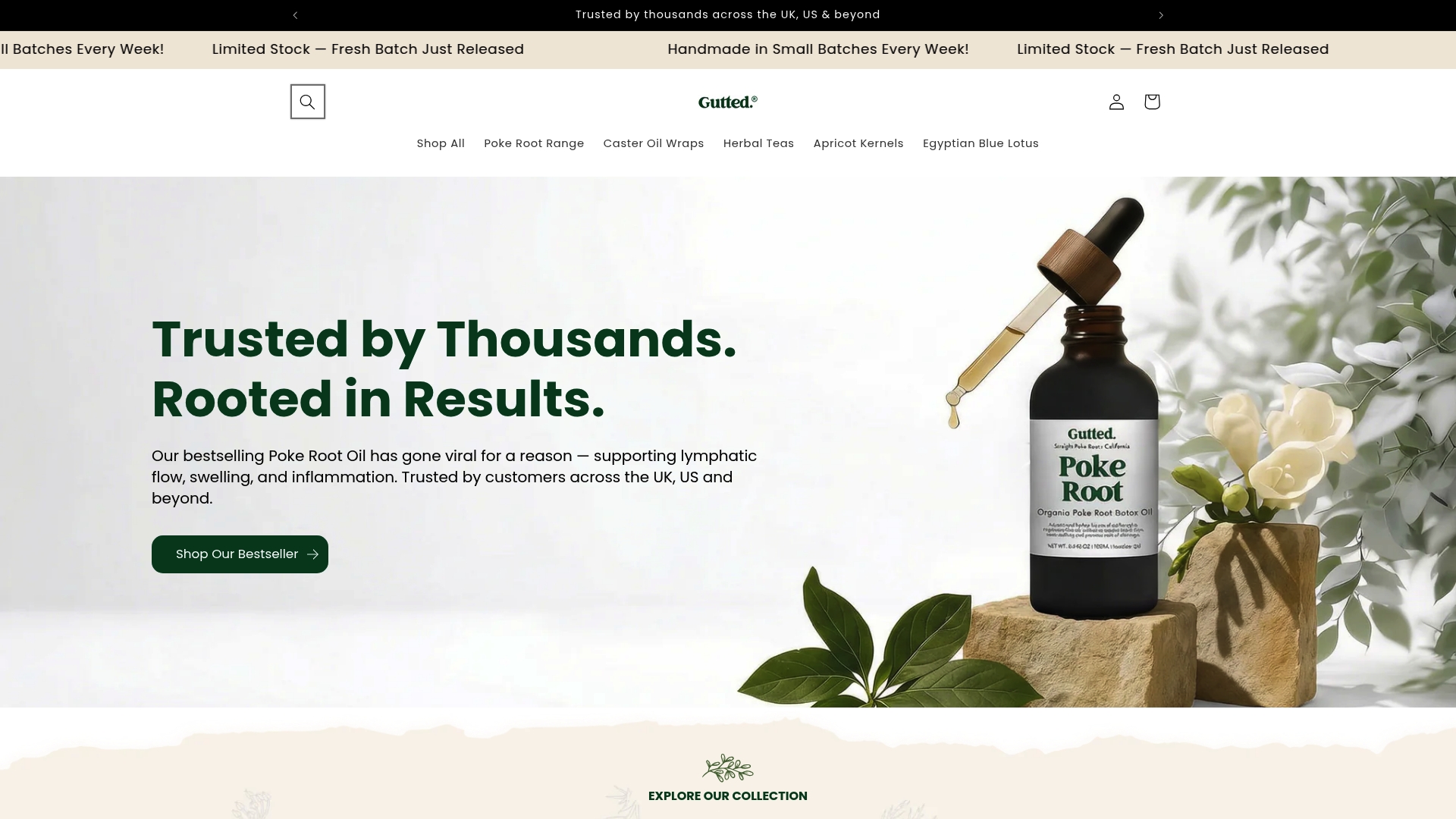
The kits are designed for people who want to engage with plant-based healing thoughtfully, not people looking for a quick fix. They work best alongside the kind of slow, attentive practice described throughout this article: keeping a journal, building a relationship with one or two plants, and consulting a healthcare provider about any interactions with existing medications.
Visit Getgutted to explore the full range of herbal oils, teas, and wellness kits, and to access the brand’s wider library of educational content on ancestral and traditional herbal practice. As with all herbal preparations, follow the label guidance and consult your GP if you have any existing health conditions or take prescription medicines.
Useful sources and further reading
The sources below are selected for authority and relevance. UK-specific guidance is marked accordingly.
-
WHO: Traditional, Complementary and Integrative Medicine — the primary global policy framework for traditional medicine, including definitions, member state data, and quality assurance guidance. Global scope.
-
WHO: Traditional medicine feature story — detailed account of how traditional plant knowledge has contributed to modern pharmaceuticals, including aspirin, artemisinin, and cardiovascular medicines. Global scope.
-
NCBI Bookshelf: Herbal Medicine — peer-reviewed overview of herbal medicine’s history, pharmacological contributions, and safety considerations. Global evidence synthesis.
-
Johns Hopkins Medicine: Herbal Medicine — clinical guidance on herb–drug interactions and the importance of disclosing herbal use to healthcare providers. US-based but clinically applicable to UK readers.
-
Better Health Channel: Herbal medicine — accessible summary of herbal medicine safety, including St John’s wort interactions. Australian source; interaction data is internationally applicable.
-
Plant-based traditional remedies: ethnomedicinal perspectives (Springer) — peer-reviewed ethnomedicinal study documenting preparation methods, plant part usage, and therapeutic consensus metrics. Global evidence synthesis.
-
Cornell Botanic Gardens: Plants that draw the spirit world near — botanical and cultural documentation of plants used in ancestor work and ritual cleansing, including mugwort. Cultural/ritual context.
-
ScienceDirect: Traditional herbal medicine — academic overview distinguishing clinical herbalism from ancestral and ritual practice. Global scope.
-
MHRA Traditional Herbal Registration (THR) — UK-specific. The MHRA’s THR scheme is the primary UK regulatory framework for herbal products. Search the MHRA’s public register to verify any product’s registration status before purchase. Visit gov.uk/government/organisations/medicines-and-healthcare-products-regulatory-agency for current guidance.
-
NHS: Herbal medicines — UK-specific. The NHS provides patient-facing guidance on herbal medicine safety, interactions, and when to consult a GP. Search “herbal medicines” at nhs.uk for the current page.
-
What is holistic wellness? A guide for adults 30–65 — accessible primer on placing ancestral herbal practice within broader holistic health frameworks.