

Why detox reduces inflammation: an evidence-based guide
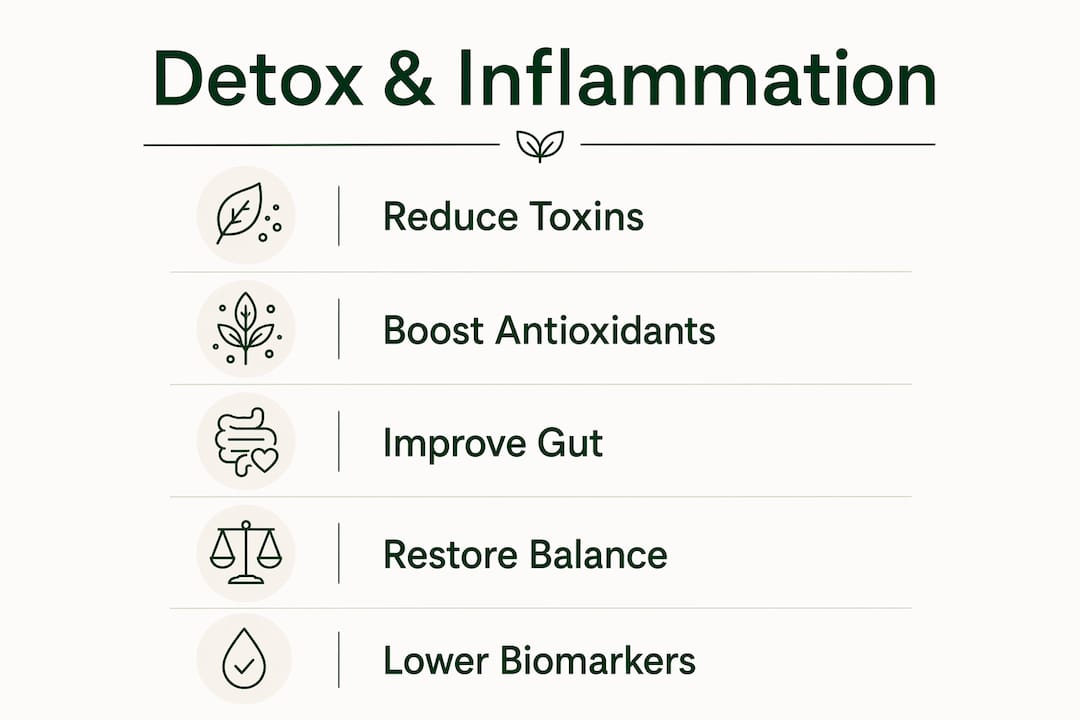
Detoxification reduces inflammation by lowering the body’s toxic burden, restoring antioxidant reserves, and rebalancing immune signalling. These three mechanisms work together, and the science behind them is more specific than most wellness content lets on. A whole-food detox protocol can increase cellular antioxidant capacity by 40% and raise superoxide dismutase (SOD) activity by 23%, with a 13% increase in glutathione S-transferase (GST) activity over four weeks. Those are not trivial shifts. They represent measurable changes in the biochemical environment that drives chronic inflammation.
Table of Contents
- How detoxification reduces inflammation: the core mechanisms
- What causes chronic inflammation?
- How does your gut microbiome affect inflammation?
- How does detoxing reduce inflammation at a biological level?
- Practical detox methods that lower inflammation
- What does the science actually say about detox and inflammation?
- Key points: why and how detox reduces inflammation
- What are the long-term effects of detox on immune system health?
- Key takeaways
- Getgutted: plant-based support for inflammation and detox
How detoxification reduces inflammation: the core mechanisms
Detoxification, in a physiological sense, is the continuous process of reducing toxic load and strengthening antioxidant defences to protect cells from oxidative stress. It is not a weekend juice cleanse. The liver, kidneys, lymphatic system, and gut all play active roles, and when any one of them is overwhelmed, inflammation tends to follow.
The connection between detox and inflammation runs in both directions. Oxidative stress impairs detox pathways by depleting the antioxidants that liver enzymes depend on. Less antioxidant capacity means more free radical activity, which drives further inflammation. Break that cycle and inflammatory markers begin to fall.
Key mechanisms by which detoxification lowers inflammation:
- Toxin load reduction: fewer circulating toxins means fewer triggers for immune activation and cytokine release.
- Antioxidant reserve restoration: replenishing glutathione, SOD, and glutathione S-transferase (GST) neutralises free radicals before they damage tissue.
- Immune modulation: antioxidants regulate immune cell signalling and reduce the synthesis of pro-inflammatory cytokines such as interleukin-6 (IL-6) and tumour necrosis factor-alpha (TNF-α).
- Gut barrier support: restoring intestinal integrity prevents bacterial endotoxins from leaking into the bloodstream and triggering systemic inflammation.
- Phase II liver detox enhancement: conjugation reactions in the liver neutralise reactive metabolites that would otherwise provoke an immune response.
Common inflammation biomarkers that improve with detox include high-sensitivity C-reactive protein (hs-CRP), IL-6, TNF-α, and lipopolysaccharides (LPS). The liver, gut, lymphatic system, and kidneys are the primary organs involved, each contributing to the overall reduction in inflammatory load.
What causes chronic inflammation?
Chronic inflammation does not usually have a single cause. It builds from a combination of dietary choices, environmental exposures, and lifestyle patterns that collectively overwhelm the body’s natural defences.
The most well-established dietary driver is ultra-processed food. A 2025 report published in the journal Nutrients found that ultra-processed foods alter gut bacteria, damage the gut lining, and switch on inflammatory genes in cells. High salt, added sugars, and saturated fat all independently promote inflammation, and most packaged foods combine all three.
Environmental toxins are a less-discussed but equally important trigger. Xenoestrogens, BPA (bisphenol A), and phthalates are synthetic compounds found in plastics, food packaging, and personal care products. They disrupt hormonal signalling and generate oxidative stress, both of which activate inflammatory pathways. Organophosphate pesticides present a similar problem: they suppress the detox enzymes that also neutralise oxidised fats, leaving the body more vulnerable to inflammatory damage.
Oxidative stress sits at the centre of this picture. Free radicals, produced by poor diet, pollution, chronic stress, and alcohol, attack cell membranes, proteins, and DNA. The immune system responds to that damage with inflammation. When free radical production consistently outpaces the body’s antioxidant capacity, the result is low-grade, persistent inflammation that quietly raises the risk of cardiovascular disease, type 2 diabetes, and autoimmune conditions.
Primary causes of chronic inflammation:
- Ultra-processed foods high in sugar, salt, and saturated fat
- Exposure to BPA, phthalates, and xenoestrogens from plastics and packaging
- Organophosphate pesticides in conventionally grown produce
- Chronic psychological stress elevating cortisol and inflammatory cytokines
- Alcohol and tobacco smoke generating free radicals
- Sedentary behaviour reducing anti-inflammatory enzyme activity
- Gut dysbiosis and impaired intestinal barrier function
Pro Tip: Switching from plastic food containers to glass or stainless steel is one of the fastest ways to cut daily BPA and phthalate exposure. The reduction in xenoestrogen load is immediate and requires no dietary change.
How does your gut microbiome affect inflammation?
The gut microbiome is one of the most powerful regulators of systemic inflammation in the body. The trillions of bacteria living in your intestinal tract directly influence immune cell behaviour, cytokine production, and the integrity of the gut wall itself.

When the microbiome is balanced, beneficial bacteria produce short-chain fatty acids (SCFAs) such as butyrate, which strengthen the intestinal lining and suppress inflammatory signalling. Dysbiosis, an imbalance where harmful bacteria outcompete beneficial strains, does the opposite. It weakens tight junctions between intestinal cells, allowing lipopolysaccharides to leak into the bloodstream. This process, known as metabolic endotoxemia, triggers a persistent low-grade immune response throughout the body.
The microbiome also directly influences liver detoxification. Gut bacteria regulate the activity of Phase I and Phase II detox enzymes, including cytochrome P450 enzymes and GST. A disrupted microbiome can reduce the efficiency of these pathways, allowing reactive metabolites to accumulate and generate further oxidative stress.
| Microbiome factor | Effect on inflammation |
|---|---|
| Butyrate-producing bacteria | Strengthen gut barrier; reduce inflammatory cytokines |
| Dysbiosis (bacterial imbalance) | Increases intestinal permeability; raises LPS in blood |
| Metabolic endotoxemia | Drives systemic low-grade inflammation and insulin resistance |
| Reduced microbial diversity | Associated with higher CRP and IL-6 levels |
| Probiotic-rich diet | Supports tight junction integrity; lowers inflammatory markers |
A 12-week detox-enhanced lifestyle intervention targeting endotoxemia produced significant reductions in LPS and zonulin (a marker of intestinal permeability), alongside measurable improvements in body composition and inflammatory markers. The gut was the entry point for much of that improvement.
Pro Tip: Fermented foods such as kefir, sauerkraut, and live-culture yoghurt introduce beneficial bacteria directly. Pairing them with prebiotic fibre from leeks, garlic, and oats gives those bacteria the fuel to produce butyrate and reinforce the gut wall.
How does detoxing reduce inflammation at a biological level?
The liver processes toxins in two stages. Phase I uses cytochrome P450 enzymes to convert fat-soluble toxins into intermediate compounds. Phase II then conjugates those intermediates with molecules such as glutathione, sulphate, or glucuronic acid, making them water-soluble and ready for excretion. The problem is that Phase I intermediates are often more reactive than the original toxin. If Phase II cannot keep pace, those reactive metabolites accumulate and generate free radicals that directly trigger inflammation.

Antioxidants are the bridge between detox capacity and inflammatory control. Glutathione, SOD, and catalase neutralise free radicals produced during Phase I processing. When antioxidant reserves are depleted, whether by poor diet, chronic stress, or high toxic load, Phase I intermediates cause oxidative damage that the immune system reads as a threat. The inflammatory response that follows then further depletes antioxidants, impairing Phase II detox and creating the feedback cycle described in the research.
A guided whole-food detox protocol demonstrated this mechanism clearly. Over four weeks, participants showed a 40% increase in cellular antioxidant capacity, a 13% decrease in reactive oxygen species, a 23% increase in SOD activity, and a 13% increase in GST activity. Each of those changes directly reduces the substrate available for inflammatory signalling.
The detox-inflammation cycle in brief:
- High toxic load overwhelms Phase I liver enzymes
- Reactive intermediates accumulate and generate free radicals
- Free radicals deplete antioxidant reserves (glutathione, SOD, GST)
- Reduced antioxidant capacity allows oxidative damage to tissue
- Immune system activates, releasing IL-6, TNF-α, and CRP
- Chronic inflammation further impairs Phase II detox enzymes
- Cycle continues until toxic load is reduced and antioxidants are replenished
Pro Tip: Cruciferous vegetables such as broccoli, Brussels sprouts, and kale contain sulforaphane, which directly upregulates Phase II detox enzymes. Adding them to meals three to four times per week is one of the most evidence-supported ways to boost detox pathways naturally.
Understanding natural detox pathways helps clarify why food choices have such a direct impact on inflammatory load. It is not about “cleansing” in the marketing sense. It is about giving the liver the cofactors it needs to complete Phase II reactions efficiently.
| Detox phase | Key enzymes | Antioxidants involved | Inflammatory impact |
|---|---|---|---|
| Phase I (oxidation) | Cytochrome P450 | Glutathione (consumed) | Produces reactive intermediates |
| Phase II (conjugation) | GST, UGT, SULT | Glutathione (required) | Neutralises intermediates; reduces oxidative load |
| Antioxidant defence | SOD, catalase | Vitamin C, E, selenium | Directly quenches free radicals driving inflammation |
Practical detox methods that lower inflammation
The most effective detox is a sustained lifestyle that supports the body’s natural metabolic pathways, not a short-term cleanse. That distinction matters because extreme calorie-restrictive detoxes can actually impair Phase II liver detoxification by depriving the liver of the amino acids and cofactors it needs. The result can be a higher, not lower, toxic burden.
Dietary approaches
An anti-inflammatory whole-food diet is the foundation. Harvard Health notes that whole, unprocessed foods including fruits, vegetables, legumes, fish, nuts, and olive oil provide the fibre, omega-3 fatty acids, and polyphenols that actively suppress inflammatory pathways. Brightly coloured vegetables supply antioxidants that reduce free radical activity directly. Herbs and spices such as turmeric, ginger, and cinnamon carry additional anti-inflammatory compounds.
Herbal functional beverages deserve specific mention. They are one of the more studied delivery formats for plant-based anti-inflammatory compounds, and the clinical data on their effects on hs-CRP, IL-6, and TNF-α is discussed in the evidence section below.
Lifestyle and physical approaches
- Intermittent fasting: reduces oxidative stress and gives the liver recovery time between detox cycles.
- Hydration: adequate water intake supports kidney filtration and lymphatic flow, both of which clear inflammatory metabolites.
- Exercise: regular moderate activity raises antioxidant enzyme activity and reduces circulating inflammatory cytokines.
- Sauna use: heat stress promotes sweating as an excretion pathway and has been associated with lower inflammatory markers in observational studies.
- Stress management: chronic psychological stress elevates cortisol, which suppresses immune regulation and raises inflammatory cytokine levels. Practices such as breathwork, yoga, and adequate sleep directly reduce this load.
Toxin avoidance
Reducing exposure to xenoestrogens, BPA, and phthalates cuts the inflammatory trigger load before it even reaches the liver. Reducing organophosphate exposure preserves the detox enzymes that neutralise oxidised fats, keeping inflammatory pathways quieter. Practical steps include choosing organic produce for the highest-pesticide crops, avoiding plastic food packaging, and switching to fragrance-free personal care products.
Common detox mistakes that increase inflammation
Juice fasts and very low-calorie protocols strip the liver of the protein and micronutrients it needs for Phase II reactions. This is not a theoretical risk. Amino acids such as glycine, taurine, and glutamine are direct substrates for Phase II conjugation. Without them, Phase I intermediates build up and worsen oxidative stress rather than resolving it.
Pro Tip: If you are following a detox protocol, keep protein intake above 1g per kilogram of body weight daily. This gives the liver the raw materials for Phase II reactions and prevents the reactive intermediate build-up that drives inflammation.
For a structured approach to herbal detox methods that avoids these pitfalls, the evidence consistently points to protocols that combine dietary support with targeted botanical compounds rather than restriction alone.
What does the science actually say about detox and inflammation?
The clinical evidence for detox reducing inflammation has strengthened considerably in recent years, particularly around herbal functional beverages and whole-food nutritional protocols.
A randomised controlled study on herbal functional beverages found that over eight weeks, hs-CRP decreased by 0.62 mg/L versus 0.12 mg/L in the control group. IL-6 dropped by 0.81 pg/mL versus 0.16 pg/mL, and TNF-α fell by 0.89 pg/mL versus 0.12 pg/mL. These are not marginal differences. The herbal intervention produced roughly five times the reduction in key inflammatory markers compared to the control condition.
The whole-food detox data referenced earlier adds another layer. The 40% rise in cellular antioxidant capacity and the 23% increase in SOD activity over four weeks show that the liver’s own defences can be meaningfully restored through dietary intervention, not just supplementation.
| Biomarker | Herbal beverage group (8 weeks) | Control group (8 weeks) |
|---|---|---|
| hs-CRP reduction (mg/L) | 0.62 | 0.12 |
| IL-6 reduction (pg/mL) | 0.81 | 0.16 |
| TNF-α reduction (pg/mL) | 0.89 | 0.12 |
| Cellular antioxidant capacity | +40% | Not measured |
| SOD activity | +23% | Not measured |
| GST activity | +13% | Not measured |
The DELITE pilot study on detox-enhanced lifestyle intervention showed significant reductions in LPS and zonulin after 12 weeks, confirming that gut barrier restoration is a measurable and achievable outcome of structured detox programmes.
Statistic to note: In the herbal functional beverage trial, TNF-α fell by 0.89 pg/mL in the intervention group versus just 0.12 pg/mL in controls, a difference that reflects a genuine shift in the body’s inflammatory signalling, not a statistical artefact.
Limitations are worth acknowledging. Many detox studies use small samples, short durations, or lack rigorous blinding. The strongest evidence currently supports dietary and herbal approaches over short-term fasting or juice protocols. Anti-inflammatory whole-food diets show measurable improvements in inflammatory markers within two to three weeks, with reported benefits including reduced joint pain, clearer skin, better sleep, and lower gastrointestinal symptoms. That timeline is clinically meaningful and achievable without extreme restriction.
The consistent message across the research is that plant-based inflammation support works best when it is sustained. A two-week cleanse followed by a return to processed food will not hold the gains. The biochemistry requires ongoing support.
Key points: why and how detox reduces inflammation
Detox reduces inflammation by addressing the root biochemical causes rather than masking symptoms. The evidence points to three interconnected mechanisms: lowering toxic load, restoring antioxidant capacity, and repairing gut barrier integrity.
- Detox lowers the toxic burden on the liver, reducing the volume of reactive intermediates that generate free radicals and trigger immune activation.
- Restoring antioxidant reserves (glutathione, SOD, GST) gives the body the tools to neutralise oxidative stress before it becomes inflammatory damage.
- Gut health is central: repairing intestinal barrier integrity prevents LPS from leaking into the bloodstream and driving systemic inflammation.
- Herbal functional beverages and whole-food protocols produce measurable reductions in hs-CRP, IL-6, and TNF-α within four to eight weeks.
- Consistency matters more than intensity. Sustained dietary and lifestyle changes outperform short-term cleanses every time the research compares them.
- Toxin avoidance, including reducing BPA, phthalates, and xenoestrogen exposure, cuts the inflammatory trigger load at source.
- Extreme calorie restriction undermines Phase II liver detox by removing the amino acid cofactors the process depends on.
What are the long-term effects of detox on immune system health?
Over time, a sustained detox-oriented lifestyle reshapes how the immune system behaves. The short-term reductions in hs-CRP and IL-6 seen in clinical trials are the beginning of a longer process in which the immune system gradually recalibrates away from a state of chronic activation.
The liver’s Phase II capacity improves with consistent nutritional support. Higher GST and SOD activity means the body processes environmental toxins more efficiently, so each new exposure generates less oxidative stress and less immune activation. This is why people who maintain anti-inflammatory dietary patterns for months rather than weeks tend to report qualitatively different results: fewer flare-ups, better energy, and reduced sensitivity to environmental triggers.
Gut microbiome diversity also improves with sustained dietary change. A more diverse microbiome produces more butyrate, which directly suppresses the NF-κB inflammatory pathway in intestinal cells. Over time, this reduces the baseline level of immune activation that drives conditions such as inflammatory bowel disease, eczema, and chronic joint pain. The role of detox in wellness is therefore cumulative: each month of consistent practice builds on the last.
There is also an immune tolerance dimension. Chronic inflammation is associated with a loss of regulatory T-cell function, the immune cells that prevent the body from attacking its own tissue. Reducing oxidative stress and toxic load appears to support regulatory T-cell activity, which is one reason anti-inflammatory protocols show benefit in autoimmune conditions. The research here is still developing, but the mechanistic rationale is sound.
The practical implication is straightforward. Detox is not a reset button you press once a year. It is a set of daily habits, dietary choices, toxin avoidance, stress management, and targeted botanical support, that collectively keep the immune system from tipping into chronic overactivation.
Key takeaways
Detox reduces inflammation by lowering toxic burden, restoring antioxidant capacity, and repairing gut barrier integrity, with measurable improvements in hs-CRP, IL-6, and TNF-α within four to eight weeks.
| Point | Details |
|---|---|
| Core mechanism | Detox lowers toxic load and restores antioxidant reserves, breaking the cycle of oxidative stress and immune activation. |
| Antioxidant evidence | A whole-food detox protocol produced a 40% increase in cellular antioxidant capacity, a 23% rise in SOD activity, and a 13% increase in GST activity over four weeks. |
| Herbal beverage data | Herbal functional beverages reduced hs-CRP by 0.62 mg/L and TNF-α by 0.89 pg/mL over eight weeks versus minimal change in controls. |
| Gut health is central | Restoring intestinal barrier integrity reduces LPS leakage and metabolic endotoxemia, two primary drivers of systemic inflammation. |
| Getgutted approach | Getgutted’s herbal wellness kits and botanical teas are formulated to support the liver detox pathways and gut health that underpin inflammation reduction. |
Getgutted: plant-based support for inflammation and detox
If you have read this far, you understand that reducing inflammation through detox is not about restriction. It is about giving your body the botanical compounds, antioxidants, and gut support it needs to do the work it was designed to do.
Getgutted’s wellness kits are built around exactly that principle. Each kit combines handcrafted herbal oils, botanical teas, and targeted supplements chosen for their evidence-backed roles in supporting liver detox pathways, lymphatic drainage, and gut barrier integrity. The formulations draw on traditional plant-based healing practices and are produced in small batches with strict ingredient standards, so you know what you are actually putting into your body.
For anyone dealing with persistent low-grade inflammation, hormonal imbalance, or a sense that their body is not clearing toxins efficiently, these kits offer a structured starting point grounded in the same mechanisms this article covers. No extreme restriction, no missing cofactors, just consistent botanical support for the pathways that matter.
Browse the wellness kits and find the combination that fits your current health focus.