

What is naturopathic detoxification: a practical guide
Naturopathic detoxification is defined as the clinical support of your body’s continuous, natural waste elimination processes through personalised nutrition, herbal medicine, and lifestyle strategies. Unlike commercial juice cleanses or short-term fasting protocols, this approach works with the liver, kidneys, lymphatic system, digestive tract, skin, and nervous system simultaneously. Naturopathic practitioners design evidence-based programmes that are tailored to your individual physiology, not a generic reset. The goal is to remove barriers to elimination and strengthen the pathways your body already uses every day.
What is naturopathic detoxification and how does it differ from commercial cleanses?
Naturopathic detoxification supports your body’s continuous physiological processes rather than attempting to trigger a process that is already running. Your liver, kidneys, and lymphatic system are working right now. The question naturopathic practice asks is: are they working well enough, and what is slowing them down?
Commercial detox products typically promise a short, dramatic reset. Naturopathic detox programmes, by contrast, are built around clinical assessment, identifying whether your digestion is sluggish, your lymphatic system is congested, or your liver is under-supported nutritionally. The intervention follows the finding, not a fixed protocol.
One concrete example is the use of cruciferous vegetables such as broccoli, kale, and Brussels sprouts. These foods increase Phase II enzyme capacity in the liver, which is the stage responsible for binding toxins so they can be safely excreted. This is targeted nutritional support, not a trend.
Which organs and systems are involved in naturopathic detoxification?
The liver is the central organ in naturopathic detox practice. It processes fat-soluble toxins through two sequential stages. Phase I uses cytochrome P450 enzymes to break compounds down. Phase II then conjugates those broken-down intermediates with amino acids, glutathione, or sulphate groups so the body can excrete them safely. Upregulating Phase I without adequately supporting Phase II causes toxin recirculation and worsens symptoms rather than relieving them.

The kidneys filter blood continuously and excrete water-soluble waste through urine. Adequate hydration is not optional here. Without sufficient fluid intake, the kidneys cannot maintain the concentration gradient needed for effective filtration.
The gastrointestinal tract plays a dual role. It produces bile, which carries fat-soluble waste from the liver into the intestines, and it eliminates that waste through stool. Constipation is one of the most common barriers to effective detoxification because it allows toxins bound in bile to be reabsorbed.
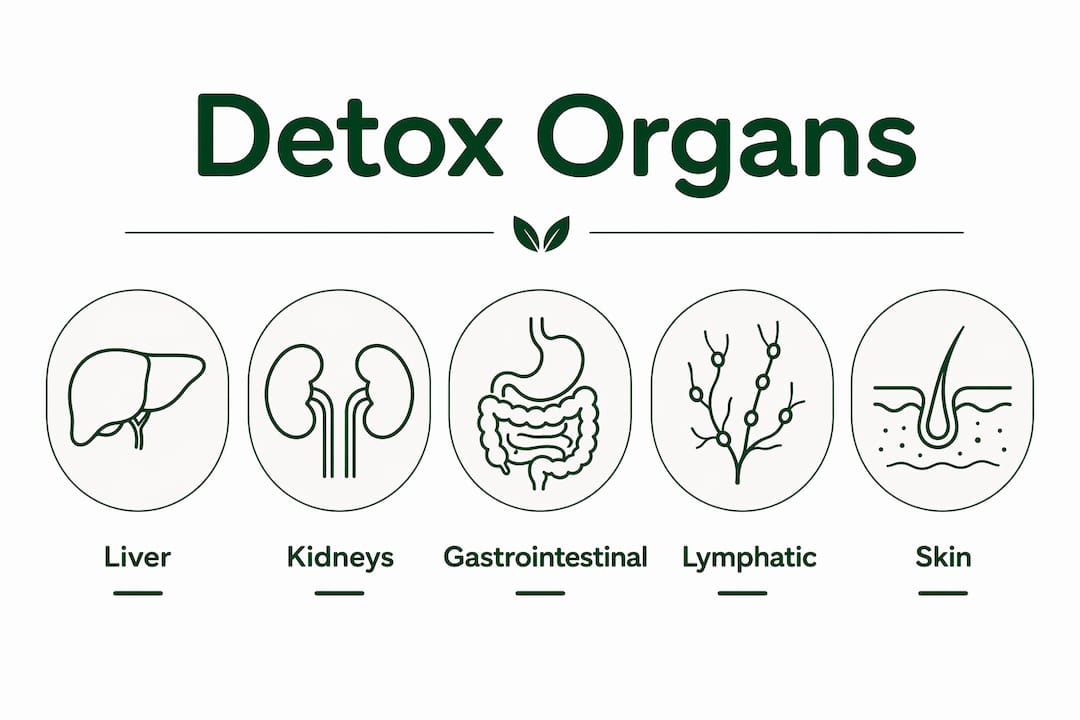
The lymphatic system transports cellular waste and immune debris from tissues to the bloodstream for processing. Unlike the cardiovascular system, it has no pump. Movement, deep breathing, and manual techniques are the primary ways to keep lymphatic flow active.
The skin contributes through sweat, particularly in response to heat or exercise. The nervous system’s glymphatic pathway, which clears metabolic waste from the brain, operates almost exclusively during deep sleep. This is why sleep quality is a clinical consideration in any naturopathic detox programme.
| System | Primary detox function | Key support strategy |
|---|---|---|
| Liver | Phase I and II chemical transformation | Amino acids, glutathione, cruciferous vegetables |
| Kidneys | Water-soluble waste filtration | Consistent hydration |
| Gastrointestinal tract | Bile excretion and stool elimination | Fibre, bowel regularity |
| Lymphatic system | Cellular waste transport | Movement, deep breathing |
| Skin | Toxin excretion via sweat | Exercise, infrared sauna |
| Nervous system (glymphatic) | Brain metabolic waste clearance | Quality sleep |
What are the primary naturopathic detox methods and practices?
Naturopathic detox methods are built on a hierarchy. Foundational nutrition comes first, followed by targeted herbal support, then gentle clinical modalities. Skipping the foundation and jumping to the modalities is a common mistake.
-
Nutritional optimisation. Protein provides the amino acids required for Phase II liver conjugation. Micronutrients including B vitamins, magnesium, and zinc act as cofactors for detox enzymes. Antioxidants, particularly glutathione from foods like avocado and asparagus, protect liver cells during the detox process. Extreme fasting or juice cleanses strip away these nutrients and actively impair Phase II function.
-
Herbal medicine. Herbs such as milk thistle support liver cell regeneration and protect against oxidative damage. Dandelion root stimulates bile production. Burdock root supports kidney filtration. A naturopath selects herbs based on your clinical picture, not a standard formula. Getgutted’s approach to herbal detox support reflects this principle of personalised botanical care.
-
Hydration and movement. Two to three litres of water daily supports kidney filtration and lymphatic flow. Regular movement, even brisk walking, activates the lymphatic system and promotes sweating through the skin.
-
Gentle clinical adjuncts. Infrared sauna and colon hydrotherapy are used as adjunct modalities in some naturopathic programmes. They are not the centrepiece. They are used selectively, after clinical assessment confirms the elimination pathways are open enough to handle increased output.
-
Personalised assessment. A naturopath identifies your specific bottlenecks before recommending any protocol. Sluggish digestion, poor sleep, chronic stress, and lymphatic congestion each require a different primary intervention.
Pro Tip: Before adding any herbal supplement to your routine, confirm your bowel movements are regular. If the gastrointestinal exit is blocked, mobilising more toxins through herbal support will simply recirculate them.
What are the benefits and common misconceptions about naturopathic detox?
The realistic benefits of naturopathic detox include improved energy, clearer skin, better hormone balance, stronger immune function, and reduced inflammation. These outcomes occur because the body’s elimination systems are working more efficiently, not because toxins have been magically flushed out by a single product.
The most persistent misconception is that detox needs to be switched on. Detox is always active. Your liver processed toxins while you slept last night. The naturopathic question is whether the system is burdened or supported.
A second misconception is that more is better. Aggressive protocols that mobilise stored toxins faster than the elimination pathways can handle them cause what practitioners call a “healing crisis.” Symptoms include fatigue, headaches, and skin reactions.
A ‘healing crisis’ is not a sign that detox is working. It is a sign that the protocol has overloaded the elimination system. A well-designed naturopathic programme avoids this entirely by opening elimination pathways before mobilising stored toxins.
The third misconception is that detox is a one-time event. Naturopathic detox is an ongoing, lifelong process of reducing burden and supporting capacity. Seasonal programmes are useful resets, not complete solutions.
You can read more about natural detox pathways and how they work continuously in the body.
How does naturopathic detox work in daily life and seasonal routines?
Daily detox support does not require a formal programme. Foundational habits including consistent hydration, seven to nine hours of quality sleep, regular movement, and stress management are the most powerful tools available, and they are the least consistently applied.
Aromatic herbs offer a surprisingly accessible daily tool. Smelling fennel or peppermint before meals stimulates digestive secretions via the vagus nerve. This primes the gastrointestinal tract for better bile flow and nutrient absorption, both of which support liver detox function. The cost is near zero.
Seasonal detox programmes, typically timed with spring or autumn, act as structured resets. Naturopaths favour these periods for gentle liver, kidney, digestive, and lymphatic support. The approach avoids harsh interventions and instead uses the seasonal shift as a prompt to reassess and recalibrate habits.
Practical daily habits worth building include:
- Drinking warm water with lemon first thing in the morning to stimulate bile flow
- Eating at least one serving of cruciferous vegetables daily to support liver Phase II enzymes
- Moving for at least 30 minutes to activate lymphatic circulation
- Prioritising sleep as a non-negotiable, given the glymphatic system’s dependence on it
- Managing stress actively, since chronic cortisol suppresses liver detox enzyme activity
Pro Tip: Seasonal detox is not mandatory for everyone. Focus on it if you notice signs of impaired elimination: persistent fatigue, skin breakouts, bloating, or brain fog. These are your body’s signals that the system needs support.
Key takeaways
Naturopathic detoxification works by supporting the liver, kidneys, lymphatic system, and gut simultaneously through nutrition, herbal medicine, and consistent daily habits, not short-term cleanses.
| Point | Details |
|---|---|
| Detox is always active | Your body detoxifies continuously; naturopathy supports and removes barriers to this process. |
| Phase II support is critical | Without amino acids and glutathione, Phase I activity recirculates toxins rather than eliminating them. |
| Elimination pathways come first | Open bowels, hydration, and lymphatic movement must be established before mobilising stored toxins. |
| Seasonal resets are gentle tools | Spring and autumn programmes recalibrate habits; they are not replacements for daily foundational care. |
| Aggressive cleanses carry real risk | Juice fasts and extreme protocols deplete the micronutrients required for effective Phase II detoxification. |
Why I think most people misunderstand what detox actually does
After working with people on natural health for years, the pattern I see most often is this: someone tries an aggressive cleanse, feels terrible by day three, and concludes that detox does not work for them. What actually happened is that the protocol mobilised stored compounds faster than their elimination system could handle them.
The body does not need to be forced into detoxification. It needs the barriers removed. That means regular bowel movements, adequate protein, quality sleep, and movement before anything else. The herbs and clinical modalities come after, not instead of, those foundations.
What I find most striking is how rarely people address sleep as a detox tool. The glymphatic system clears brain metabolic waste almost entirely during deep sleep. Skipping that and buying an expensive supplement is the wrong order of operations entirely.
Naturopathic detox is best understood as lifelong maintenance, not a seasonal event. The people who benefit most are those who build consistent small habits and use seasonal programmes as a check-in, not a rescue. That shift in thinking changes everything about how you approach your health.
— Mabel
Wellness kits that support your natural detox pathways
If you have read this far, you already understand that effective detox support comes from consistent, targeted nutrition and herbal care rather than dramatic short-term protocols.
Getgutted’s wellness kits are formulated to complement exactly the kind of personalised, gradual detox approach described here. Each kit brings together botanicals and nutritional support designed to work with your liver, lymphatic system, and elimination pathways, not against them. They are a practical next step for anyone ready to move from understanding the principles to applying them daily. Explore the range and find the kit that fits your current health picture.
FAQ
What is naturopathic detoxification in simple terms?
Naturopathic detoxification is the clinical support of your body’s natural, continuous waste elimination systems through personalised nutrition, herbal medicine, and lifestyle changes. It is not a short-term cleanse but an ongoing process of reducing burden and improving elimination capacity.
How does naturopathic detox differ from a juice cleanse?
A juice cleanse restricts food and typically lacks the protein and micronutrients required for liver Phase II detoxification. Naturopathic detox programmes are clinically assessed, nutritionally complete, and designed to support all elimination pathways simultaneously.
How long does a naturopathic detox programme take?
Programme length varies based on clinical assessment and individual needs. Seasonal programmes typically run for two to four weeks, while foundational habit changes are maintained year-round as ongoing support.
Can naturopathic detox cause side effects?
Poorly designed protocols that mobilise toxins faster than the body can eliminate them cause fatigue, headaches, and skin reactions. A well-structured naturopathic programme avoids this by establishing open elimination pathways before any mobilisation phase begins.
Who benefits most from naturopathic detox support?
People experiencing persistent fatigue, skin breakouts, bloating, hormonal imbalance, or brain fog are most likely to benefit. These symptoms often indicate impaired elimination that targeted naturopathic support can address effectively.