

How to apply poke root oil for lymphatic health
TL;DR:
- Poke root oil is used topically to stimulate the lymphatic system, not for ingestion.
- Proper preparation, patch testing, and cautious application are essential for safety.
- Results vary; signs of effectiveness include reduced swelling and improved lymphatic flow.
Conventional remedies often fall short when lymphatic discomfort becomes a persistent concern. Swelling, fluid retention, and a sense of blockage in the body can be frustrating to manage, and many people in the UK are turning to traditional herbal options for support. Poke root oil, particularly when infused in castor oil, has a long history of folk use for lymphatic stimulation. This article walks you through exactly how to apply it safely, what to prepare beforehand, and how to assess whether it is working for you.
Table of Contents
- What you need before starting
- Step-by-step poke root oil application process
- Troubleshooting and common mistakes
- Expected outcomes and how to verify effects
- A fresh perspective on poke root oil safety and tradition
- Find trusted herbal support for your wellness routine
- Frequently asked questions
Key Takeaways
| Point | Details |
|---|---|
| Patch test first | Always perform a skin patch test before full application to check for sensitivity. |
| Use small amounts | Apply poke root oil sparingly and avoid broken skin or facial areas to minimise risk. |
| Track outcomes | Record your responses and results to assess effectiveness and spot potential issues early. |
| Respect traditional limits | Stick to traditional topical use and avoid oral ingestion, as safety is not clinically validated. |
What you need before starting
Preparation matters as much as the application itself. Before you use poke root oil on your body, there are several things to gather and check. Skipping this stage is one of the most common reasons people run into problems.
Essential materials:
- High-quality poke root oil infused in castor oil, sourced from a reputable supplier
- A clean glass dropper for precise application
- Nitrile gloves to protect your hands during use
- A clean, soft cloth for spreading and wiping
- A journal or notes app to track your responses over time
Quality sourcing is non-negotiable. A well-prepared poke root oil guide can help you understand what distinguishes a potent slow-infused oil from a diluted or poorly processed one.
Skin patch test: do this first
Apply a small amount of oil to the inside of your forearm. Leave it for 24 hours. If you notice redness, itching, or swelling, do not proceed. This is your body’s signal that topical use may not be suitable for you.
Pro Tip: Patch test on the same type of skin area you plan to treat. Testing on your forearm when you intend to apply to your neck gives a closer indication of likely sensitivity.
Poke root oil is for external topical use only. Do not ingest it. Pokeweed safety concerns note that no clinical trials support uses or dosages, and risks include GI distress if absorbed excessively.
When reviewing your options, it also helps to look at a broader herbal remedies comparison to understand how poke root oil sits alongside other plant-based lymphatic supports.
| Preparation step | Why it matters |
|---|---|
| Skin patch test | Identifies allergic or sensitive reactions before full use |
| Gloves during application | Limits skin contact and accidental ingestion via hands |
| Clean application cloth | Prevents bacterial contamination of treated areas |
| Quality oil source | Ensures potency and reduces risk from fillers or synthetic additives |
| Application journal | Tracks reactions and outcomes for informed decision-making |
Step-by-step poke root oil application process
Once your patch test results are clear and your tools are assembled, you can proceed with the application. Follow these steps in order.
- Wash the target area with mild soap and pat it dry. Clean, dry skin allows the oil to absorb more evenly.
- Put on your nitrile gloves before handling the oil. This protects your hands and prevents accidental transfer to eyes or mouth.
- Draw up 3 to 5 drops of oil using the glass dropper. Less is more when starting out.
- Apply the oil directly to the skin over the target area, such as the side of the neck, underarm, or groin where lymph nodes are accessible.
- Massage gently in circular motions for 2 to 3 minutes. Use light pressure. The goal is to encourage surface absorption, not to press deeply into tissue.
- Leave the area uncovered and allow the oil to absorb naturally. Do not apply heat directly on top.
- Wash your hands thoroughly after removing gloves, even if you did not directly touch the oil.
For guidance on pairing this with broader herbal lymph massage guide techniques, specific movement sequences can improve lymphatic flow alongside topical application.
Traditional folk use describes a lymphatic ‘plunger’ effect, though medical sources note undefined safety benchmarks and no proven dosage standards for topical application.
Pro Tip: Apply in the evening when your body is at rest. Lymphatic drainage is naturally more active during rest periods, which may support better absorption and response.
Areas to avoid:
- Broken, cut, or irritated skin
- The face, including the eye area and lips
- Mucous membranes
- Any area with an active rash or infection
| Application factor | Recommended approach |
|---|---|
| Amount per session | 3 to 5 drops |
| Frequency | Start with 2 to 3 times per week |
| Massage duration | 2 to 3 minutes per area |
| Target zones | Neck, underarm, groin (lymph node sites) |
| Time of day | Evening, during rest |
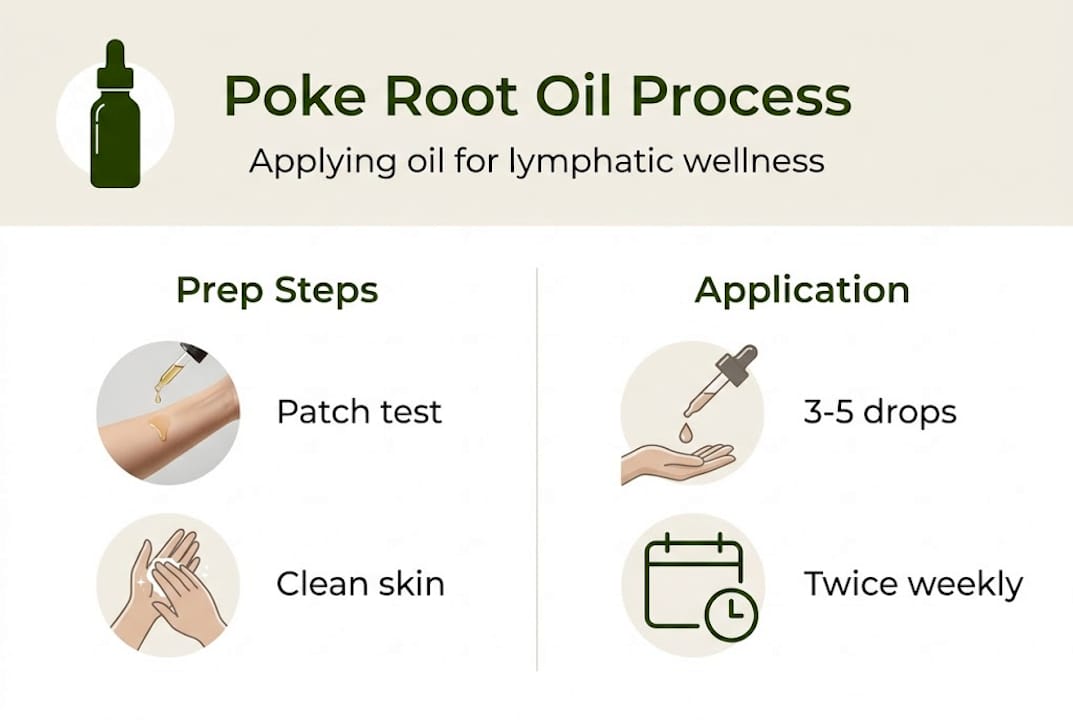
Learn more about how this relates to poke root oil lymphatic wellness in a broader context of daily herbal self-care.
Troubleshooting and common mistakes
Even with careful preparation, issues can arise. Knowing what to look for and how to respond quickly can prevent minor reactions from becoming more serious.
Common mistakes people make:
- Applying too much oil in a single session, particularly in the early stages
- Using the oil on sensitive skin areas without patch testing first
- Applying over broken or inflamed skin, which increases absorption rate
- Forgetting gloves and then touching the face or mouth
- Using the oil daily from the outset rather than building up gradually
Warning signs to watch for:
- Redness or warmth that spreads beyond the application area
- Persistent tingling or itching that does not resolve within an hour
- Nausea or stomach discomfort, which may indicate excessive absorption
- Any swelling that worsens rather than improves
GI distress risks are a documented concern when pokeweed compounds are absorbed excessively, making it essential to keep applications controlled and minimal.
What to do if a reaction occurs:
- Wash the area immediately with mild soap and lukewarm water.
- Remove gloves and wash hands thoroughly.
- Do not apply anything else to the area until it has settled.
- If symptoms worsen or involve nausea, seek medical advice promptly.
Pro Tip: Keep a simple application journal. Note the date, area treated, amount used, and any reactions. This record is invaluable if you ever need to consult a practitioner or simply refine your routine.

If you are exploring multiple herbal options, reading about herbal inflammation support can help you understand which plant-based approaches are better suited to your specific concerns. You can also find a useful overview of herbal oils inflammation relief to compare methods and make more informed choices.
Expected outcomes and how to verify effects
After following the correct application process, you will want to know what to look for and how to assess whether the approach is producing any change for you.
Positive signs that may indicate a response:
- A reduction in localised puffiness or swelling around the treated area
- Improved comfort or reduced heaviness in the limbs
- Slightly easier movement or reduced tension near lymph node sites
- A general sense of improved drainage over several weeks of consistent use
These outcomes vary significantly from person to person. Factors including your overall lymphatic health, hydration levels, diet, and activity levels all influence how your body responds. Traditional views emphasise a variable ‘plunger’ effect, but no clinical benchmarks exist to standardise or predict results.
Signs to pause or stop the routine:
- Persistent redness or skin irritation that does not clear between sessions
- Any increase in swelling or discomfort after application
- Systemic symptoms such as headache, nausea, or fatigue
| Outcome type | What it may indicate |
|---|---|
| Reduced localised swelling | Positive response to topical application |
| No change after 3 to 4 weeks | Routine adjustment or alternative approach may be needed |
| Increased redness or irritation | Reduce frequency or discontinue use |
| Systemic symptoms | Stop immediately and consult a medical professional |
Tracking effectiveness requires patience. Give the process at least three to four weeks before drawing conclusions. Consistency in technique, amount, and frequency matters more than any single session.
For broader context, exploring articles on herbal oils swelling relief and lymphatic support evidence can help you set realistic expectations. You may also find it useful to read about natural detox herbs that complement topical oil use as part of a wider wellness routine.
A fresh perspective on poke root oil safety and tradition
The folk tradition around poke root is genuinely compelling. Communities across generations have used it as a lymphatic ‘plunger’, describing it as something that gets things moving when the body feels stuck. That empirical legacy carries weight. It means real people, over a long period of time, found something useful here.
But we should be honest about what that history does and does not tell us. Traditional folk use lacks the controlled conditions needed to establish safe dosages, reliable outcomes, or risk thresholds. The gap between “people have used this for generations” and “this is clinically safe and effective” is significant.
Responsible self-experimentation is not reckless experimentation. It means starting small, recording your responses, and treating early warning signs seriously rather than pushing through them. A degree of scepticism, applied thoughtfully, produces safer outcomes than uncritical enthusiasm.
Community feedback consistently points to one pattern: those who approach herbal self-care swelling with measured expectations and careful tracking tend to report more positive experiences than those who expect rapid results.
Find trusted herbal support for your wellness routine
If you are ready to take the next step, sourcing quality matters as much as technique.
Our herbal wellness range includes our Organic Poke Root Oil infused in Castor Oil, handcrafted in small batches using traditional slow-infusion methods. Each product is made to preserve the natural integrity of the herb and maximise potency. Alongside the oil, we offer complementary products including Soursop Leaves, Apricot Kernels, and Essiac tea blends, all selected to support detox, internal balance, and overall lymphatic wellness. If you are looking for trustworthy, plant-based options made with care, this is where to start.
Frequently asked questions
Is poke root oil safe for daily use?
There is no clinical evidence supporting safe daily use. Empirical tradition suggests caution, as GI distress risks increase when compounds are absorbed excessively through frequent application.
Can poke root oil be used on broken skin or sensitive areas?
Avoid applying it to broken skin, the face, or sensitive areas. Undefined safety benchmarks mean adverse reactions are more likely in areas with compromised or thinner skin barriers.
What should I do if I experience redness or discomfort after applying poke root oil?
Wash the area immediately with mild soap, discontinue use, and monitor symptoms. If discomfort persists or worsens, seek medical advice promptly.
Are there proven benefits for lymphatic health from poke root oil?
Folk tradition praises its lymphatic support, but no clinical trials substantiate or quantify the benefits for lymphatic health in a controlled setting.