

Herbal Wellness Explained: Natural Balance for Modern Life
More than 45 percent of British adults have tried herbal remedies to support their health. The rising popularity of botanical healing across British communities highlights a growing search for natural alternatives that nurture wellbeing without harsh chemicals. With roots in both ancient tradition and modern science, herbal wellness offers a powerful way to restore balance and resilience. Explore how natural botanicals can become part of a holistic routine for better health outcomes.
Key Takeaways
| Point | Details |
|---|---|
| Holistic Approach | Herbal wellness focuses on restoring the body’s balance through natural remedies, integrating traditional knowledge with contemporary science. |
| Diverse Remedies | A variety of herbal remedies, such as tinctures and teas, offer targeted health benefits and can be personalised to individual needs. |
| Detox Support | Specific herbs aid the body’s detoxification processes, promoting overall wellness and homeostasis. |
| Safety Considerations | Consult a qualified healthcare professional before using herbal remedies to ensure safety and avoid potential interactions. |
Defining Herbal Wellness and Botanical Healing
Herbal wellness represents a holistic approach to health that harnesses the therapeutic potential of natural botanical ingredients. This ancient practice goes far beyond simple symptom treatment, focusing instead on restoring the body’s intrinsic balance and supporting comprehensive wellbeing. By understanding how traditional healing networks interact with human biological systems, we can appreciate the profound intelligence embedded in herbal medicine.

Historically, practitioners have observed that plants carry specific healing signatures, a concept known as the doctrine of signatures. Early healing traditions suggested that a plant’s physical characteristics might indicate its medicinal properties, reflecting a deep interconnectedness between natural elements and human health. This perspective recognises that botanical remedies work synergistically with the body’s own healing mechanisms, rather than simply suppressing symptoms.
Modern herbal wellness integrates traditional knowledge with contemporary scientific understanding. Botanical healing approaches recognise that each herb contains complex compounds that can support different bodily systems – from immune function to hormonal balance. By selecting specific herbs and understanding their unique properties, individuals can create personalised wellness strategies that address their specific health needs.
Pro Tip - Herbal Wellness Foundation: Begin your herbal wellness journey by consulting with a qualified herbalist who can help you develop a tailored approach matched to your individual health profile and wellness goals.
Further reading on this topic can be found in our traditional infusions guide, which explores deeper insights into herbal restoration and natural wellness practices.
Types of Herbal Remedies and Their Uses
Herbal remedies encompass a diverse range of therapeutic approaches that harness the healing potential of botanical ingredients. Traditional medicinal plants offer a comprehensive array of health-supporting compounds, each with unique properties and potential therapeutic applications. These natural remedies can be categorised into several key types, including tinctures, infusions, essential oils, herbal teas, and topical preparations.
The spectrum of herbal remedies includes powerful botanicals with targeted health benefits. Common examples include adaptogenic herbs like ashwagandha for stress management, anti-inflammatory herbs such as turmeric for joint health, and immune-supporting herbs like echinacea. Comprehensive botanical guides detail preparation methods and specific uses for over 100 medicinal plants, highlighting the rich diversity of natural healing approaches available to modern wellness practitioners.
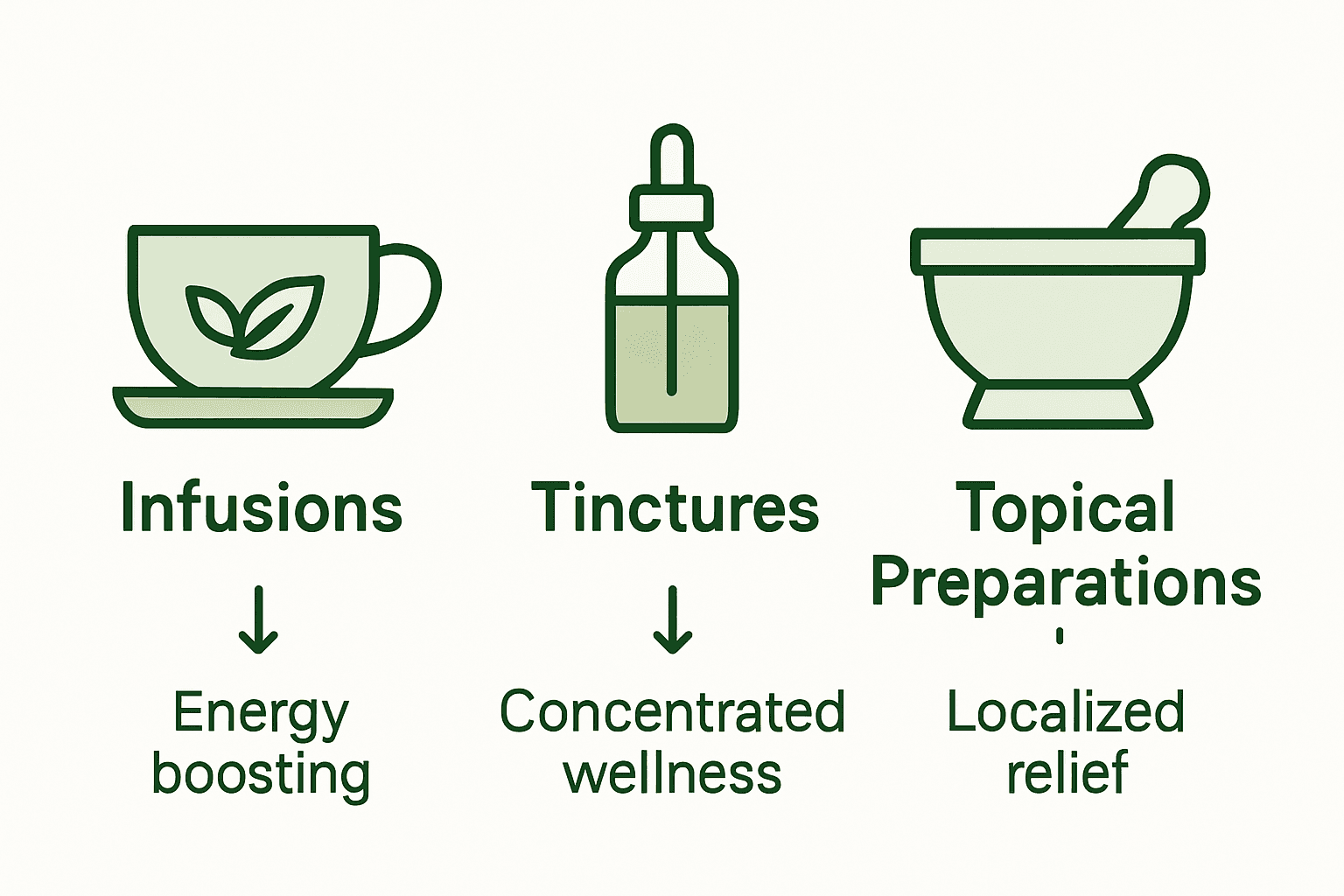
Each herbal remedy type offers distinct advantages and absorption methods. Tinctures provide concentrated herbal extracts with rapid systemic absorption, while herbal teas offer gentler, more gradual therapeutic effects. Topical preparations can deliver localised healing, making herbal remedies incredibly versatile for addressing various health concerns. Understanding these different applications allows individuals to create personalised wellness strategies tailored to their specific physiological needs.
The following table summarises the main types of herbal remedies and highlights their common uses and absorption methods:
| Remedy Type | Typical Uses | Absorption Method |
|---|---|---|
| Tinctures | Rapid systemic support | Alcohol-based, fast absorption |
| Infusions | Gentle daily upkeep | Steeped in hot water, moderate |
| Essential Oils | Aromatherapy or topical | Inhaled or applied to skin |
| Herbal Teas | General wellness, hydration | Consumed as beverage, gradual |
| Topical Preparations | Local relief, skin care | Applied directly to affected area |
Pro Tip - Herbal Remedy Selection: Always consult a qualified herbalist or healthcare professional to ensure safe and appropriate herbal remedy selection based on your individual health profile and potential interactions.
For deeper insights into traditional herbal wisdom, explore our role of traditional herbs guide, which offers comprehensive information on botanical healing practices.
How Herbal Remedies Support Detox and Balance
Intricate herbal mechanisms play a crucial role in supporting the body’s natural detoxification processes, helping to restore internal equilibrium and promote overall wellness. The human body continuously encounters environmental toxins, stress, and metabolic byproducts that can disrupt physiological balance, making effective detoxification strategies essential for maintaining optimal health. Herbal remedies offer a holistic approach to supporting these critical bodily functions.
Modern scientific research reveals that specific botanical compounds interact with the body’s detoxification systems in sophisticated ways. Comprehensive studies demonstrate how herbal medicines actively support liver function, kidney health, and lymphatic clearing, targeting multiple pathways of metabolic waste elimination. Adaptogenic herbs like milk thistle, dandelion root, and burdock are particularly effective in supporting the liver’s natural detoxification mechanisms, helping to neutralise and eliminate harmful substances.
The detoxification process involves more than simple elimination of toxins. Herbal remedies work by supporting the body’s inherent ability to maintain homeostasis, reducing inflammation, supporting cellular repair, and enhancing overall metabolic efficiency. Different herbs target specific systems: some support lymphatic drainage, others improve digestive function, and some help balance hormonal processes that contribute to overall bodily equilibrium.
Pro Tip - Herbal Detox Strategy: Start with gentle, supportive herbs and gradually build a personalised herbal protocol, always consulting with a healthcare professional to ensure safe and effective detoxification.
For more in-depth information about natural detoxification approaches, explore our herbal balance guide for natural detox, which provides comprehensive insights into holistic wellness strategies.
Key Ingredients: Poke Root and Wild Botanicals
Ancient herbal compendiums document the profound medicinal significance of wild botanicals, revealing a rich tradition of natural healing that spans centuries. Poke root, in particular, stands out as a powerful botanical with deep historical roots in traditional wellness practices. This remarkable plant represents the intricate connection between nature’s complexity and human health, offering a nuanced approach to holistic healing.
Poke root has been recognised for its unique therapeutic properties, with traditional practitioners valuing its potential to support lymphatic function and cellular detoxification. Historical herbal encyclopedias provide comprehensive insights into the multifaceted applications of botanical ingredients, highlighting the sophisticated understanding our ancestors had of plant-based healing. The root contains complex biochemical compounds that interact with the body’s natural regulatory systems, promoting balance and supporting overall wellness.
Wild botanicals like poke root represent more than just individual healing ingredients. They embody a holistic approach to wellness that considers the intricate relationships between plant compounds and human physiological systems. Each botanical brings a unique profile of nutrients, adaptogens, and bioactive molecules that work synergistically to support the body’s natural healing intelligence. From supporting lymphatic drainage to providing antioxidant protection, these wild ingredients offer a comprehensive approach to natural health maintenance.
This table compares poke root with other notable wild botanicals often used in traditional wellness for their distinct properties:
| Botanical | Main Traditional Use | Key Active Compounds |
|---|---|---|
| Poke Root | Lymphatic support, detox | Saponins, alkaloids |
| Dandelion Root | Liver and digestion support | Inulin, sesquiterpene lactones |
| Burdock Root | Skin health, purification | Arctiin, polyphenols |
| Nettle Leaf | Anti-inflammatory, nutrition | Minerals, flavonoids |
Pro Tip - Botanical Wisdom: Always source wild botanicals from reputable suppliers who prioritise sustainable harvesting and maintain rigorous quality standards to ensure potency and purity.
For deeper understanding of poke root’s therapeutic potential, explore our comprehensive poke root oil guide, which offers detailed insights into this remarkable botanical ingredient.
Risks, Precautions, and Legal Status
Traditional medicine systems emphasise the critical importance of understanding herbal treatment risks and legal considerations, recognising that natural remedies are powerful substances requiring responsible approach. While herbal wellness offers profound healing potential, navigating the complex landscape of botanical treatments demands careful consideration of safety, individual health contexts, and regulatory frameworks.
Legal status of herbal remedies varies significantly across different jurisdictions, with regulations ranging from strict control to more permissive frameworks. Herbal distillates and preparations face intricate legal classifications that differ by region and intended use, making it essential for consumers to understand local guidelines. Key considerations include potential interactions with pharmaceutical medications, individual health conditions, and specific usage recommendations.
Safety considerations extend beyond legal parameters into personal health management. Potential risks associated with herbal remedies include allergic reactions, unexpected interactions with existing medications, and variations in individual physiological responses. Certain populations such as pregnant women, individuals with pre-existing medical conditions, and those on complex medication regimens require especially careful evaluation before incorporating herbal treatments into their wellness routines.
Pro Tip - Herbal Safety Protocol: Always consult a qualified healthcare professional before beginning any new herbal treatment, particularly if you have pre-existing health conditions or are taking prescription medications.
For comprehensive guidance on herbal safety, explore our herbal wellness guide, which provides in-depth insights into responsible botanical wellness practices.
Restore Your Natural Balance with Gutted™ Herbal Solutions
If you are seeking to support your body’s natural detoxification and reconnect with your innate healing intelligence, embracing herbal wellness is the vital step forward. This article highlights common challenges such as stagnation, toxin build-up, and the need for personalised, botanical-infused remedies like poke root that nurture holistic wellbeing. At Gutted™, we understand these pain points and blend traditional herbal wisdom with modern self-care to help you find gentle, effective balance.
Discover our range of potent, small-batch remedies handcrafted in London, designed specifically to aid detox and restore harmony naturally. Whether you want to explore the powerful botanical effects of our Organic Root Oil Range or prefer a comprehensive approach with our curated Wellness Kits & Bundles, Gutted™ offers trusted solutions that respect your body’s unique rhythm.
Elevate your herbal wellness journey today with carefully selected Detox Herbs & Capsules made for modern life. Each formula is authentic, sustainable, and crafted to support your body every step of the way. Visit https://getgutted.co to start your path towards natural balance now.
Experience the transformative power of botanical healing. Choose Gutted™ for herbal wellness that truly restores. Shop our collections and embrace your body’s natural intelligence today.
Frequently Asked Questions
What is herbal wellness?
Herbal wellness is a holistic approach to health that uses natural botanical ingredients to restore balance and support overall wellbeing, focusing on the body’s intrinsic healing mechanisms rather than just treating symptoms.
How do herbal remedies support detoxification?
Herbal remedies support detoxification by enhancing the body’s natural systems for eliminating toxins, such as the liver and kidneys. They often contain compounds that improve these organs’ function and promote overall metabolic efficiency.
What are the different types of herbal remedies and their uses?
The main types of herbal remedies include tinctures, infusions, essential oils, herbal teas, and topical preparations, each providing distinct absorption methods and therapeutic benefits tailored to specific health needs.
What precautions should I take when using herbal remedies?
It’s essential to consult a qualified healthcare professional before starting any herbal treatment, especially if you have pre-existing health conditions or are on medication, to ensure safety and avoid potential interactions.