

What is whole-body wellness approach: a 2026 guide
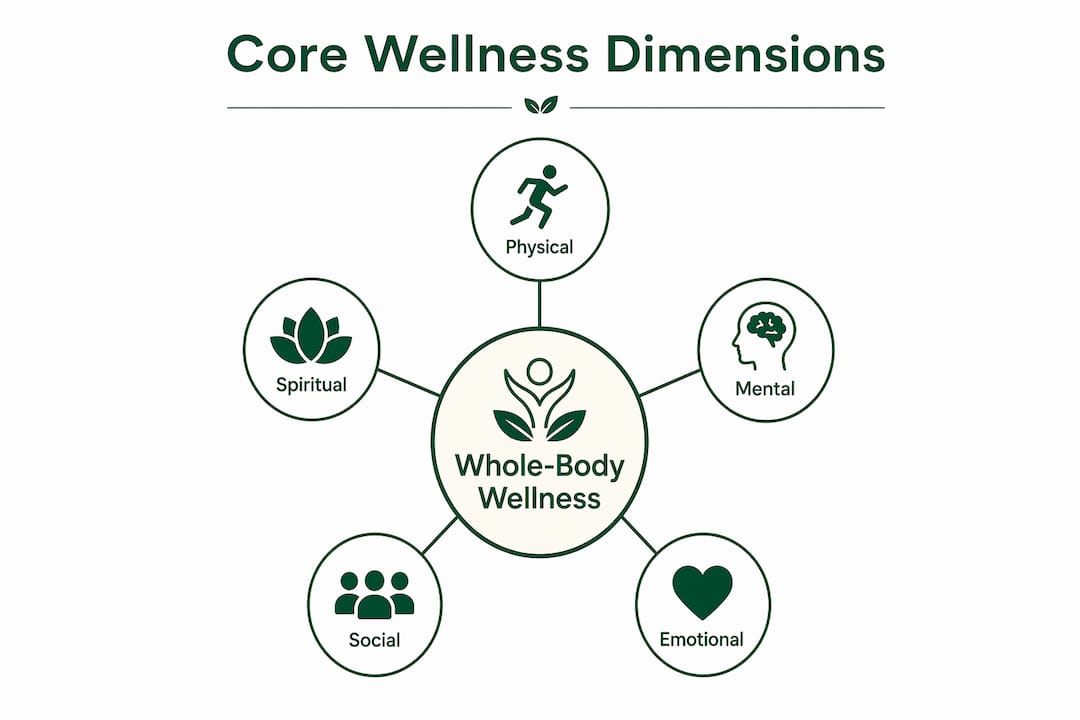
A whole-body wellness approach is defined as a patient-centred framework that integrates physical, mental, emotional, social, and spiritual health dimensions to promote lasting well-being. Known in clinical settings as whole-person care, this model treats the body as an interconnected system rather than a collection of isolated symptoms. Bill Hettler’s Six Dimensions of Wellness — physical, emotional, intellectual, social, spiritual, and occupational — remain the most widely referenced framework for understanding this approach. The shift from symptom treatment to root cause resolution is what separates whole-body wellness from conventional medicine. Getgutted builds its entire product philosophy around this principle, supporting physical and lymphatic health through plant-based tools that work with the body’s natural processes.
What are the key dimensions of whole-body wellness?
Whole-body wellness rests on the understanding that neglecting any dimension negatively affects all the others. Chronic pain, for example, disrupts mood. Social isolation impairs physical health. No dimension operates in isolation.
Bill Hettler’s Six Dimensions of Wellness, developed at the University of Wisconsin, remain the industry standard for mapping whole-person health. Variants of this model expand the framework to include environmental and financial wellness, recognising that where you live and how you manage resources shape your physical and mental state.

The table below summarises the major frameworks and their core components.
| Framework | Core dimensions | Primary focus |
|---|---|---|
| Six Dimensions of Wellness (Hettler) | Physical, emotional, intellectual, social, spiritual, occupational | Whole-person balance across life domains |
| Biopsychosocial Model | Biological, psychological, social | Medical and therapeutic integration |
| Eight Dimensions of Wellness (SAMHSA) | Adds environmental and financial | Community and resource context |
| Integrative health model | Physical, mental, spiritual, environmental | Root cause and lifestyle alignment |
Each framework shares one core principle: health is not the absence of disease. It is the active, ongoing balance of multiple life dimensions. Practitioners who use these models assess all areas before recommending any single intervention.
What evidence supports the benefits of whole-body wellness?
The evidence base for integrative wellness approaches is substantial and growing. Regular whole-body wellness habits improve anxiety, sleep quality, cardiovascular health, and stress resilience over time. These are not marginal gains. They represent measurable shifts in how the body regulates itself when all dimensions receive attention.
“Holistic wellness is a dynamic process requiring ongoing curiosity and self-awareness rather than static checklists. Patients must make small daily adjustments tailored to their social and biological context.” — The Benefits of a Whole-Person Wellness Approach
The timeline for results matters. Root cause resolution can involve a healing crisis period of 4–12 weeks, during which symptoms may temporarily fluctuate as the body rebalances. This is a normal part of the process, not a sign of failure. Understanding this prevents people from abandoning their practice too early.
Whole-person care aligns treatment to patient values and biopsychosocial factors, yet integration into primary care remains suboptimal. Most conventional systems still prioritise symptom management over the deeper work of lifestyle and root cause assessment. That gap is precisely where self-directed wellness practices and plant-based tools fill a real need.
One common misconception is that integrative care is simply an alternative fix. It is not. It is a systemic approach focused on interconnected network effects across the body’s physical, emotional, and social systems. The distinction matters because it changes how you set expectations and measure progress.
How does whole-body wellness differ from traditional medical care?
Traditional medical care excels at acute intervention. A broken bone, an infection, a cardiac event: conventional medicine handles these with speed and precision. Where it falls short is in addressing the conditions that build slowly over years, shaped by lifestyle, environment, and emotional state.
Initial assessments in whole-body wellness involve 60–90 minute comprehensive reviews that connect lifestyle habits with physiological outcomes. These evaluations cover stress levels, sleep hygiene, diet, relationships, and environmental exposures. A standard GP appointment rarely touches most of these areas.
The following pitfalls in conventional care are directly addressed by a whole-body wellness framework:
- Symptom masking without root cause investigation. Prescribing medication for inflammation without examining diet, stress, or lymphatic function leaves the underlying driver intact.
- Siloed specialisms. Seeing a cardiologist, a gastroenterologist, and a psychiatrist separately means no single practitioner sees the full picture.
- Passive patient role. Conventional care often positions the patient as a recipient of treatment rather than an active participant in their own recovery.
- Short appointment windows. A 10-minute consultation cannot capture the psychosocial and environmental factors that shape chronic conditions.
- Absence of preventive lifestyle guidance. Most conventional systems intervene after illness develops rather than supporting the conditions that prevent it.
Pro Tip: Keep a simple daily log of sleep quality, energy levels, and mood for two weeks before any wellness consultation. This data gives a practitioner far more to work with than a verbal summary.
Active patient participation and daily metric tracking are key success factors in whole-body wellness. The more clearly you can describe your patterns, the more precisely care can be tailored to you.
What practical techniques help you achieve whole-body wellness?
Achieving whole-body wellness does not require a complete life overhaul. The most durable changes come from small, consistent shifts across multiple dimensions simultaneously.
Lifestyle modifications that work
Nutrition is the foundation. A diet rich in whole foods, fibre, and anti-inflammatory plants supports gut health, hormonal balance, and immune function. Sleep hygiene follows closely: consistent sleep and wake times regulate cortisol, which in turn affects mood, weight, and cardiovascular health. Mindful movement, whether yoga, walking, or swimming, reduces inflammatory markers and supports lymphatic drainage. You can read more about supporting lymphatic flow naturally as part of a broader wellness routine.
Complementary therapies worth integrating
Meditation practised for as little as 10 minutes daily reduces perceived stress and improves emotional regulation. Yoga combines breath, movement, and mindfulness into a single practice that addresses physical, mental, and spiritual dimensions at once. Chiropractic care and massage therapy support musculoskeletal health and nervous system function. Holistic remedies for natural balance can complement these therapies when chosen thoughtfully.
Tracking your progress
- Monitor sleep quality and duration each morning using a simple journal or wearable device.
- Rate your energy and mood on a 1–10 scale daily to spot patterns over weeks.
- Note digestive comfort after meals to identify food sensitivities.
- Track physical activity type and duration three times per week.
- Review your log every two weeks and adjust one variable at a time.
For a structured approach to monitoring your herbal wellness routine, Getgutted’s guide on tracking herbal wellness progress offers practical steps.
Pro Tip: Change one habit at a time and give it three weeks before evaluating. Stacking too many changes at once makes it impossible to identify what is working.
True wellness requires flexibility and personalised habit adjustments rather than rigid adherence to a fixed programme. What works for one person may not work for another, and that is not a flaw in the approach. It is the approach.
Key takeaways
A whole-body wellness approach works because it addresses the root causes of poor health across physical, mental, emotional, social, and spiritual dimensions simultaneously, rather than treating symptoms in isolation.
| Point | Details |
|---|---|
| Core definition | Whole-body wellness integrates six or more health dimensions to promote lasting well-being, not just absence of disease. |
| Framework standard | Bill Hettler’s Six Dimensions of Wellness remains the most widely used model for mapping whole-person health. |
| Evidence base | Consistent practice improves anxiety, sleep, cardiovascular health, and stress resilience over a 4–12 week period. |
| Key difference from conventional care | Whole-body wellness uses 60–90 minute assessments to address root causes, not 10-minute symptom-focused consultations. |
| Practical starting point | Daily tracking of sleep, mood, and energy gives practitioners and individuals the data needed to personalise care. |
Why I think most people misunderstand what whole-body wellness actually is
People come to whole-body wellness looking for a better version of what they already know. They want a supplement that replaces a medication, or a yoga class that fixes their back. That framing misses the point entirely.
What I have found, both personally and through years of engagement with this field, is that the real shift is perceptual. You stop asking “what do I take for this symptom?” and start asking “what in my life is producing this symptom?” That question changes everything. It makes you the investigator of your own health rather than a passive recipient of someone else’s diagnosis.
The hardest part is not the practice itself. It is the patience. A 4–12 week healing period, during which things may feel worse before they improve, is genuinely difficult to sit with. Most people abandon the process precisely when it is beginning to work. I have seen this repeatedly, and it is the single biggest barrier to lasting results.
The other misconception worth naming is that whole-body wellness is a luxury for people with time and money. It is not. The most powerful tools, sleep consistency, daily movement, stress awareness, and mindful eating, cost nothing. The plant-based and herbal tools that Getgutted offers are designed to complement these free foundations, not replace them. Start with the basics. Add layers as your awareness grows.
— Mabel
Getgutted’s wellness kits: built for whole-body support
Getgutted designs its products around the same principles this article describes: address multiple dimensions of health at once, support the body’s natural processes, and use plant-based ingredients with clear purpose.
The Getgutted wellness kits bring together herbal oils, teas, and targeted tools that support lymphatic drainage, detoxification, hormonal balance, and digestive health in one curated set. Each kit is handcrafted in small batches using ingredients chosen for purity and traditional efficacy. If you are building a whole-body wellness routine and want physical tools that align with that framework, these kits offer a practical and grounded starting point. You can also explore Getgutted’s guide on combining wellness modalities to understand how herbal tools fit within a broader integrative approach.
FAQ
What is the whole-body wellness approach in simple terms?
The whole-body wellness approach is a framework that addresses physical, mental, emotional, social, and spiritual health together rather than treating each in isolation. It focuses on root causes rather than individual symptoms.
How long does it take to see benefits from whole-body wellness?
Consistent practice typically produces measurable improvements over a 4–12 week period, though some people experience temporary symptom fluctuations as the body rebalances during this time.
What is the difference between whole-body wellness and holistic health?
The terms are closely related. Holistic health is the broader philosophy; whole-body wellness is its applied framework, often structured around models like Bill Hettler’s Six Dimensions of Wellness and used in clinical and self-directed practice.
Can I practise whole-body wellness without seeing a specialist?
Yes. Daily habits such as sleep consistency, mindful movement, nutrition, and stress tracking form the foundation and require no clinical support. A specialist adds value for deeper assessment and personalised guidance.
Does whole-body wellness replace conventional medical care?
No. Whole-body wellness complements conventional care by addressing the lifestyle and psychosocial factors that primary care often overlooks. For acute conditions, conventional medicine remains the appropriate first response.