

How to track progress with your herbal wellness routine
Tracking progress with an herbal wellness routine is defined as the systematic recording of symptoms, biomarkers, and behavioural patterns before, during, and after introducing a herbal supplement. Without this structure, you cannot tell whether an herb is working, causing harm, or simply doing nothing. The most effective approach combines a 7–14 day baseline period with daily symptom logs scored on a 0–10 scale, then layers in objective data from wearable devices. Getgutted recommends this method to anyone serious about getting real answers from their herbal regimen.
How to track progress with your herbal wellness routine
The foundation of any reliable herbal wellness tracking system is a clean baseline. You record your current state, including sleep quality, mood, pain levels, energy, and digestion, for 7–14 days before introducing any new herb. This gives you a reference point that makes later changes visible and meaningful.
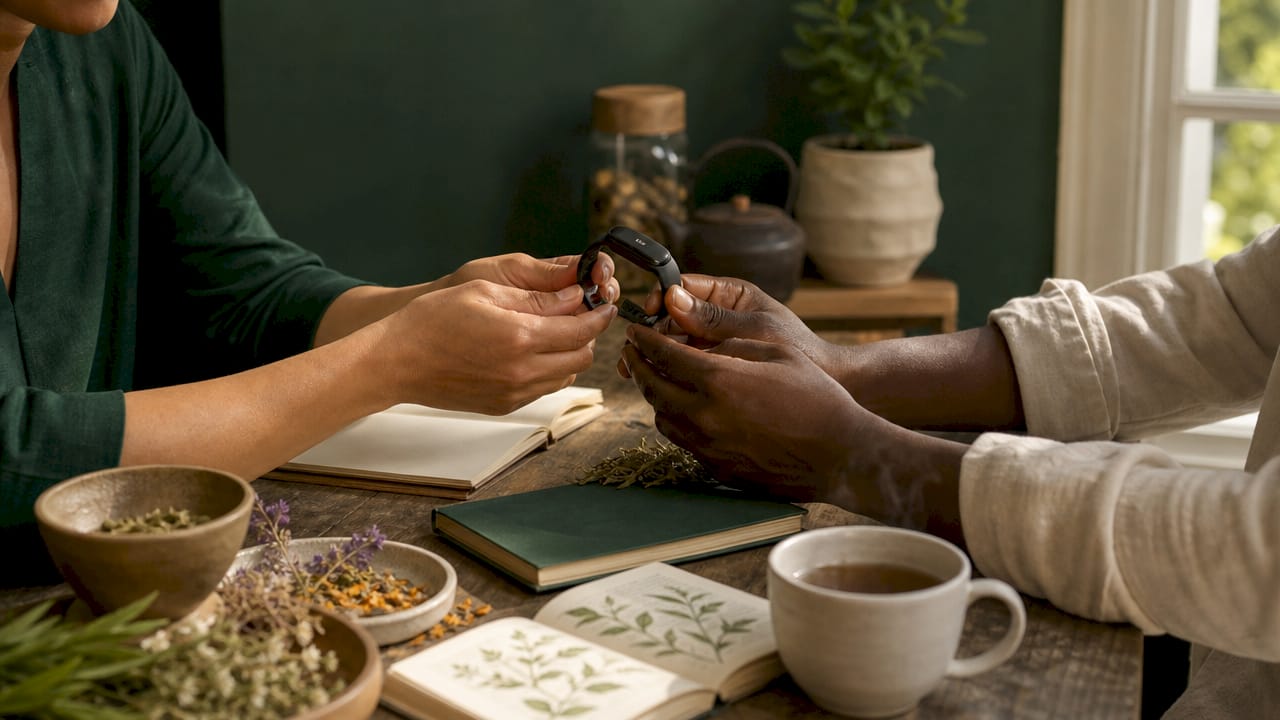
Subjective logs alone are not enough. Combining symptom ratings with wearable data such as heart rate variability (HRV), sleep stages, and resting heart rate transforms vague impressions into evidence you can act on. That combination is what separates guesswork from genuine self-knowledge.
The standard industry term for this structured self-experiment is an n-of-1 trial. It treats you as your own control group. You cycle through baseline, active herb use, and washout phases to isolate cause and effect with a level of rigour that casual use never achieves.
What baseline data is essential before starting an herbal routine?
A baseline is not optional. Recording symptoms for 7–14 days before you introduce a herb gives you the comparison data that makes your trial meaningful. Without it, any change you notice could be coincidence, seasonal variation, or placebo effect.
The key markers to log during your baseline period are:
- Sleep quality and duration (hours slept, how rested you feel on waking)
- Mood and anxiety levels (scored 0–10 each morning)
- Pain or discomfort (location, intensity, time of day)
- Energy levels (morning and afternoon, scored 0–10)
- Digestion (bloating, regularity, appetite)
- Any existing symptoms you are hoping the herb will address
Score each marker on a consistent 0–10 scale every day. Consistency matters more than precision. A score of 6 means nothing in isolation, but a pattern of 6, 7, 6, 5, 6 over two weeks tells you exactly where you started.
Wearable devices add a layer of objectivity that self-reporting cannot match. Wearable biomarkers such as sleep duration, sleep efficiency, resting heart rate, HRV, and step count all provide context for the subjective changes you record. A smartwatch or fitness tracker worn consistently during the baseline period creates a data anchor for everything that follows.
Pro Tip: Log your symptoms at the same time each day, ideally within 30 minutes of waking. Morning logs capture overnight recovery patterns and are less influenced by the events of the day.
How can you integrate habit stacking to maintain consistent herbal tracking?
Consistency is the single biggest failure point in herbal regimen progress. People start well and then miss days, which corrupts the data and makes interpretation unreliable. Habit stacking solves this by anchoring your herbal dose and your daily log to an existing routine you already do without thinking.
Habit stacking means pairing a new behaviour with an established one. In the context of herbal tracking, effective anchors include:
- Taking your herb with your morning smoothie or first cup of tea
- Logging symptoms immediately after brushing your teeth at night
- Setting a wearable reminder to sync data after your evening walk
- Reviewing your weekly log every Sunday morning alongside your breakfast
The benefit is not just convenience. When your log becomes part of a ritual you already perform, you stop relying on willpower. The data becomes more complete, and complete data produces more reliable conclusions about what the herb is actually doing.
“Anchoring new health behaviours to existing habits is one of the most evidence-backed methods for long-term adherence. The habit does not feel like extra work because it rides on the momentum of something already automatic.”
This principle applies directly to herbal supplement tracking. If you take your Blue Lotus tea every evening before bed, logging your sleep quality score immediately afterwards takes less than 60 seconds and becomes as automatic as the tea itself.
What tools and methods best support herbal wellness progress monitoring?
Three main approaches exist for monitoring herbal health: paper journals, spreadsheets, and dedicated apps. Each has genuine strengths, and the best system is the one you will actually use every day.
| Tool | Ease of use | Objective data | Latency tracking | Best for |
|---|---|---|---|---|
| Paper journal | High | No | Yes, if timed | Beginners, low tech |
| Spreadsheet | Medium | No | Yes, with timestamps | Detail-oriented trackers |
| Dedicated app | High | Partial | Varies by app | Habit consistency |
| Wearable + app | Medium | Yes | Limited | Objective biomarkers |
Paper journals have one underrated advantage: they force you to write in your own words, which often captures nuance that tick-box apps miss. A note like “felt calmer but still anxious in meetings” is more useful than a score of 6.
Spreadsheets give you the ability to chart trends over time. A simple column for date, dose, and each symptom score takes minutes to set up and produces graphs that make progress visible at a glance.
Digital apps combined with manual logs offer the strongest overall picture. Apps handle reminders and data storage. Manual logs capture the timing detail that automated trackers miss, particularly latency effects. For example, anxiety reduction from an adaptogen may appear 45–90 minutes after ingestion. Only a time-stamped manual entry captures that window accurately.
Pro Tip: Use a wearable for objective data and a paper journal for subjective notes. Review both together at the end of each week. The contrast between what your body measured and what you felt often reveals patterns neither source would show alone.
What is the ideal multi-phase approach to trial an herbal supplement?
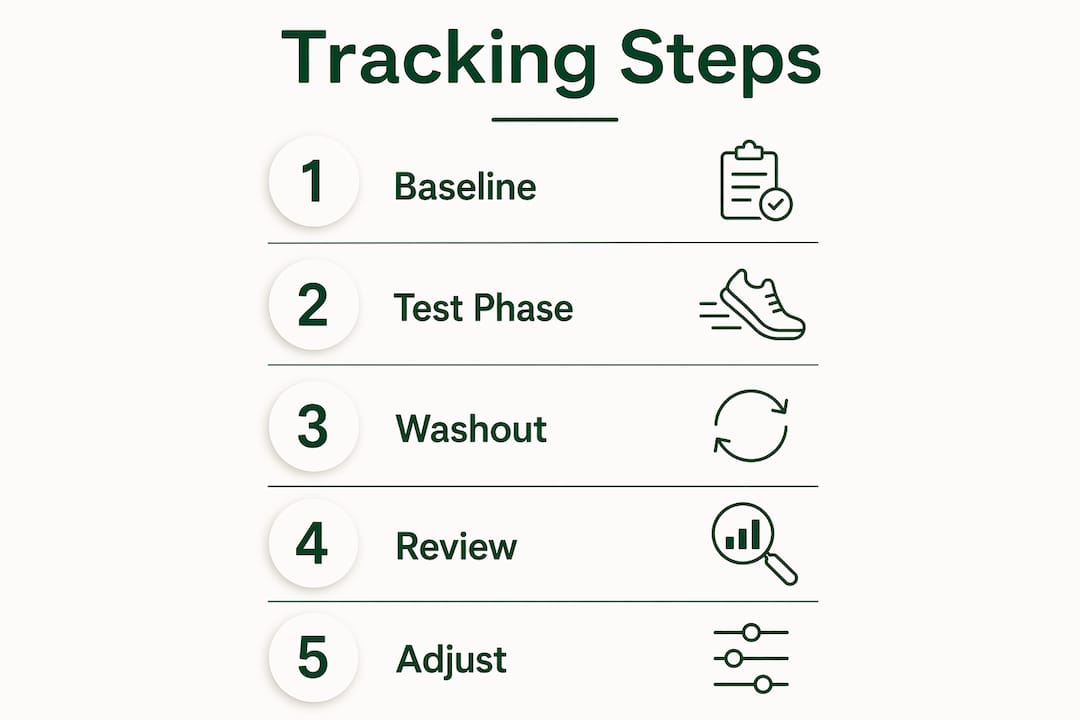
The n-of-1 experimental design is the most reliable method for assessing herbal effects in an individual. It structures your trial into four distinct phases, each with a specific purpose.
- Baseline phase (7–14 days). Record all target symptoms and wearable biomarkers without the test herb. This is your control period.
- Test phase (2–4 weeks). Introduce a single herb at a consistent dose and time. Continue logging all the same markers daily.
- Washout phase (minimum 1 week). Stop the herb completely. Continue logging to see whether any changes reverse. Reversibility is strong evidence of causality.
- Reintroduction phase (optional, 2–4 weeks). Reintroduce the herb to confirm the pattern repeats.
During the test phase, watch for:
- Improvements in your target symptoms (scored against baseline)
- Any new symptoms that were not present at baseline
- Changes in wearable data, particularly HRV and sleep efficiency
- Timing of effects relative to each dose
The washout phase is the most commonly skipped step, and skipping it is the most common reason people draw wrong conclusions. If your symptoms improve during the test phase but do not return during washout, the herb may not be the cause. If they do return, you have genuine evidence of effect.
One critical rule: trial one single-ingredient herb at a time. Introducing two herbs simultaneously makes it impossible to attribute any change to either one. Patience here is not optional. It is the method.
How do you troubleshoot common tracking mistakes and stay safe?
The most common tracking mistake is introducing multiple herbs at once. It feels efficient, but it destroys the signal. You end up with data that cannot tell you which herb did what, or whether a side effect came from one or both.
Safety monitoring is not a secondary concern. Even common herbs can cause serious reactions, including liver toxicity, and adverse effects are widely underreported. Treating herbal supplements with the same caution as pharmaceuticals is the standard recommended by experts aligned with WHO safety principles.
Watch for these warning signs during any herbal trial:
- Nausea, skin reactions, or unusual fatigue appearing within days of starting
- Worsening of the symptoms you were hoping to improve
- Changes in urine colour or digestion that were not present at baseline
- Any symptom that feels new and unexplained
“Underreporting of adverse herbal reactions is a documented public health concern. Continuous vigilance aligned with WHO pharmacovigilance principles is necessary for anyone self-managing herbal use.”
If you take any prescription medication, screen for herb-drug interactions before starting. St John’s Wort, for example, is known to reduce the effectiveness of several common drugs. A pharmacist or GP can check interactions in minutes. That conversation is worth having before you begin, not after a problem appears.
Stop the herb and seek professional advice if any adverse reaction occurs. No tracking system replaces clinical judgement when something goes wrong.
Key takeaways
Effective herbal wellness tracking requires a structured n-of-1 approach: baseline recording, a consistent test phase, and a washout period to confirm that any changes are genuinely caused by the herb.
| Point | Details |
|---|---|
| Record a clean baseline | Log symptoms on a 0–10 scale for 7–14 days before introducing any herb. |
| Use habit stacking | Anchor your dose and daily log to an existing routine to protect data quality. |
| Combine subjective and objective data | Pair daily symptom scores with wearable biomarkers like HRV and sleep efficiency. |
| Follow the n-of-1 phases | Baseline, test, washout, and reintroduction give you the clearest picture of causality. |
| Trial one herb at a time | Introducing multiple herbs simultaneously makes it impossible to identify what is working. |
What I have learned from tracking my own herbal wellness
I spent the first year of my herbal practice doing it completely wrong. I would introduce two or three herbs at the same time, feel vaguely better, and assume all of them were helping. When I finally committed to a single-herb n-of-1 structure with a proper baseline and washout, the results were almost embarrassingly clear. Some herbs I had been taking for months turned out to do very little for me personally. One I had dismissed made a measurable difference to my sleep HRV within two weeks.
The hardest part is patience. The washout phase in particular feels like going backwards. You stop something that seems to be helping, and you wait. But that waiting period is where the real data lives. If your symptoms return during washout, you have evidence. If they do not, you have saved yourself months of taking something unnecessary.
My honest advice is to start with a paper journal, not an app. Apps are convenient, but writing by hand forces you to slow down and notice things you would otherwise skip past. Once you have a few weeks of handwritten data, move it into a spreadsheet and look at the trends. The combination of tactile journalling and visual charting has been more useful to me than any single tracking tool I have tried.
The goal is not perfect data. The goal is data that is good enough to make better decisions than you would make without it. That threshold is lower than most people think, and the payoff, in terms of knowing what actually works for your body, is significant.
— Mabel
Getgutted’s herbal teas and wellness kits for your tracking routine
If you are ready to put a structured tracking method into practice, the herbs you choose matter as much as the system you use to monitor them. Getgutted’s range of single-ingredient and blended teas makes it straightforward to run a clean n-of-1 trial, because each product is formulated with ingredient purity as a non-negotiable standard.
The herbal teas collection includes options suited to sleep, detoxification, and lymphatic support, each clearly labelled so you know exactly what you are trialling. For those wanting a more structured starting point, the wellness kits bundle complementary products together, making it easier to build a consistent routine around a defined set of ingredients. If sleep tracking is your primary focus, the Organic Blue Lotus Tea Bags pair naturally with evening habit stacking and overnight wearable monitoring.
FAQ
What is the minimum baseline period before starting an herbal supplement?
A 7–14 day baseline is the recommended minimum. This period gives you enough data to identify your normal symptom patterns before any herb is introduced.
How long should I trial an herb before drawing conclusions?
A test phase of 2–4 weeks is standard, followed by at least one week of washout. Shorter trials often miss delayed effects that take time to accumulate.
Can I track multiple herbs at the same time?
Tracking multiple herbs simultaneously makes it impossible to identify which one caused any change. Trial one single-ingredient herb at a time for clear results.
What wearable data is most useful for herbal wellness monitoring?
Heart rate variability, sleep duration, sleep efficiency, and resting heart rate are the most relevant biomarkers. These metrics provide objective context for the subjective symptom scores you record daily.
When should I stop an herbal trial and seek professional advice?
Stop immediately if you notice nausea, skin reactions, unusual fatigue, or any symptom that was not present at baseline. Consult a GP or pharmacist, particularly if you take prescription medication, before restarting.