

Combine modalities with herbal wellness tools: a practical guide
Combining wellness modalities with herbal tools is the most effective way to address inflammation and hormonal imbalance without relying on pharmaceuticals alone. The technical term for this approach is integrative medicine, defined by the WHO as people-centred, evidence-based care that brings biomedical and complementary practices together. Over 60% of people already use herbal remedies alongside conventional treatments, which means the question is no longer whether to combine them. The question is how to do it safely and effectively. This guide gives you a clear, practical framework for doing exactly that.
What does it mean to combine modalities with herbal wellness tools?
Integrative medicine treats the body as a whole system rather than a collection of separate symptoms. When you combine modalities with herbal wellness tools, you pair daily plant-based support with therapies that regulate the body’s immediate state, such as acupuncture, sound frequency therapy, movement, and targeted nutrition.

The key distinction is rhythm. Herbs provide ongoing, daily measured support, while modalities like acupuncture regulate or move energy during clinic visits. Think of herbs as the steady foundation and modalities as the periodic adjustments that keep the structure aligned. Neither works as well in isolation.
For people managing inflammation or hormonal imbalance, this distinction matters enormously. Chronic inflammation does not resolve in a single session. It requires consistent daily input from anti-inflammatory herbs like soursop or mullein, reinforced by modalities that reduce the stress hormones driving the inflammatory cycle in the first place.
What are the primary wellness modalities to pair with herbal therapies?
Each modality brings a specific mechanism that complements what herbs do at a cellular level. The four most evidence-supported options are:
- Acupuncture. Acupuncture regulates the nervous system and supports lymphatic flow during treatment sessions. Paired with herbs like poke root oil for lymphatic drainage, it creates a two-pronged approach: the herb works daily between sessions, and acupuncture amplifies the effect at each visit.
- Sound frequency therapy. A meta-analysis of 47 studies confirms that sound therapy reduces cortisol and promotes parasympathetic nervous system activation. Lower cortisol directly supports hormonal balance, since elevated cortisol suppresses progesterone and disrupts the entire endocrine cascade.
- Movement therapies. Practices such as yoga, tai chi, and lymphatic rebounding increase circulation and support detoxification pathways. They create the physical conditions that allow herbal compounds to reach target tissues more efficiently.
- Nutritional therapy. Food is the most constant modality of all. Anti-inflammatory dietary patterns, combined with herbal recipes that integrate adaptogens and plant compounds, amplify the effect of standalone herbal protocols considerably.
Sound frequency therapy deserves particular attention because its mechanism is direct. Bioenergetic modalities like sound frequency set a structured energetic state that lowers the body’s barriers to accepting and utilising herbal compounds. In practical terms, taking an herbal tincture during or immediately after a sound therapy session may increase its uptake.
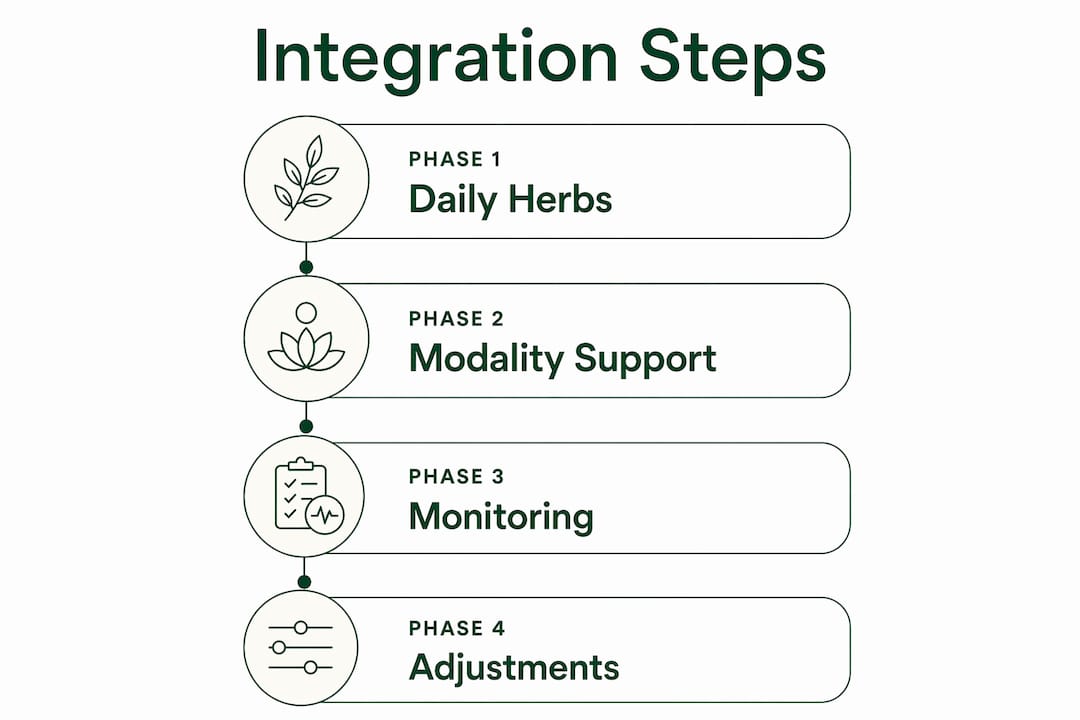
Safety requirements before integrating herbal and modality therapies
Safe integration starts with one non-negotiable rule: full disclosure to every clinician you see. This means your GP, your acupuncturist, your herbalist, and any specialist. Each practitioner needs the complete picture to screen for adverse interactions.
Successful integration is not about adding more therapies. It is about coordinating them so each one reinforces the others without creating conflict. The most common integration failures happen when one practitioner does not know what another has prescribed.
Before you begin any combined protocol, work through this checklist:
- Write a complete list of every medication, supplement, and herb you currently take, including doses and timing.
- Share this list with every practitioner involved in your care.
- Ask each practitioner to screen for interactions before adding anything new.
- Never stop or reduce a prescribed medication to accommodate a herbal protocol without medical supervision.
- Reassess the full list every four to six weeks as your protocol evolves.
Pro Tip: Keep your written list in a notes app on your phone so it is always with you at appointments. Update it the same day you make any change to your protocol.
Habit stacking is the most reliable way to maintain adherence. Anchoring herbal intake to existing routines reduces willpower fatigue and prevents missed doses. If you already make tea every morning, that is your anchor point for your first herbal dose of the day.
How to build a step-by-step integration plan
A structured daily plan is what separates people who see results from those who do not. Research recommends a minimum 40-day commitment when combining herbal tinctures and frequency therapies for observable benefits in gut-brain and hormonal support. Treat the first two weeks as calibration, not evaluation.
Here is a practical daily framework:
- Morning (7:00–8:00 AM). Take your first herbal dose with warm water or as a tea. Soursop leaf tea supports immune and inflammatory pathways. Follow with 10–15 minutes of movement, such as rebounding or yoga, to activate lymphatic circulation while the herbs are absorbing.
- Midday (12:00–1:00 PM). If you use a second herbal dose, take it before eating. Pair this window with a brief breathwork or sound frequency session of 10–20 minutes. This is the window where cortisol naturally peaks, making it the ideal time to use sound therapy to bring it down.
- Evening (7:00–9:00 PM). Apply topical herbal oils, such as poke root oil with castor oil, to lymphatic areas. Follow with a longer sound frequency session of 20–30 minutes before sleep. This combination supports overnight detoxification and hormonal repair cycles.
- Weekly. Schedule your acupuncture or other clinical modality sessions. Bring your written herb and supplement list to every appointment.
- Every 4–6 weeks. Conduct a full reassessment. Note changes in inflammation markers, sleep quality, energy, and hormonal symptoms. Adjust herb formulas or modality frequency based on what you observe.
Pro Tip: Log your symptoms in a simple daily note. Even three words per day gives you a pattern to review at your reassessment. Practitioners make better adjustments when you bring data, not just impressions.
| Integration phase | Herbal focus | Modality focus | Key outcome |
|---|---|---|---|
| Weeks 1–2 | Establish daily herbal routine | Introduce sound therapy daily | Baseline calibration |
| Weeks 3–4 | To add topical herbal oils | Begin acupuncture sessions | Lymphatic and nervous system support |
| Weeks 5–6 | Adjust tincture formulas if needed | To add movement therapy | Circulation and detox enhancement |
| Weeks 7+ | Maintain and refine | Ongoing clinical modality sessions | Sustained hormonal and inflammatory balance |
What are the most common mistakes when combining herbal and modality therapies?
The most frequent error is treating integration as additive rather than coordinated. People add herbs and modalities one by one without a plan, then cannot identify what is helping or what is causing a reaction. Integrative herbal care requires ongoing assessment, not a fixed prescription set and forgotten.
Watch for these warning signs:
- New or worsening symptoms within 48–72 hours of adding a herb or modality.
- Unusual fatigue, digestive disruption, or skin changes that were not present before.
- Emotional volatility or sleep disruption that begins after starting a new protocol.
- Symptoms that improve then plateau without any adjustment to the plan.
If any of these occur, pause the most recently added element first. Do not stop everything at once, as this makes it impossible to identify the cause. Contact the relevant practitioner and bring your written protocol list.
Over-reliance on either herbs or modalities alone is the other common trap. Herbs without modalities miss the regulatory and energetic support that accelerates results. Modalities without herbs lack the daily biochemical input that sustains change between sessions. The synergy is the point.
Pro Tip: If you are unsure whether a symptom is a detox response or an adverse reaction, treat it as an adverse reaction until a qualified practitioner confirms otherwise. Caution costs nothing. Ignoring a real reaction can set your progress back significantly.
Key takeaways
Combining herbal wellness tools with complementary modalities produces better outcomes than either approach alone, provided you coordinate care, disclose everything, and commit to at least 40 days of consistent practice.
| Point | Details |
|---|---|
| Herbs and modalities serve different rhythms | Herbs provide daily biochemical support; modalities regulate the body’s state during sessions. |
| Disclosure is non-negotiable | Share a written list of all herbs, supplements, and medications with every practitioner before starting. |
| Commit to 40 days minimum | Observable benefits from combined herbal and frequency protocols require at least a 40-day commitment. |
| Habit stacking improves adherence | Anchor herbal doses to existing daily routines to reduce missed doses and willpower fatigue. |
| Treat the plan as a living system | Reassess every 4–6 weeks and adjust herb formulas or modality frequency based on symptom changes. |
Why I think most people underestimate the coordination piece
People come to integrative wellness with the right instincts but the wrong mental model. They think of herbs and modalities as a menu: pick what appeals, add it to the routine, and wait for results. What I have seen, working with people who have tried this approach for years, is that the coordination layer is where most protocols succeed or fail.
The herbs are rarely the problem. The modalities are rarely the problem. The gap between them is. When an acupuncturist does not know you are taking soursop leaf tea daily, and your GP does not know you are using poke root oil, and your nutritionist has no idea you are doing sound therapy three times a week, nobody has the full picture. Nobody can optimise anything.
What actually works is treating your protocol as a living document. I have seen people make dramatic progress on inflammation and hormonal balance not by adding more, but by getting clearer on what they already had and making it work together. The Lymphatic Boost Pack from Getgutted, for example, is not just a product. It is a starting point for a conversation with your practitioners about what daily herbal support looks like in your specific case.
The other thing I would push back on is the idea that results should come quickly. A 40-day minimum is not a marketing claim. It reflects how long it takes for herbal compounds to accumulate to therapeutic levels and for the nervous system to genuinely shift its baseline. Patience is not passive. It is the active decision to give the protocol enough time to work before you change it.
— Mabel
Getgutted’s herbal range for your integrative wellness plan
Getgutted builds its products specifically for people who take their wellness seriously enough to combine approaches. The herbal teas collection includes soursop leaf, blue lotus, and Essiac blends, each formulated to serve as the daily herbal foundation within a broader integrative protocol.
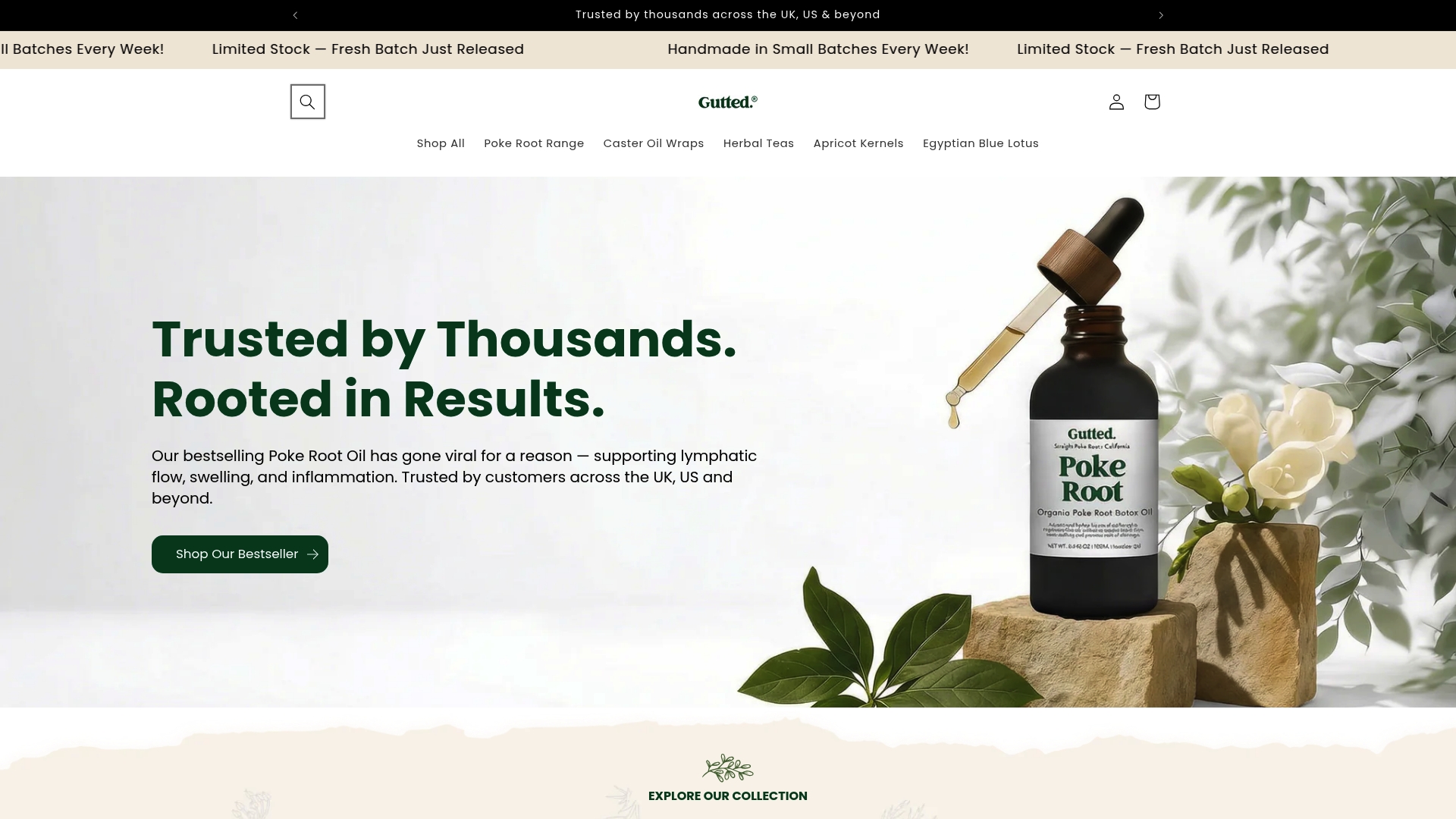
The wellness kits are designed for people who want a coordinated starting point rather than individual products. Each kit pairs herbal teas, tinctures, or oils in combinations that support lymphatic drainage, detoxification, and hormonal balance together. Every product is small-batch, ingredient-pure, and built for people who want plant-based support they can trust as part of a real, practitioner-coordinated plan.
FAQ
What does “integrative medicine” mean in practice?
Integrative medicine combines conventional biomedical care with evidence-based complementary therapies, including herbal remedies, acupuncture, and sound therapy. The WHO defines it as people-centred care aimed at improving universal health coverage.
How long before I see results from combining herbal tools and modalities?
A minimum 40-day commitment is recommended for observable benefits when combining herbal tinctures with frequency or sound therapies. The first two weeks are calibration, not evaluation.
Is it safe to use herbal remedies alongside prescribed medications?
It can be safe, but full disclosure to every clinician is required before starting. More than 60% of people already combine herbal remedies with conventional treatments, making practitioner coordination the critical safety step.
Which modality works best alongside herbal therapy for inflammation?
Sound frequency therapy and acupuncture both have strong evidence for reducing cortisol and supporting the parasympathetic nervous system, which directly lowers the hormonal drivers of chronic inflammation.
How do I know if my herbal and modality combination is working?
Track symptoms daily, even briefly, and conduct a formal reassessment every 4–6 weeks. Improvements in sleep quality, energy, and inflammatory symptoms are the primary markers to monitor.