

Poke root oil benefits for lymphatic wellness
TL;DR:
- Poke root oil is a traditional herbal remedy used topically to support lymphatic drainage.
- It has a narrow safety margin, requiring careful, professional-guided application.
- Milder herbs like cleavers are safer options for general lymphatic support.
Finding a natural remedy that genuinely supports lymphatic drainage and reduces fluid retention is harder than it sounds. Many products make bold claims but deliver little. Poke root oil is different in that it carries a long herbal tradition and a growing body of anecdotal support, yet it also demands respect and caution. This article covers what poke root oil is, how it is believed to work, how it compares to milder alternatives, and the safety boundaries every user should know before applying it.
Table of Contents
- Understanding poke root oil: Origins and traditional uses
- The science and mechanisms behind lymphatic support
- Comparing poke root oil to other lymphatic herbal remedies
- Safety guidelines, contraindications, and expert nuances
- Our perspective: The real-life balance of benefit and risk
- Further your herbal wellness journey
- Frequently asked questions
Key Takeaways
| Point | Details |
|---|---|
| Herbal origins | Poke root oil draws on centuries-old herbal traditions for lymphatic support in the UK. |
| Lymphatic stimulation | Used topically, poke root oil may aid drainage and swelling by promoting lymph flow. |
| Safety first | Due to inherent toxicity, professional guidance is imperative for any use. |
| Alternative options | Milder herbal oils offer safer choices for most users needing everyday lymphatic relief. |
Understanding poke root oil: Origins and traditional uses
Poke root oil comes from Phytolacca americana, a large perennial plant native to North America that has been used in folk medicine for centuries. It arrived in European herbal practice through trade and colonial-era botanical exchange, and UK herbalists have referenced it in traditional formularies for generations. Today, it occupies a specialist niche within British herbal wellness, valued for its potency but handled with considerable care.
You can read more about what is poke root and its broader applications if you are new to this herb. The short version: poke root is a powerful lymphatic herb, and its oil form is the safest way to access its properties for most people.
The preparation method matters enormously. Traditional infusion involves placing dried poke root into a carrier oil, commonly olive oil, and allowing it to slow-infuse over several weeks. This process draws out the active constituents while keeping concentrations at a level suitable for topical use. Our own poke root oil guide covers the preparation process in detail.
Topical use is strongly preferred over oral ingestion. The root contains toxic alkaloids and lectins that pose serious risk when consumed, even in small amounts. Applied to the skin over lymph nodes or swollen tissue, the risk profile is far more manageable, provided the skin is intact and the application is measured.
Key traditional applications in UK herbal practice include:
- Topical application over swollen lymph nodes in the neck, armpit, and groin
- Use alongside manual lymphatic drainage massage
- Support for mastitis and breast tissue congestion
- Addressing areas of chronic swelling or stagnation
As herbal reality poke root notes, the herb has a long-standing place in Western herbal medicine, though it is classified as a low-dose botanical requiring professional oversight.
“Poke root oil is used topically as an infused oil for lymphatic stimulation, reducing swollen glands and improving drainage.”
UK practitioners consistently emphasise monitored use. The line between therapeutic and irritating doses is narrow, and first-time users should always patch-test and work with a qualified herbalist.
The science and mechanisms behind lymphatic support
With roots in herbal tradition, let us examine how poke root oil is said to work and what the evidence actually shows.
The lymphatic system moves fluid, waste, and immune cells through the body. When it stagnates, the result is swelling, heaviness, and a sluggish immune response. Poke root is classified as a lymphatic stimulant and alterative in herbal medicine, meaning it is believed to promote lymph flow, clear waste, and reduce stagnation. The mechanisms involve poke root acting as a lymphatic stimulant and alterative, promoting lymph flow to clear waste, reduce stagnation, and support detoxification, with anti-inflammatory effects attributed to saponins and other naturally occurring compounds that reduce swelling.

Saponins are the primary compounds of interest. They are found in many anti-inflammatory plants and are thought to interact with cell membranes in ways that reduce localised swelling. Poke root contains a particularly concentrated form, which is part of why it is both effective and potentially hazardous.
However, the scientific picture is incomplete. No empirical clinical data or benchmarks exist for poke root oil specifically. Benefits are based on traditional herbal use and anecdotal reports. Laboratory studies on isolated compounds such as pokeweed antiviral protein show antiviral and anti-inflammatory potential, but these findings do not translate directly to crude topical oil.
| Compound | Proposed action | Evidence level |
|---|---|---|
| Saponins | Anti-inflammatory, membrane interaction | Traditional and lab-based |
| Pokeweed antiviral protein | Antiviral, immune modulation | Lab studies only |
| Phytolaccine | Lymphatic stimulation | Traditional use |
| Lectins | Immune activation | Lab studies, toxic at high doses |
Pro Tip: If you are exploring herbal oils for lymphatic relief, start with milder options and introduce poke root oil only under practitioner guidance. The evidence for gentler herbs is often more robust and the risk profile is lower.
The gap between tradition and clinical proof is real. That does not make poke root oil useless. It means you should approach it as a specialist tool, not a general-purpose remedy. For a broader view of herbal wellness for swelling, several other herbs have stronger documented support.
Comparing poke root oil to other lymphatic herbal remedies
To appreciate poke root oil’s place, compare it with other lymphatic remedies commonly used in UK herbal practice.
Poke root oil is not the only option. Cleavers, calendula, and red clover are all used to support lymphatic function, and each carries a significantly lower risk profile. The question is not which herb is best in isolation, but which is appropriate for your specific situation.
| Herb or oil | Lymphatic action | Safety profile | Best use context |
|---|---|---|---|
| Poke root oil | Strong stimulant | Low-dose, practitioner only | Stubborn swelling, congested nodes |
| Cleavers | Gentle tonic | Very safe, widely used | Everyday lymphatic maintenance |
| Calendula oil | Anti-inflammatory | Safe for most | Skin-level inflammation, general use |
| Red clover | Alterative | Generally safe | Long-term detox support |
| Castor oil | Circulatory support | Safe topically | Paired carrier for deeper absorption |
Traditional herbalists rarely use poke root oil alone. Combining it with milder herbs such as cleavers or calendula is standard practice, and UK sources emphasise practitioner guidance when poke root is involved.
When considering your options, the following points are worth noting:
- Cleavers is the go-to herb for routine lymphatic support and carries virtually no toxicity risk
- Calendula suits those with skin-level inflammation or sensitivity
- Poke root oil is reserved for cases where milder herbs have not produced results
- Combining poke root with castor oil, as in our formulation, may enhance absorption and extend the therapeutic effect
For a structured comparison, our guide to the best oils for lymphatic drainage covers the full landscape. You can also review our lymphatic oils comparison for a side-by-side breakdown of leading options.
If you are newer to this area, herbal remedies for swelling offers a practical starting point before moving to more potent herbs.
Safety guidelines, contraindications, and expert nuances
Now that you know how poke root oil compares, the safety considerations deserve direct attention.
Poke root oil is not a casual wellness product. It is a low-dose botanical with a narrow margin between therapeutic and toxic effect. The following groups should not use it:
- Children under 18
- Pregnant or breastfeeding individuals
- Anyone with broken, irritated, or compromised skin
- Those with known sensitivity to plants in the Phytolaccaceae family
- Individuals on immunosuppressant or anticoagulant medication
For those who do use it, best practice involves applying a small amount to intact skin over a lymph node, avoiding mucous membranes, and washing hands thoroughly after application. Never apply to the face or near the eyes.
“Avoid in pregnancy, breastfeeding, children; skin irritation is possible; not for broken skin; high toxicity risk if absorbed systemically, leading to nausea, vomiting, and cramps.”
The expert landscape is divided. Traditional and herbal sources recognise poke root’s lymphatic benefits and have used it responsibly for generations. Medical sources, including Verywell Health and Drugs.com, stress lack of evidence and high toxicity, advising avoidance without professional oversight. Both perspectives are valid and neither should be dismissed.
Pro Tip: If you are considering organic poke root oil for the first time, consult a registered UK medical herbalist before use. They can assess your specific situation and guide appropriate application frequency and duration.
The ways to use herbal oils guide outlines practical application methods for topical herbal oils, which applies directly to poke root oil use. Frequency matters: daily use is not recommended. Most herbalists suggest short application cycles with rest periods in between.
Self-treatment without oversight is the main risk factor. The herb itself, used correctly, has a long track record. The problem arises when people apply it liberally, frequently, or to compromised skin without guidance.
Our perspective: The real-life balance of benefit and risk
Having covered the evidence and expert advice, here is our candid take on poke root oil for lymphatic health.
Poke root oil occupies a genuine and useful place in herbal wellness. The tradition behind it is not folklore. UK herbalists have used it for specific, targeted applications for a long time, and the results reported by practitioners and clients are consistent enough to take seriously.
But casual use is the problem. The modern wellness landscape encourages people to self-prescribe potent herbs based on social media content or a single article. With poke root oil, that approach carries real risk. The herb demands respect, not fear, but absolutely demands informed use.
Our view, shaped by working with UK practitioners and customers, is that poke root oil is most valuable when it is part of a considered protocol. That means starting with milder herbs, identifying where the lymphatic system is struggling, and introducing poke root oil only when there is a clear rationale. Our poke root oil guide reflects this approach throughout.
The cautious path is not timid. It is simply the one that works.
Further your herbal wellness journey
If poke root oil has caught your attention, the next step is building a fuller picture of what herbal wellness can offer.
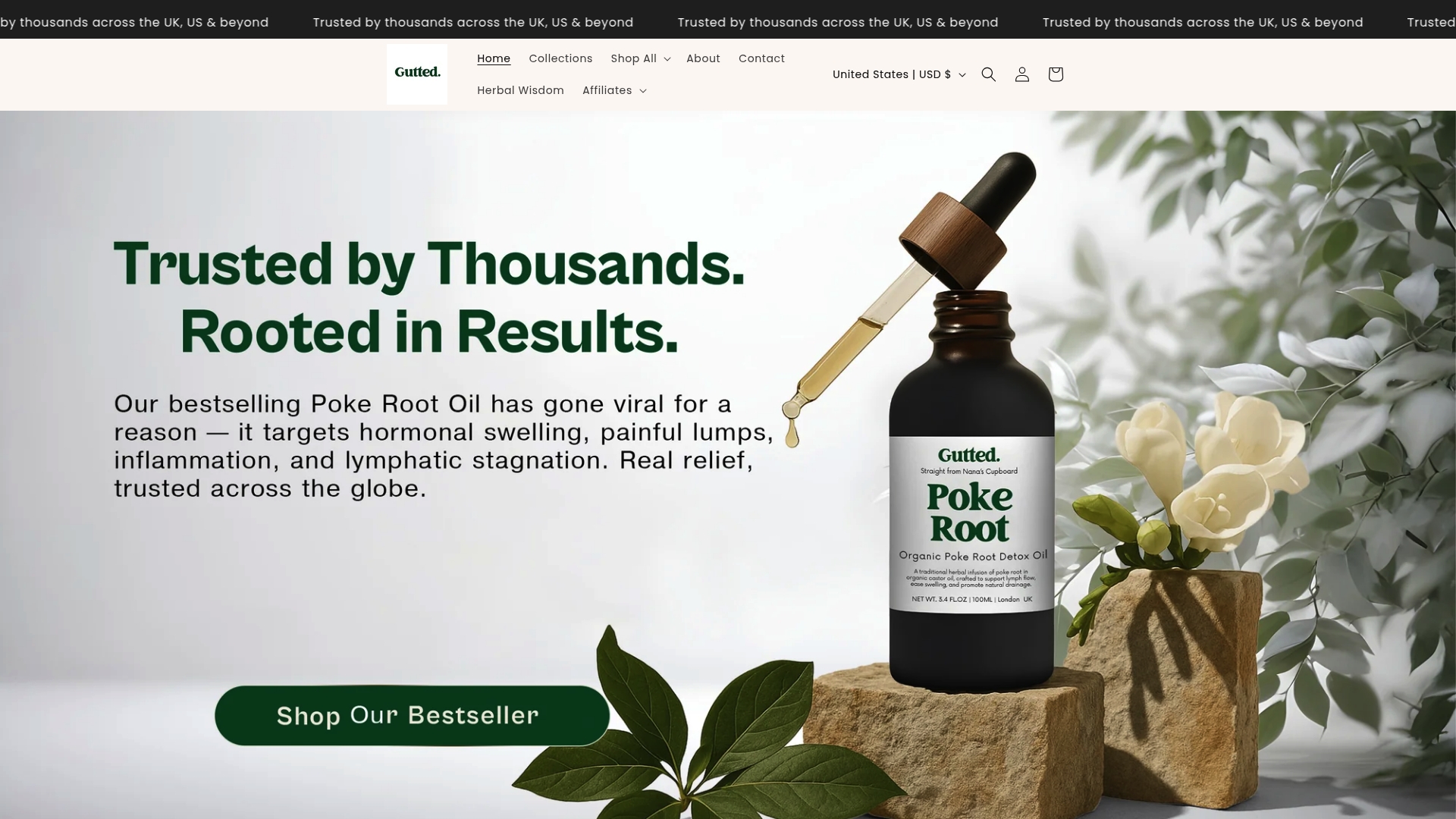
At Get Gutted, we have developed our Organic Poke Root Oil infused in Castor Oil specifically for those seeking targeted lymphatic support, handcrafted in small batches using traditional slow-infusion methods. Alongside this, our range includes Soursop Leaves, Apricot Kernels, and Essiac tea blends, all selected to support detox and internal balance. Explore our full range of herbal wellness resources and find the right combination for your needs. Quality, transparency, and practitioner-informed formulation are at the centre of everything we offer.
Frequently asked questions
Is poke root oil safe for everyday use on swollen glands?
No. Poke root oil is potent and restricted to external use by many herbalists due to toxicity. It should only be used sparingly and under practitioner guidance.
Can poke root oil help with inflammation and fluid retention?
Traditionally, yes, but no empirical clinical data supports this for poke root oil specifically. Benefits are based on herbal tradition and anecdotal reports, and caution is advised.
Who should avoid poke root oil?
Children, pregnant or breastfeeding individuals, and those with broken skin should not use it. Avoid in pregnancy, breastfeeding, and children as systemic absorption poses a toxicity risk.
How is poke root oil typically prepared for topical use?
The dried root is infused in a carrier oil such as olive oil over several weeks, then applied sparingly to intact skin over affected areas.