

How to Use Infused Oils Naturally for Wellness
Finding the best artisanal infused oils can feel overwhelming when your personal well-being matters most. With more than 60 percent of British women reporting concerns about hormonal imbalance and inflammation, demand for natural remedies continues to grow. Understanding how to select, prepare, and use botanical oils empowers you to create a safe and effective home ritual. This guide shows you practical steps for choosing and applying infused oils tailored to your individual wellness goals.
Quick Summary
| Significant Insight | Detailed Explanation |
|---|---|
| 1. Choose oils based on wellness goals | Select infused oils that align with your specific health objectives, such as stress relief or skin nourishment, for maximum benefit. |
| 2. Prepare a clean work environment | Ensure sterilised tools and a tidy workspace to create high-quality herbal infused oils, minimising contamination risks. |
| 3. Apply oils with mindful techniques | Use gentle massage techniques on clean skin and monitor for sensitivity to enhance therapeutic absorption and effectiveness. |
| 4. Track effects and adjust accordingly | Keep a detailed wellness journal to observe changes in your body’s response and customise usage for optimal results. |
| 5. Store oils properly to maintain quality | Use dark glass containers in cool, dark places to protect infused oils from light and heat, ensuring their longevity and efficacy. |
Step 1: Select the ideal infused oil for your needs
Selecting the right infused oil is crucial for achieving your specific wellness goals. Your choice depends on understanding individual needs and matching botanical properties with desired health outcomes.
Start by considering your primary wellness objective. Are you seeking stress relief, skin nourishment, or hormonal balance? Different botanical oils offer unique therapeutic benefits. Traditional botanical oils provide holistic wellness approaches that can target specific health concerns. When evaluating oils, prioritise cold-pressed, high-quality carrier oils with stable properties. Research indicates that soybean, jojoba, and sunflower oils represent excellent choices due to their neutral scent, skin compatibility, and resistance to oxidation.
Consider these key selection criteria: purity of ingredients, extraction method, intended therapeutic use, and personal skin sensitivity. Some oils work better for topical application, while others excel in massage or aromatherapy. Pay attention to the herb infused into the oil and its specific properties.
Expert Tip: Always perform a small patch test with new botanical oils to ensure no adverse skin reactions and verify individual compatibility.
Here is a comparison of popular carrier oils used for botanical infusions:
| Oil Type | Scent Profile | Skin Compatibility | Shelf Life |
|---|---|---|---|
| Jojoba Oil | Neutral | Suitable for most | Very stable, long |
| Sunflower Oil | Mild/nutty | Well tolerated | Stable, moderate |
| Soybean Oil | Subtle, bland | Good for sensitive | Oxidation resistant |
| Olive Oil | Heavy, grassy | Moisturising, rich | Moderate, can spoil |
Step 2: Gather tools and prepare your space
Preparing your workspace is a critical first step in creating high-quality herbal infused oils. Your environment and equipment will directly impact the purity and effectiveness of your botanical preparation.
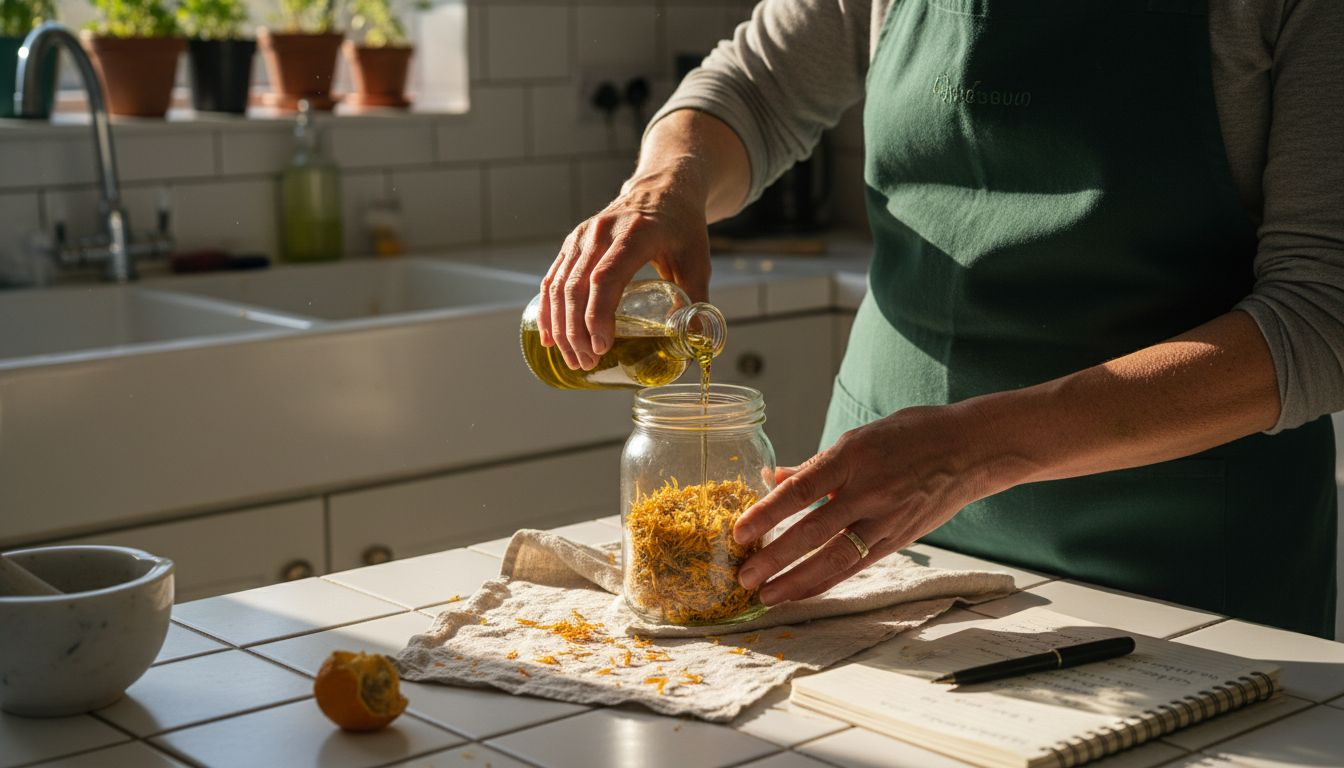
Careful selection of tools and workspace sterilization ensures the highest quality herbal infusion. You will need specific equipment including clean glass jars with secure lids, high-quality carrier oils like olive or sunflower, and dried botanical herbs. For optimal infusion, follow a precise herb-to-oil ratio of approximately 1:5, which helps maintain the potency of your botanical blend.
Ensure your workspace is pristine by thoroughly cleaning all surfaces and tools. Choose a cool, dark area for your preparation that maintains consistent temperature and minimises potential contamination. Select glass containers preferably with dark tinting to protect your infusion from light degradation. Air circulation and a stable environment are crucial for successful herbal oil creation.
Expert Tip: Always use sterilised equipment and work in a clean environment to prevent potential bacterial growth in your herbal infusions.
Step 3: Apply the infused oil with mindful technique
Applying herbal infused oils requires a thoughtful and deliberate approach to maximise therapeutic benefits and ensure safe absorption. Your application technique directly influences the oil’s effectiveness and your overall wellness experience.
Safely applying therapeutic oils involves gentle massage techniques and careful skin observation, ensuring optimal absorption and minimising potential adverse reactions. Begin by performing a small patch test on a discrete area of skin, watching for any signs of irritation over 24 to 48 hours. When massaging, use diluted oils and focus on gentle circular motions that promote relaxation and enhance therapeutic absorption, targeting areas like wrists, temples, or specific muscle groups experiencing tension.
Pay close attention to your body’s response during application. Start with minimal quantities, gradually increasing as you understand your skin’s sensitivity and the oil’s specific properties. Explore different application techniques that align with your wellness goals, whether for anxiety relief, inflammation reduction, or targeted muscle relaxation.
Expert Tip: Always apply infused oils to clean skin and wait at least 15 minutes after bathing to ensure optimal absorption and minimal interference from residual moisture.
Step 4: Monitor effects and adjust usage as required
Tracking your body’s response to infused oils is crucial for developing a personalised wellness approach that maximises therapeutic benefits while ensuring safety and effectiveness.
Begin by establishing a systematic approach to monitoring your body’s response to herbal infusions, starting with minimal dosages and carefully observing any changes in your physical or emotional state. Conduct regular assessments of potential skin reactions and overall therapeutic outcomes, paying close attention to subtle shifts in inflammation, stress levels, and general well-being.
Keep a detailed wellness journal to track your experiences, noting factors such as application frequency, quantity used, specific areas of application, and any noticeable changes in your body’s response. If you experience any adverse reactions or unexpected symptoms, reduce the dosage or discontinue use temporarily. Your body’s individual response is unique, and what works for others might not be identical to your personal wellness needs.
Expert Tip: Photograph or document your skin’s condition before starting infused oil treatments to help objectively track any changes or potential reactions over time.
Step 5: Store infused oils to maintain freshness
Preserving the potency and quality of your herbal infused oils requires strategic storage techniques that protect their therapeutic properties and prevent premature degradation.
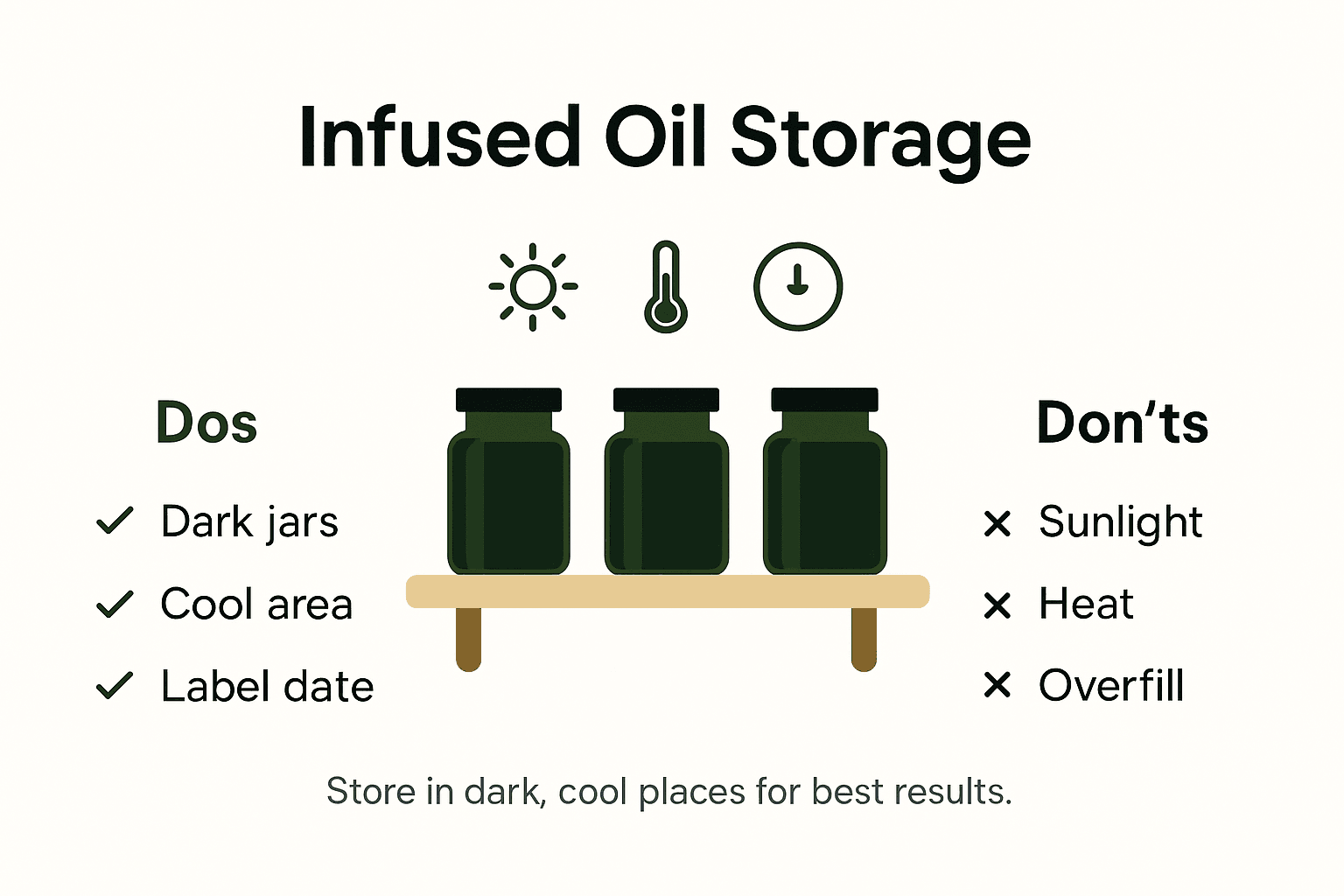
Proper storage involves selecting appropriate containers and environmental conditions that shield your oils from potential contamination, focusing on minimising exposure to light, heat, and air. Choose dark glass bottles with airtight seals and store them in cool, dark environments to prevent oxidation and maintain the oils’ therapeutic integrity. Amber or cobalt glass containers offer superior protection against light degradation and help preserve the delicate botanical compounds.
Implement a systematic approach to oil storage by labelling each container with preparation dates and conducting regular quality checks. Refrigeration is recommended for oils infused with fresh herbs or perishable ingredients, while dried herb infusions can be stored in a cool pantry. Remain vigilant for signs of spoilage such as unusual odours, cloudiness, or textural changes that might indicate compromised quality.
Expert Tip: Create a small batch of infused oil and mark the storage date to help you track freshness and rotate your botanical preparations effectively.
The following table highlights best practices for storing infused oils to maintain quality:
| Storage Condition | Preservation Benefit | Common Risk if Ignored |
|---|---|---|
| Dark glass container | Minimises light degradation | Discolouration, loss of potency |
| Airtight seal | Prevents oxidation | Rancidity, off smells |
| Cool, stable temperature | Slows breakdown of compounds | Spoilage, separation |
| Labelling & dating | Tracks freshness | Confused batches, spoilage |
Enhance Your Wellness Journey with Authentic Herbal Infused Oils
If you find selecting the perfect infused oil and mastering its application a challenge, you are not alone. Many seek natural ways to restore balance, relieve tension, and nurture their skin but struggle to find trusted preparations that truly deliver. This is where our Organic Root Oil Range – Gutted. comes in. Crafted with careful small-batch methods and potent botanicals, each handcrafted oil supports your wellness goals safely and effectively while honouring traditional herbal wisdom.
Experience the joy of mindful self-care with our thoughtfully blended oils designed to detox, soothe stagnation and reconnect you with your body’s natural healing intelligence. Explore our Wellness Kits & Bundles – Gutted. for curated solutions that simplify your herbal oil rituals. Start your personalised wellness journey today and discover the difference authentic botanicals can make by visiting https://getgutted.co. Your body deserves genuine care that works as hard as you do.
Frequently Asked Questions
How do I select the right infused oil for my wellness needs?
To select the right infused oil, identify your primary wellness objective, such as stress relief or skin nourishment. Research the therapeutic benefits of different botanical oils and choose a high-quality carrier oil that aligns with your goal. For instance, if aiming for skin nourishment, consider jojoba oil for its compatibility with most skin types.
What tools do I need to prepare infused oils?
To prepare infused oils, gather clean glass jars with secure lids, a high-quality carrier oil, and dried botanical herbs. Ensure your workspace is thoroughly sterilised to maintain the purity of your preparation, which will enhance the effectiveness of your infused oils.
How should I apply infused oils for the best results?
For optimal results, apply infused oils using gentle massage techniques while observing your skin’s response. Start with a small patch test to ensure there are no adverse reactions, and then use the oils on targeted areas, like wrists or temples, to maximise benefits.
How can I monitor the effects of infused oils on my body?
Begin by documenting your experiences in a wellness journal, noting factors like dosage, application frequency, and any changes in your physical or emotional state. Regularly assess your body’s response and adjust the usage as needed to ensure you are benefiting from the infused oils safely and effectively.
What is the best way to store infused oils?
To maintain freshness, store infused oils in dark glass containers with airtight seals, away from light and heat. Regularly check your infused oils for signs of spoilage and label them with preparation dates to track their freshness.
How can I perform a patch test for infused oils?
To perform a patch test, apply a small amount of the infused oil to a discrete area of skin, such as the inside of your wrist. Observe for any irritation over 24 to 48 hours before using the oil more broadly to ensure compatibility with your skin.