

Massage Oils: Everything You Need To Know
Massage oils are more than just smooth glides for tired muscles. Over 80 percent of massage therapists rely on plant-based oils to deliver both comfort and lasting wellness benefits during bodywork. Choosing the right oil can transform an ordinary massage into a therapeutic ritual for your body and mind. This guide breaks down how massage oils work, what makes them effective, and how they support holistic health with every drop.
Key Takeaways
| Point | Details |
|---|---|
| Massage Oils Enhance Wellness | Specially formulated to improve physical wellness, these oils reduce friction during massage techniques and provide nourishment to the skin. |
| Choose Quality Oils | Selecting high-quality, plant-derived massage oils is crucial for maximizing benefits and addressing specific therapeutic needs. |
| Know Your Skin Type | Different oils have unique properties; understanding your skin’s requirements helps in making an informed selection for the best massage experience. |
| Safety First | Always perform a patch test before widespread use and consult professionals if you have allergies or specific health conditions. |
What Are Massage Oils And Their Purpose
Massage oils are specialized lubricating substances designed to enhance physical wellness and bodywork experiences. According to kviconline, these oils are carefully formulated products applied directly to the skin to support overall well-being, serving purposes ranging from general body application to targeting specific areas like stretch marks and cellulite.
The fundamental purpose of massage oils extends beyond simple lubrication. London School of Massage experts highlight that these oils facilitate smooth hand movements during massage techniques, enabling practitioners to create seamless, fluid motions across the body. Typically derived from vegetable or plant origins, massage oils vary in weight and viscosity to suit different massage requirements.
Key characteristics of effective massage oils include:
- Natural plant-based composition
- Ability to reduce friction during bodywork
- Potential therapeutic benefits depending on botanical ingredients
- Skin-nourishing properties
While mineral oils like baby oil are available, holistic practitioners generally recommend plant-derived alternatives that offer more comprehensive skin nutrition and energetic support. The selection of a massage oil can significantly impact the overall massage experience, making it crucial to choose high-quality, purposefully crafted formulations.
For those interested in diving deeper into herbal wellness, our guide on herbal oils provides additional insights into natural healing approaches.
Types Of Massage Oils Explained
Massage oils represent a diverse world of botanical extracts, each offering unique properties for holistic wellness. Healthline highlights several key carrier oils that have become staples in massage therapy, including coconut oil, renowned for its skin-nourishing fatty acids and polyphenols, and jojoba oil, a liquid wax that remarkably mimics the skin’s natural sebum.
Massage Theory experts provide deeper insights into the nuanced characteristics of these oils. For instance, jojoba oil stands out for its remarkable compatibility with sensitive skin, while grapeseed oil offers a lightweight, quick-absorbing option that leaves no greasy residue. Olive oil emerges as a rich, moisture-intensive alternative that provides deep nourishment.
Key massage oil types include:
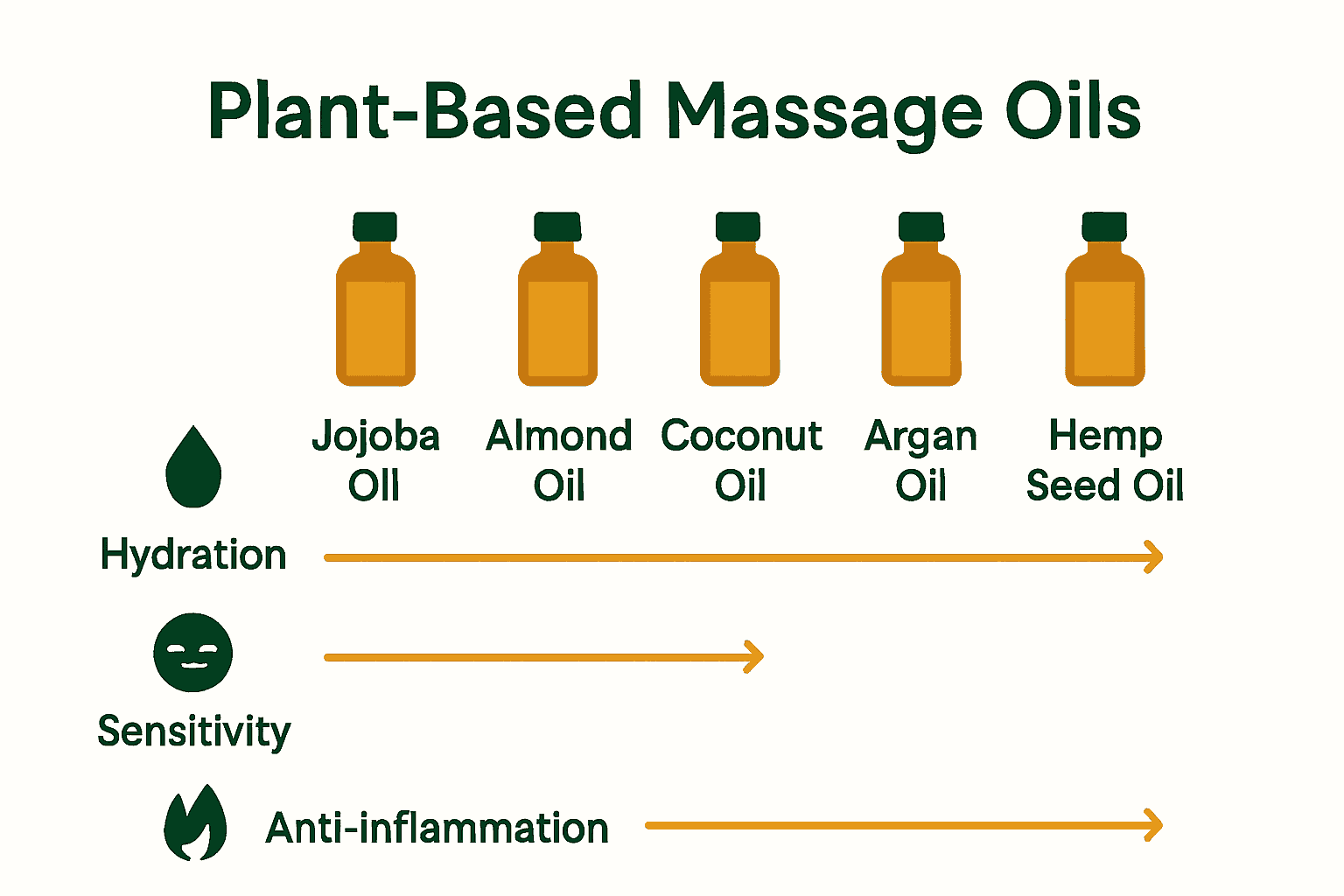
Here’s a comparison of popular massage oils and their properties:
| Oil Type | Main Benefits | Skin Suitability |
|---|---|---|
| Coconut Oil | Antimicrobial Deep hydration |
Normal to dry |
| Jojoba Oil | Closest to natural sebum Hypoallergenic |
Sensitive Oily skin |
| Grapeseed Oil | Lightweight Fast absorption |
All skin types |
| Sweet Almond Oil | Vitamin E rich Smooth application |
Dry Non-allergic skin |
| Olive Oil | Nutritive Intense moisture |
Very dry Mature skin |
- Coconut Oil: Antimicrobial, deeply moisturizing
- Jojoba Oil: Closest to human skin’s natural oils
- Grapeseed Oil: Lightweight and fast-absorbing
- Sweet Almond Oil: Smooth glide, rich in vitamin E
- Olive Oil: Dense, nutritive properties
When selecting a massage oil, consider your specific wellness goals and skin type.
 Some practitioners prefer blending multiple oils to create a customized therapeutic experience. For a comprehensive exploration of botanical oil benefits, explore our guide on traditional botanical oils that can elevate your holistic wellness journey.
How Massage Oils Support The Body
Holistic body support through massage oils extends far beyond simple skin lubrication. Warrington Worldwide reveals that these specialized oils enhance therapeutic effects by providing critical lubrication that reduces friction and enables smooth hand movements during bodywork, simultaneously nourishing the skin with targeted botanical properties.
London School of Massage experts highlight the nuanced ways massage oils facilitate bodily wellness. By allowing free hand movement and preventing skin irritation, these oils can be strategically tailored to individual physiological needs, with different viscosities addressing specific therapeutic requirements.
Key body support mechanisms of massage oils include:
- Lymphatic Drainage: Promoting toxin elimination
- Muscle Recovery: Reducing inflammation and tension
- Skin Hydration: Delivering essential nutrients
- Circulatory Stimulation: Improving blood flow
- Stress Reduction: Activating parasympathetic nervous system
Understanding the intricate relationship between botanical oils and bodily systems reveals their profound potential for holistic healing. For those seeking deeper insights into natural wellness approaches, explore our guide on detox oils to unlock more comprehensive healing strategies.
Herbal And Botanical Oil Benefits
Botanical oils represent a powerful reservoir of natural healing potential, each carrying unique therapeutic properties. Wikipedia highlights lavender oil as a prime example, distilled from flower spikes and containing compounds like linalool and linalyl acetate, which demonstrate potential calming effects in aromatherapy and massage contexts.
Marula Oil Research reveals another remarkable botanical extract, rich in monounsaturated fatty acids and potent antioxidants. Traditionally used in cosmetics and body treatments, these oils offer profound moisturizing benefits that extend beyond surface-level skin care, penetrating deeper cellular layers to support holistic wellness.
Key benefits of herbal and botanical oils include:
- Cellular Nourishment: Delivering concentrated plant-based nutrients
- Stress Reduction: Activating parasympathetic relaxation responses
- Skin Regeneration: Supporting natural healing processes
- Inflammatory Management: Reducing systemic inflammation
- Emotional Balancing: Leveraging aromatherapeutic properties
Understanding the nuanced interactions between botanical extracts and human physiology opens pathways to more integrated wellness approaches. For those curious about exploring natural skin solutions further, our guide on botanical oils for skin offers comprehensive insights into these transformative natural resources.
Safety, Allergies And Usage Precautions
Botanical oil safety requires careful consideration and informed approach. Healthline warns that individuals with specific allergies must exercise extreme caution, particularly those with nut sensitivities who should avoid oils like almond oil. The critical first step in safe usage is always performing a comprehensive patch test to identify potential adverse reactions before widespread application.
Wikipedia’s research on lavender oil reveals additional critical safety insights, highlighting that certain essential oils can act as endocrine disruptors and may cause unexpected interactions. Some oils are particularly toxic if ingested, with children being especially vulnerable to potential complications from improper usage.
Key safety precautions for massage oil usage include:
- Patch Testing: Always test a small skin area first
- Allergy Awareness: Check ingredients against known sensitivities
- Dilution: Properly dilute concentrated essential oils
- Professional Consultation: Seek advice for specific health conditions
- Storage: Keep oils in cool, dark places away from direct sunlight
Navigating the complex world of botanical oils requires mindful approach and respect for individual bodily responses. For those seeking deeper understanding of natural wellness strategies, our guide on botanical oils for skin provides comprehensive insights into safe and effective usage.
Discover the Power of Herbal Massage Oils for True Wellness
If you have been searching for natural ways to enhance your massage experience and support your body’s deeper healing, understanding the right massage oils is essential. This article highlights how specialized plant-based oils reduce friction, nourish the skin, and help relieve muscle tension and stress. Many people struggle with finding pure, effective oils that genuinely support circulation and lymphatic drainage while being safe for sensitive skin.
At Gutted™, we share your passion for authentic herbal wellness. Our Organic Root Oil Range – Gutted. features handcrafted, wild-infused blends designed to restore balance and promote detoxification naturally. Every formula is carefully made in London using traditional herbal wisdom to unlock your body’s own healing intelligence.

Enhance your massage therapy with oils that nourish, protect, and soothe. Explore our carefully crafted range now and experience holistic care that truly makes a difference. Visit Gutted™ today and start your journey to renewed vitality and comfort.
Frequently Asked Questions
What are the main purposes of massage oils?
Massage oils are designed to enhance physical wellness by providing lubrication for smooth hand movements during massage techniques, nourishing the skin, and offering potential therapeutic benefits depending on their botanical ingredients.
How do I choose the right massage oil for my skin type?
To select the right massage oil, consider your specific skin type and wellness goals. For example, jojoba oil is great for sensitive skin, while coconut oil provides deep hydration for normal to dry skin. Blending multiple oils can also create a customized experience.
What are the benefits of using herbal and botanical oils in massage?
Herbal and botanical oils offer numerous benefits, including cellular nourishment, stress reduction, skin regeneration, inflammatory management, and emotional balancing through their concentrated plant-based properties and aromatherapeutic effects.
How can I ensure the safety of using massage oils?
To ensure safety, perform a patch test before widespread application, be aware of any allergies, properly dilute concentrated essential oils, and consult with a professional if you have specific health conditions. It’s also important to store oils in cool, dark places away from direct sunlight.
Recommended
- 7 Botanical Oils for Skin: Natural Solutions for You – Gutted.
- Why Use Herbal Oils: Complete Guide to Natural Wellness – Gutted.
- 7 Types of Traditional Botanical Oils for Natural Wellness – Gutted.
- 7 Types of Traditional Botanical Oils for Holistic Wellness – Gutted.
- Hair Care Oils: Your Guide to Choosing the Right Oil | MyHair