

How to create a herbal oil self-massage routine
A daily short self-massage session, starting at your hands and feet and working toward the heart with warm carrier oil, is one of the most practical things you can do for inflammation, lymphatic flow, and hormonal calm. For a lymphatic-focused routine, Getgutted’s Gutted poke root oil (poke root infused in organic castor oil) is the recommended base. Before your first session, patch-test any new oil on your inner forearm and consult your GP or midwife if you are pregnant or managing a health condition.
Table of Contents
- What do you need before you start?
- How to follow the self-massage routine step by step
- What dilution ratios and blends should you use?
- When should you avoid or modify self-massage?
- How do you make and store a small-batch herbal oil?
- How do you build the habit and track whether it is working?
- Key takeaways
- Why consistency beats intensity every time
- Ready to start your herbal oil routine with Getgutted?
- Useful sources
What do you need before you start?
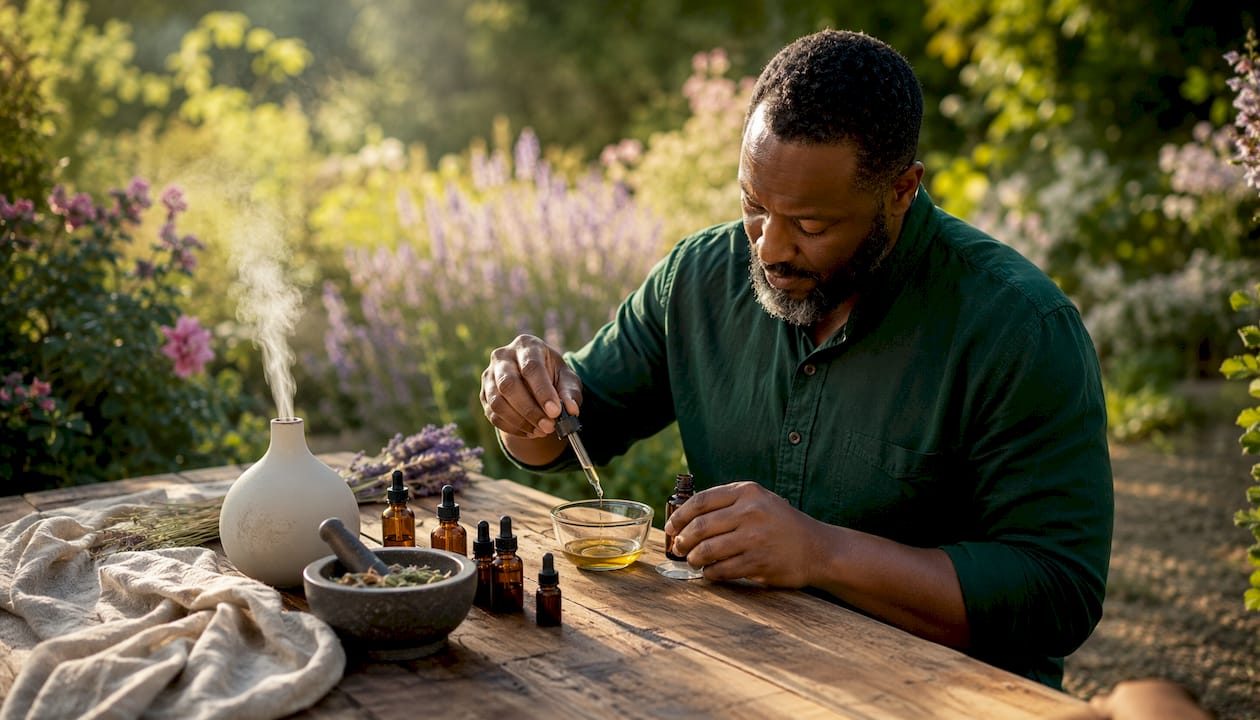
Getting everything ready before you sit down saves you from scrambling mid-session. Here is what to gather.
Carrier oils and why they matter
| Carrier oil | Best for | Notes |
|---|---|---|
| Castor oil | Lymphatic support, inflammation | Thick; blend with a lighter oil for easier glide |
| Sweet almond oil | General massage, smooth application | Light texture, mild scent, suits most skin types |
| Jojoba oil | Sensitive or reactive skin | Technically a wax ester; long shelf life |
Gutted poke root oil uses organic castor oil as its base, which makes it well suited to lymphatic health and inflammation-focused work. If you find castor oil too thick on its own, blend it 50:50 with sweet almond oil.
Essential oils for relaxation and targeted support
Essential oils must always be diluted in a carrier before skin contact. According to the Cleveland Clinic, lavender supports relaxation and frankincense offers anti-inflammatory properties. Roman chamomile is a quieter choice for hormonal calm and sleep. Keep concentrations below 5% for topical use; for daily full-body work, 1–2% is the standard.
Tools and environment
A warm, private room matters more than most people expect. Combining scent with a warm, calm environment increases parasympathetic signalling, which is the whole point of the session. You will also need:
- A small squeeze bottle or glass dropper bottle for your blended oil
- A clean towel you do not mind oiling
- Non-slip socks (oiled feet on hard floors are a genuine fall risk)
- A bowl of hot water to warm your oil (never heat oil directly on a stove)
- A timer
Getgutted’s wellness kits bundle several of these essentials together if you prefer a ready-made start.
How to follow the self-massage routine step by step
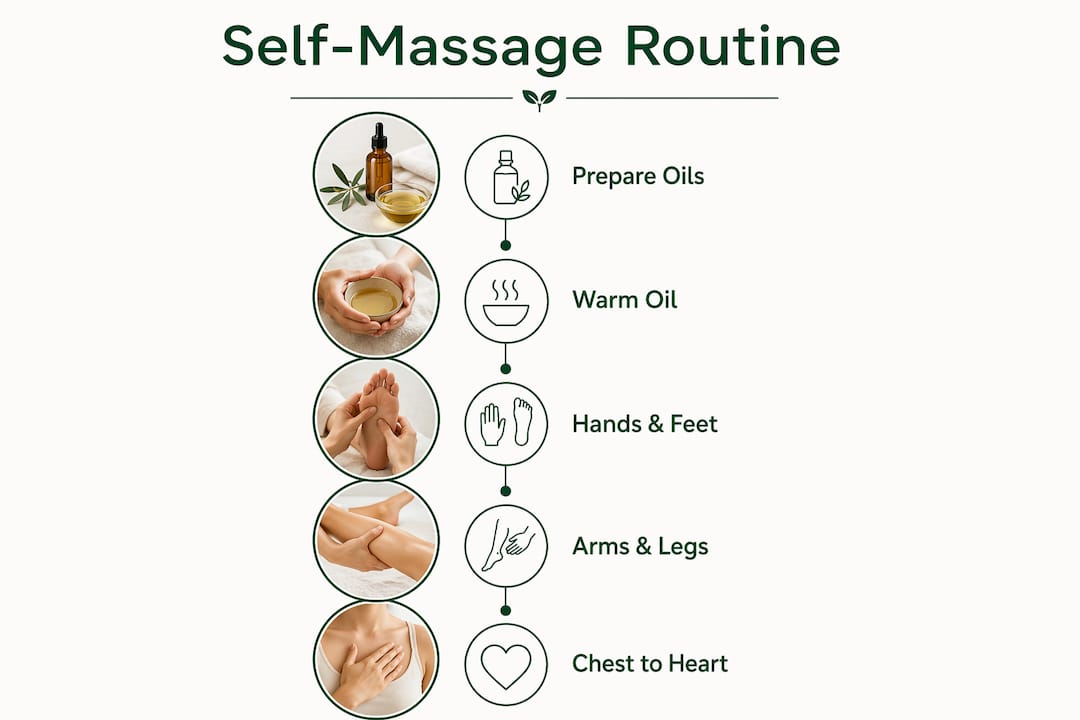
Self-massage should start at the extremities and move toward the heart, using circular motions over joints and long straight strokes along the limbs. This direction supports lymphatic return rather than working against it.
- Warm your oil. Place your bottle in a bowl of hot water for 2–3 minutes. Test on your wrist; it should feel comfortably warm, not hot.
- Hands and forearms (2–3 minutes). Apply oil and use long strokes from fingertips toward the elbow. Circular motions over each knuckle and the wrist joint.
- Upper arms and shoulders (1–2 minutes). Long strokes from elbow toward the shoulder; gentle circles over the elbow joint.
- Feet and lower legs (2–3 minutes). Start at the toes, stroke toward the knee. Circles over the ankle joint and around the heel.
- Thighs (2 minutes). Long upward strokes from knee toward the groin. Circles over the knee.
- Abdomen and lower back (2 minutes). Gentle clockwise circles on the abdomen; light long strokes on the lower back if you can reach comfortably.
- Neck and décolletage (1–2 minutes). Light downward strokes from jaw toward the collarbone to encourage lymph drainage toward the thoracic duct.
- Rest (2 minutes). Leave the oil to absorb. Abhyanga tradition recommends 10 minutes of absorption before showering; even a short rest improves uptake.
Total session: 10–20 minutes. Clinical evidence supports 10–20 minute sessions for pain management and recovery, with focused 2-minute passes on specific areas.
Pressure should be moderate on a comfort scale. Smooth, gliding strokes are more effective than force; over-massaging can irritate tissue and prolong discomfort. Exhale as you apply each stroke — it nudges the nervous system toward a parasympathetic state.
Pro Tip: If you feel a tight spot, work around it with small circles rather than pressing directly into it. Stop immediately if you feel sharp pain.
What dilution ratios and blends should you use?
Safe dilution is non-negotiable. The table below gives you the drop counts for 1% and 2% concentrations across three common batch sizes.
| Carrier oil volume | 1% dilution | 2% dilution |
|---|---|---|
| 10 ml | 2 drops | 4 drops |
| 30 ml | 6 drops | 12 drops |
| 100 ml | 20 drops | 40 drops |
Use 1% for daily full-body routines. Up to 2–3% is appropriate for short, targeted sessions on a specific area. Johns Hopkins Medicine notes that essential oils can cause irritation when applied undiluted, so always use a carrier.
Three example blends
Inflammation support: 30 ml castor/sweet almond blend + 6 drops frankincense. Apply to swollen joints or inflamed areas after patch-testing.
Hormonal calm: 30 ml jojoba + 4 drops Roman chamomile + 2 drops lavender. Use in the evening; avoid in the first trimester without midwife guidance.
Lymphatic stimulant: 30 ml Gutted poke root oil + 4 drops grapefruit + 2 drops lemon. Note: citrus oils are photosensitising — avoid sun exposure on treated skin for 12 hours.
Patch-test steps
- Mix 0.5 ml of your diluted blend.
- Apply to the inner forearm.
- Leave uncovered for 24 hours.
- If redness, itching, or swelling develops, wash off immediately and do not use that blend. Seek advice from a pharmacist if the reaction persists.
When should you avoid or modify self-massage?
Stop and seek advice if you notice: a sudden hot, red, or swollen limb (possible deep vein thrombosis); open wounds or broken skin over the area; signs of acute infection; or sharp, persistent pain during a session. These are not situations to massage through.
Additional cautions:
- Pregnancy: avoid targeted abdominal and pelvic massage without midwife or GP clearance. Certain essential oils (including clary sage and rosemary) are contraindicated in pregnancy.
- Recent surgery or severe varicose veins: consult your GP before starting any massage routine over the affected area.
- Photosensitising medications: some drugs (including certain antibiotics and retinoids) increase skin sensitivity. Check with your pharmacist before using citrus essential oils topically.
- Children: use much lower dilutions (0.5% or less) and only gentle strokes; seek paediatric advice for any health condition.
Always warm oil using a bowl of hot water or a double boiler. Direct stovetop heating degrades active compounds and creates a burn risk. If you are unsure whether self-massage is appropriate for your situation, your GP or pharmacist is the right first call.
How do you make and store a small-batch herbal oil?
Making your own herbal oil at home is straightforward when you follow basic hygiene. Use dried herbs only — fresh plant material introduces moisture and causes rancidity.
- Sterilise a clean glass jar with boiling water and allow it to dry completely.
- Fill the jar one-third with dried herb (e.g. dried chamomile flowers or calendula).
- Pour carrier oil to cover the herb by at least 2 cm.
- Cold infusion: seal and leave in a cool, dark place for 4–6 weeks, shaking daily. Warm infusion: place the sealed jar in a bowl of hot (not boiling) water for 2–3 hours, then cool.
- Strain through cheesecloth into a sterilised bottle, pressing the herb to extract all oil.
- Label immediately with the herb name, carrier oil, and batch date.
Small batches of 4–8 weeks’ supply are ideal. Store in a cool, dark place and discard if the oil smells rancid or the colour changes significantly. Shelf life varies by carrier: jojoba lasts longest (up to two years), sweet almond oil around 12 months.
Pro Tip: Start with a 50 ml trial batch. It lets you adjust herb ratios and check your skin’s response before committing to a larger volume.
Getgutted’s Gutted poke root oil follows exactly this small-batch philosophy: poke root infused into organic castor oil in controlled batches, with ingredient purity as the non-negotiable standard.
How do you build the habit and track whether it is working?
Consistency produces results that intensity cannot. Aim for 3–7 sessions per week depending on your goal: daily for active lymphatic or hormonal support, three times weekly for maintenance.
A simple tracking log keeps you honest. After each session, note the date, duration, blend used, target area, a swelling or pain score (0–10), sleep quality, and any observations. Review every 2–4 weeks. Small, consistent improvements in sleep or morning puffiness are the early signals that the routine is working.
If swelling increases, new numbness appears, or you see no change after 6–8 weeks, consult a physiotherapist or GP. Self-massage supports the body; it does not replace clinical assessment when something is wrong. For deeper reading on boosting lymphatic flow naturally, Getgutted’s blog covers complementary techniques alongside the oil routine.
Key takeaways
A consistent daily herbal oil self-massage, starting at the extremities and working toward the heart with a lightly diluted blend, is a practical approach to supporting lymphatic flow, inflammation, and hormonal balance at home.
| Point | Details |
|---|---|
| Routine order | Start at hands and feet, work toward the heart; 10–20 minutes total per session. |
| Pressure and strokes | Gentle glide at 4–7/10 comfort; circles over joints, long strokes along limbs. |
| Safe dilution | 1% for daily full-body use (2 drops per 10 ml); up to 2–3% for short targeted sessions. |
| Safety first | Patch-test every new blend; stop for sharp pain, hot swollen limbs, or broken skin; consult your GP or midwife when in doubt. |
| Getgutted starting point | Gutted poke root oil and wellness kits offer a ready-made, small-batch base for the lymphatic and inflammation blends in this article. |
Why consistency beats intensity every time
Most people approach self-massage the way they approach a gym session: go hard, go long, and expect fast results. That instinct works against you here. The lymphatic system has no pump of its own. It moves through gentle, rhythmic pressure and the natural contractions of surrounding muscle. Force does not accelerate it; it can actually cause the tissue to guard and slow things down.
A ten-minute daily ritual will outperform a forty-minute weekly session for lymphatic drainage and hormonal regulation. The nervous system needs repetition to shift into a parasympathetic pattern, and that shift is where the hormonal benefits live. Cortisol does not drop because you pressed harder; it drops because the body learned, through repeated gentle cues, that this is a safe moment to relax.
The other thing people underestimate is the role of the oil itself. A well-chosen herbal base is not just a lubricant. Poke root has a long history in traditional botanical practice for lymphatic support, and pairing it with castor oil gives you a carrier that is itself associated with anti-inflammatory and circulation-supporting properties. That combination, used consistently, is doing more than helping your hands glide.
Start small. Ten minutes, three times a week, with a blend you have patch-tested and enjoy the scent of. Add days as it becomes habitual. Track one metric, whether that is morning puffiness, sleep quality, or joint comfort, and give it six weeks before you judge the results.
Ready to start your herbal oil routine with Getgutted?
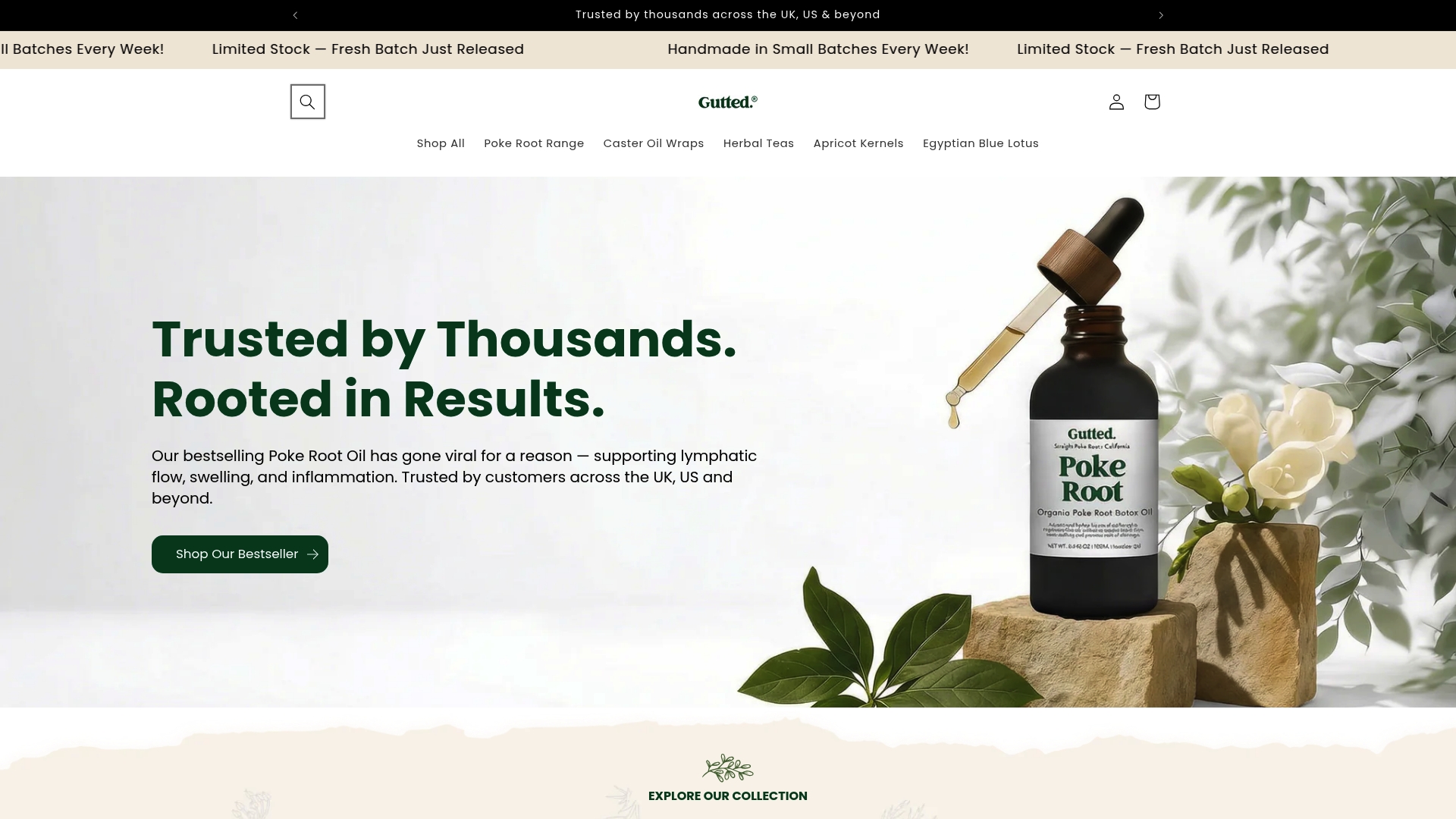
The Gutted poke root oil is the simplest way to put the lymphatic blend in this article into practice without mixing from scratch. It arrives ready to use as a base: poke root infused into organic castor oil, produced in small batches to preserve potency. For a first session, apply a few drops warmed in your palms and follow the extremities-to-heart sequence above, starting at 1% if you are adding any essential oils.
If you want everything in one place, the Getgutted wellness kits bundle the oils and supporting products together. Patch-test first, begin with a 1% blend, and build from there. That is genuinely all it takes to start.
Useful sources
- Self-massage for pain and mobility (PubMed, J Strength Cond Res) — supports session length and frequency guidance in the routine section.
- Essential oils 101 (Cleveland Clinic) — dilution rationale, lavender and frankincense properties, and the role of environment.
- Aromatherapy: do essential oils really work? (Johns Hopkins Medicine) — olfactory and transdermal absorption; skin irritation risk from undiluted oils.
- Abhyanga massage guide (Healthline) — application order, absorption time, and small-batch infusion method.
- Self-massage basics (Healthline) — pressure guidance and safety cues.
- University Health Network self-massage guidance — stroke direction and lymphatic return technique.
- Getgutted: how to make herbal oil naturally — small-batch infusion steps and storage guidance by Mabel.
- Getgutted: herbal lymph massage guide — lymph-specific protocols and product context.
- Getgutted: 7 powerful ways to use herbal oils — daily ritual integration and hormonal support context by Mabel.