

Hydration and lymphatic health: what you need to know
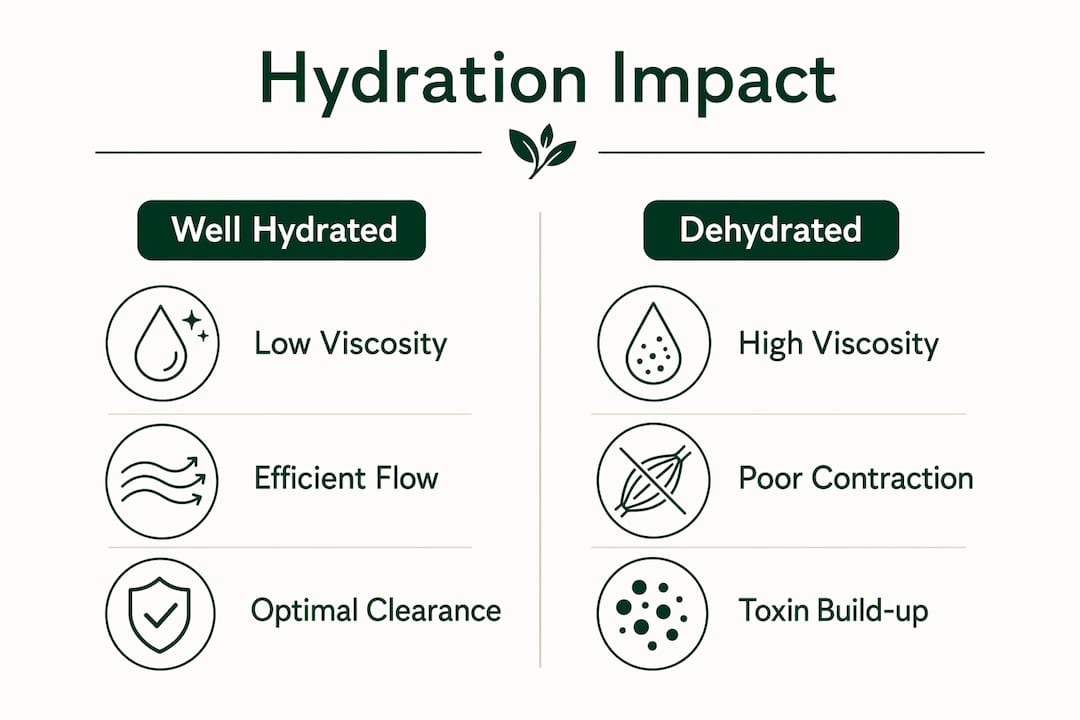
Hydration is the single most direct lever you have over your lymphatic system’s ability to function. Lymph fluid is approximately 90% water, which means even mild dehydration thickens it, slows its movement, and allows waste and toxins to accumulate in your tissues. The lymphatic system has no heart to drive it. Instead, small muscular segments called lymphangions contract rhythmically to push fluid forward, and those contractions depend on adequate plasma volume to work against resistance. Drink too little, and the whole system stalls.
- Lymph fluid is roughly 90% water; dehydration raises its viscosity and causes stagnation
- Thicker lymph increases resistance against lymphangion contractions, reducing their effectiveness
- Consistent water intake maintains the low viscosity needed for fluid to move freely through vessels
- Hydration supports immune function by keeping pathogens moving efficiently through lymph nodes
- Dehydration impairs the body’s natural detoxification by trapping waste in tissues rather than clearing it
How does the lymphatic system actually work?
The lymphatic system is a one-way drainage network running alongside your blood vessels. It collects excess fluid, proteins, and cellular debris from your tissues and returns them to the bloodstream via the subclavian veins near your collarbone. Research published in PMC confirms that between 8 and 12 litres of fluid passes through this network and back into systemic circulation every day.
Unlike blood, lymph has no central pump. Movement depends on:
- Lymphangion contractions: muscular segments in collecting vessels that squeeze fluid forward
- Intraluminal valves: one-way gates that prevent backflow between contractions
- Skeletal muscle activity: surrounding muscles compress lymphatic vessels during movement
- Respiratory pressure changes: deep breathing creates pressure gradients that draw lymph upward through the thoracic duct
Beyond fluid balance, the lymphatic system carries immune cells to sites of infection, transports dietary fats absorbed in the gut as chylomicrons, and delivers antigens to lymph nodes for immune surveillance. StatPearls notes that the lymphatics allow the immune system to function properly by carrying antigens and macrophages to where they are needed. Disruption to any part of this network, whether from dehydration, inactivity, or structural damage, affects immunity, fluid balance, and detoxification simultaneously.
Why hydration is critical to healthy lymph flow
Consistent water intake is necessary to maintain low lymph viscosity and enable lymphangions to contract and propel fluid effectively against resistance. When you are dehydrated, the fluid thickens, and the muscular walls of lymphangions have to work harder for a smaller result. Muscle pumps depend on plasma volume; dehydration elevates heart rate and reduces exercise capacity, which limits how effectively the mechanical pump action moves lymph.
Electrolytes are part of this picture too. Electrolytes regulate fluid distribution across cell membranes, supporting the body’s ability to flush toxins and pathogens through lymphatic channels. Without adequate sodium, potassium, and magnesium, fluid can pool in the wrong compartments rather than entering lymphatic capillaries for clearance.
The table below summarises how hydration status affects key aspects of lymphatic function.
| Hydration status | Lymph viscosity | Lymphangion efficiency | Toxin clearance |
|---|---|---|---|
| Well hydrated | Low | High | Effective |
| Mildly dehydrated | Moderate | Reduced | Slowed |
| Significantly dehydrated | High | Poor | Impaired |
Pro Tip: Sip water steadily across the day rather than drinking large amounts in one go. Sporadic large volumes can impair lymphatic transport just as dehydration does, because the system needs a consistent fluid supply, not peaks and troughs.
Signs your lymphatic system may be congested
Sluggish lymphatic flow tends to announce itself gradually. The most common early signal is unexplained swelling, particularly in the limbs, which occurs when interstitial fluid accumulates faster than the lymphatics can clear it. Integris Health identifies unexplained swelling, limb heaviness, and persistent swollen lymph nodes in the neck, underarm, and groin as hallmark symptoms of reduced lymphatic flow.
Other signs worth paying attention to:
- Persistent fatigue that does not resolve with rest, often linked to reduced immune cell trafficking
- Skin changes such as dullness, puffiness around the eyes, or slow wound healing
- Recurring infections or colds, reflecting reduced pathogen clearance through lymph nodes
- Digestive sluggishness, since the gut lymphatics (lacteals) absorb dietary fats and fat-soluble vitamins
- Feeling of heaviness in the legs, especially after long periods of sitting or standing
Congestion reduces immune efficiency because pathogens and abnormal cells are not being moved to lymph nodes for processing. If several of these symptoms appear together, it is worth speaking with a GP before attributing them solely to lifestyle factors.
Practical ways to support lymphatic flow every day
Hydration works best as part of a broader daily routine rather than in isolation. Muscle activity and deep breathing pump lymph; water provides the low-viscosity fluid that makes that transport possible. The two are genuinely interdependent.
Movement
Senior Physical Therapist Marigold Travis at MD Anderson notes that the lymphatic system is stimulated by physical activity and deep breathing exercises. Low-impact options, including walking, swimming, yoga, and ankle pumps, engage large muscle groups without placing stress on joints. Deep belly breathing is particularly effective because it drives pressure changes through the thoracic duct, the body’s largest lymphatic pathway.

Lymphatic flow benefits more from consistent micro-movements and posture changes throughout the day than from infrequent intense exercise. A ten-minute walk every hour is more useful to lymphatic circulation than a single hour-long session with eight hours of sitting around it.
Diet and fluids
- Prioritise water as your primary fluid; herbal teas such as green tea and ginger tea contribute to daily intake and carry anti-inflammatory compounds
- Include electrolyte-rich foods (bananas, leafy greens, coconut water) to support fluid distribution
- Limit alcohol, which dehydrates tissues and places additional load on the liver and lymphatics
- Eat plenty of vegetables and fruits to reduce systemic inflammation, which can impair lymphatic vessel function
Adjusting for circumstances
Increase your intake during exercise, hot weather, illness, or any period of lymphatic therapy. Well-hydrated tissue is more pliable for manual lymphatic drainage, reducing the mechanical resistance a therapist works against and improving outcomes. Pairing consistent hydration with lymphatic massage techniques amplifies the benefit of both.

Pro Tip: Pair your morning glass of water with a few minutes of ankle pumps and shoulder rolls before you get out of bed. This combination primes lymphatic flow before gravity and daily activity take over.
What experts say about hydration myths and lymphatic health
The most persistent clinical misconception is that drinking water causes or worsens swelling. It does not. Lymphoedema is a failure of lymph transport, not a consequence of fluid overload. When cardiac and renal function are normal, restricting water does not reduce limb swelling. It makes things worse.
Fluid restriction triggers a compensatory response in which the kidneys increase sodium retention to preserve blood volume. This raises the osmotic load in tissues, paradoxically trapping fluid rather than mobilising it for lymphatic drainage. The kidney-lymph cross-talk here is clinically relevant: restricting fluids in a patient undergoing Complete Decongestive Therapy actively undermines the treatment.
Hydration’s role extends beyond keeping lymph thin. Fibroblasts rely on water for collagen remodelling, which is critical for tissue repair after radiation or surgery. Adequate hydration also supports cellular repair processes that the lymphatic system depends on to maintain vessel integrity over time. The picture that emerges from integrative health practice is consistent: hydration is not a passive background condition. It is an active input into lymphatic function.
How much water should you drink for lymphatic health?
There is no single figure that applies universally, because body weight, activity level, climate, and health status all shift individual requirements. The NHS advises drinking around 6–8 glasses of fluid per day under normal conditions, which translates to roughly 1.5–2 litres. For people managing lymphatic conditions, exercising regularly, or living in warm climates, that baseline typically needs to increase.
Urine colour is a practical guide. Pale straw yellow indicates good hydration; dark yellow or amber signals that you need more fluid. Thirst is a late indicator, not an early one, so waiting until you feel thirsty means you are already behind.
Herbal teas, diluted fruit juices, and water-rich foods such as cucumber, celery, and watermelon all count toward daily fluid intake. Plain water remains the most efficient option because it carries no additional metabolic load. For anyone cleansing the lymphatics or working through a structured wellness protocol, spreading intake evenly across waking hours, rather than front-loading or back-loading, keeps lymphangion contractions well supported throughout the day.
Getgutted’s plant-based approach to lymphatic support
Hydration and movement form the foundation of lymphatic health, but plant-based herbal support can work alongside them to deepen the effect.
Getgutted formulates handcrafted, small-batch herbal products rooted in traditional botanical practice and informed by current integrative health research. The herbal teas are designed to contribute to daily fluid intake while delivering botanicals that support lymphatic drainage and reduce systemic inflammation. The wellness kits bring together complementary products, including herbal oils and teas, to address lymphatic flow, hormonal balance, and detoxification as a connected system rather than isolated concerns. If you are looking for a natural adjunct to your hydration and movement routine, Getgutted’s range offers a grounded, ingredient-focused starting point.
Key takeaways
Adequate, consistent hydration is the most direct way to maintain low lymph viscosity and support the body’s natural detoxification through the lymphatic system.
| Point | Details |
|---|---|
| Lymph is mostly water | Lymph fluid is approximately 90% water; dehydration thickens it and stalls toxin clearance. |
| Steady intake beats large volumes | Sporadic large amounts impair lymphatic transport; sip consistently across the day. |
| Movement amplifies hydration | Muscle contractions and deep breathing are the mechanical pump; water provides the fluid they move. |
| Fluid restriction is counterproductive | Restricting water raises osmotic load and traps fluid in tissues, worsening congestion. |
| Getgutted herbal support | Getgutted’s herbal teas and wellness kits complement hydration and movement to support lymphatic drainage naturally. |